
 By
By Easter week. Semana Santa. In Anapra, when I was a girl, Easter meant processions through the dusty streets, Rosa's special capirotada — the bread pudding with cheese and piloncillo and raisins that tastes like nothing else on earth — and Mass at the small church where Padre Miguel spoke so softly you had to lean forward in the pew to hear him, which Rosa said was the point. \\"God doesn't shout, mija. He whispers. You have to lean in.\\"
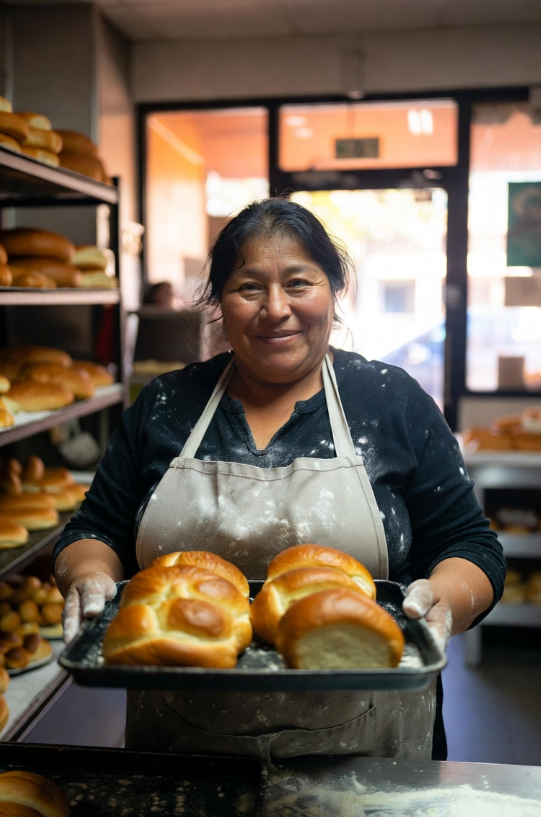
\n\nHere in El Paso, Easter means the bakery is packed. We sold out of conchas by 9 AM on Thursday, which has never happened. I made three extra batches on Friday, and Graciela — my newest employee, a young woman from Juárez who reminds me of myself at twenty, all hunger and hard work — stayed until closing to help box orders. People want pan dulce for Easter. They want rosca, they want polvorones, they want the bread their mothers made. I understand this craving in my bones. It is not hunger. It is homesickness that lives in the mouth.
\n\nWe went to Mass on Easter Sunday — the whole family, even Luis Jr., who is fifteen and would rather be anywhere else on earth than church, but who came because I asked and because saying no to his mother is not something Luis Jr. has learned yet and I intend to keep it that way. Isabella wore a white dress and looked like a young woman and not a girl, and I had to blink twice because where did thirteen go? Sofia wore jeans because Sofia does not own a dress and refuses to, and I have stopped fighting this battle because there are only so many wars a mother can wage and I choose mine carefully. Diego wore his good shirt, which is his less-wrinkled shirt. Camila wore every color simultaneously.
\n\nAfter Mass I made capirotada. Rosa's recipe — bolillo bread, torn and toasted, layered with piloncillo syrup and queso blanco and raisins and pecans and cinnamon, baked until the cheese melts and the bread goes soft and the whole thing becomes a sweet, complicated mess that tastes like everything good about being Mexican. The kids were skeptical — \\"cheese in dessert, Mamá?\\" — the way American kids always are when you put cheese where cheese doesn't seem to belong. But they tried it because I told them Rosa made this and Rosa's name carries weight in this house, even with children who never knew her well enough, and they loved it. Diego had three servings. Camila picked out the raisins, which I expected, because Camila has a personal vendetta against raisins that I do not understand but respect.
\n\nI called Rosa on Easter. She was at Carmen's — my sister, who lives here in El Paso — eating the capirotada that Carmen made from the same recipe, and for a moment we were all in the same kitchen even though we were in three different places: me in my house, Carmen in hers, Rosa in the kitchen in Anapra that doesn't exist anymore because it was always more memory than walls. Rosa said my capirotada would be good. I said how do you know, you haven't tasted it. She said: \\"Because I taught you, and I don't teach wrong.\\" That is Rosa. Confident in her kitchen the way generals are confident in battle.
\n\nLuis Jr. helped me clean up after dinner. He washed dishes without being asked, which is new and alarming because fifteen-year-old boys do not voluntarily wash dishes unless something is happening inside them that they don't know how to talk about. I stood next to him and dried, and we were quiet for a while, and then he said, \\"Mom, is Grandma Rosa going to be okay?\\" And I said yes, mijo, she is going to be fine. And I don't know if that is true. But on Easter, you believe in resurrection. You believe in fine.
\n\nThe bakery was closed on Easter Sunday — the only day I close, the only day the ovens rest, the only day the building on Dyer Street sits dark and quiet and smells like yesterday's bread. I think the bakery needs that day the way I need Mass — not because it fixes anything but because rest is holy, and holy things need protecting, and I protect what I can.
\n\nTomorrow it is Monday and I will wake at three and drive to the bakery and turn on the ovens and mix the dough and the rhythm will start again. The rhythm always starts again. That is the miracle of bread — not that it rises, but that you get to make it again. Every day, you get to make it again.
This Easter, with my mother’s health sitting heavy and uncertain, I needed to make something that belonged to her — something that would fill the house with a smell she taught me to love. Capirotada is resurrection food, the kind Catholic grandmothers have been making from stale bread and sweetness for generations, and Rosa’s version has been in our family longer than I have. I made it on Easter Sunday, in my home kitchen with the bakery ovens dark and resting, and it was the closest thing I had to a prayer I could eat. Here is how she makes it, and now how I make it too.
Rosa’s Capirotada
Prep Time: 20 minutes | Cook Time: 45 minutes | Total Time: 1 hour 5 minutes | Servings: 8
Ingredients
- 6 bolillo rolls (day-old preferred), torn into roughly 1-inch chunks
- 2 cones piloncillo (about 8 oz total), roughly chopped or broken up
- 2 cups water
- 2 cinnamon sticks
- 4 whole cloves
- 1 teaspoon ground cinnamon
- 1 cup queso blanco, crumbled
- 1 cup raisins
- 1 cup pecans, roughly chopped
- 2 tablespoons unsalted butter, for the baking dish
Instructions
- Toast the bread. Preheat oven to 350°F. Spread the torn bolillo pieces in a single layer on a baking sheet. Toast for 10 to 12 minutes, until dry and lightly golden at the edges. Set aside. Leave the oven on.
- Make the piloncillo syrup. Combine the piloncillo, water, cinnamon sticks, and cloves in a medium saucepan over medium heat. Stir occasionally until the piloncillo fully dissolves, then let the syrup simmer 8 to 10 minutes until it thickens slightly and coats a spoon. Remove the cinnamon sticks and cloves and discard.
- Prepare the baking dish. Butter a 9x13-inch baking dish generously. This keeps the bottom layer from sticking and adds a little richness to the finished pudding.
- Build the first layer. Spread half the toasted bread chunks in an even layer in the baking dish. Pour half the warm piloncillo syrup slowly over the bread, letting it soak in. Scatter half the raisins, half the pecans, and half the crumbled queso blanco over the top. Dust lightly with ground cinnamon.
- Build the second layer. Repeat with the remaining bread, syrup, raisins, pecans, and queso blanco. Finish with a final dusting of cinnamon. Press the layers down gently with the back of a spoon so the syrup distributes evenly.
- Bake covered. Cover the dish tightly with aluminum foil and bake at 350°F for 25 minutes. The bread will absorb the syrup and begin to soften.
- Finish uncovered. Remove the foil and bake an additional 15 to 20 minutes, until the top is golden, the cheese has melted into the layers, and the edges are just beginning to caramelize. The pudding should feel set but yielding when you press the center.
- Rest before serving. Let the capirotada rest for at least 10 minutes before scooping. It holds together better slightly cooled, and the flavors settle. Serve warm, directly from the dish.
Nutrition (per serving)
Calories: 385 | Protein: 8g | Fat: 14g | Carbs: 60g | Fiber: 3g | Sodium: 270mg