
 By
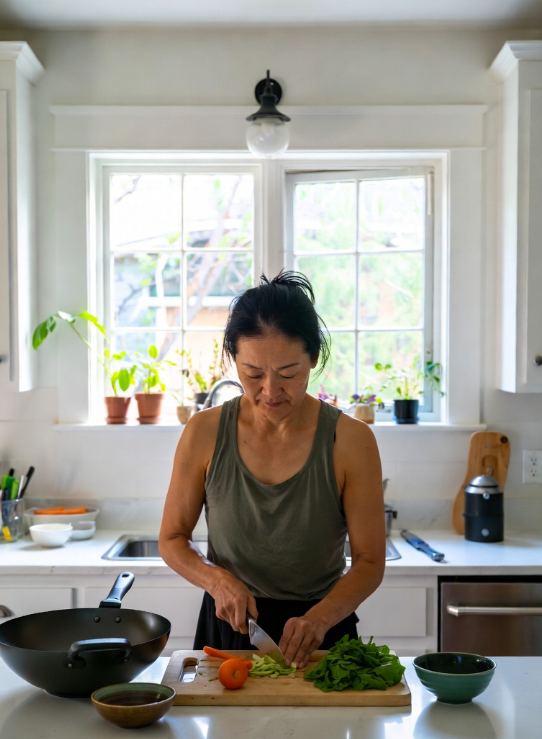
By Mid-September. The cooking classes are filling faster now — the waitlists are growing, the demand is exceeding the monthly schedule, and I am considering adding a second class per month. The consideration is the growth. The growth is the career. The career is the practice externalized: the same cooking I do at home, the same teaching I do with Miya, but offered to strangers who become students who become, in some cases, friends who come to Thanksgiving and bring dishes they learned in my class. The circle widens. The kitchen expands. The practice extends.
I made fall tempura — kabocha, sweet potato, lotus root, shiso — for the September cooking class. The students' faces when they bit into their own tempura — the crunch, the steam, the surprise of something they made themselves being delicious — were the faces of people discovering that cooking is not as hard as they thought, that the barrier between "restaurant food" and "home food" is lower than they believed, that the tempura is achievable, that the dashi is achievable, that the miso soup is achievable, that everything Fumiko knew is achievable if you have a recipe card and a teacher and the willingness to stand at the stove and try.
The book reviews continue to trickle in, a year after publication. A review in a literary journal called the book "the most important work of Japanese-American food writing in a decade." The word "important" sat in my chest for a day. Important. Fumiko's miso soup, important. Fumiko's recipe cards, important. The grief of a granddaughter, important. The importance is not the fame. The importance is the impact: the women who made miso soup because of the book. The men who called their grandmothers because of the book. The students who enrolled in my class because of the book. The impact is the importance. The importance is the practice, extended into the world, one reader at a time.
The sweet potato I used in class that September — battered into tempura, golden and crackling — stayed with me long after the students went home. It is such a patient vegetable: it gives itself to the deep-fry and it gives itself to the oven, and either way it becomes something students and readers and strangers at a table can recognize as delicious. This bowl is what I make the week after a class, when the teaching energy is still humming and I want something nourishing but unfussy — the same sweet potato, roasted this time, anchored by chickpeas and kale and a dressing that ties it all together the way a good recipe card ties a family’s memory to a stranger’s kitchen.
Roasted Sweet Potato, Chickpea and Kale Salad Bowls
Prep Time: 15 minutes | Cook Time: 30 minutes | Total Time: 45 minutes | Servings: 4
Ingredients
- 2 medium sweet potatoes (about 1 1/2 lbs), peeled and cut into 3/4-inch cubes
- 1 can (15 oz) chickpeas, drained and rinsed
- 3 tablespoons olive oil, divided
- 1 teaspoon smoked paprika
- 1/2 teaspoon ground cumin
- 1/2 teaspoon garlic powder
- Salt and black pepper, to taste
- 1 large bunch curly kale (about 6 cups), stems removed and leaves torn
- 1 teaspoon lemon juice (for massaging kale)
- 1/2 cup cooked quinoa or brown rice per bowl (2 cups total), for serving
- Tahini Dressing:
- 3 tablespoons tahini
- 2 tablespoons lemon juice
- 1 tablespoon olive oil
- 1 small garlic clove, grated
- 2–3 tablespoons warm water, to thin
- Salt to taste
- Optional toppings: toasted pumpkin seeds, sliced avocado, red pepper flakes
Instructions
- Preheat oven. Heat oven to 425°F (220°C). Line a large rimmed baking sheet with parchment paper.
- Season and roast. Toss the sweet potato cubes and chickpeas together on the baking sheet with 2 tablespoons olive oil, smoked paprika, cumin, garlic powder, 1/2 teaspoon salt, and several grinds of black pepper. Spread into a single layer. Roast for 25–30 minutes, tossing once halfway through, until the sweet potatoes are tender and caramelized at the edges and the chickpeas are lightly crispy.
- Massage the kale. Place the torn kale in a large bowl. Drizzle with the remaining 1 tablespoon olive oil and 1 teaspoon lemon juice and a pinch of salt. Use your hands to massage the leaves firmly for 1–2 minutes until they soften, darken slightly, and reduce in volume.
- Make the dressing. Whisk together tahini, lemon juice, olive oil, and grated garlic in a small bowl. Add warm water one tablespoon at a time until the dressing reaches a pourable consistency. Season with salt to taste.
- Assemble the bowls. Divide the cooked quinoa or brown rice among four bowls. Top each with a generous handful of massaged kale, followed by the roasted sweet potato and chickpeas. Drizzle tahini dressing over each bowl.
- Finish and serve. Add any optional toppings — toasted pumpkin seeds for crunch, sliced avocado for creaminess, or red pepper flakes for heat. Serve immediately.
Nutrition (per serving)
Calories: 420 | Protein: 13g | Fat: 16g | Carbs: 58g | Fiber: 10g | Sodium: 380mg