I shared the recordings with the kids this week. Sent them the files — audio clips, Paul's voice, his words for each of them. I didn't listen when they listened. I didn't need to be there for that. The recordings are between Paul and his children.
Anna called afterward. She was crying. She said, "Mom, he said —" and she couldn't finish. I said, "I know." She said, "I'm going to keep this forever." I said, "That's why he made them."
Peter called. He was quiet for a long time. Then he said, "He said I have his stubbornness." I said, "You do." He said, "Is that a good thing?" I said, "It's the thing that's going to save you." He was quiet again. Then: "Thanks, Mom." He hung up. Two words. But the two words were warm and the warmth traveled across the phone line from Chicago to Duluth.
Elsa came to the house that evening. She didn't mention the recording. She came in, took off her coat, went to Paul's wheelchair, and sat on the floor beside him and put her head against his armrest and closed her eyes. Paul looked down at her. He couldn't touch her hair — his hands can't — but he looked at her and his eyes did the touching. They sat like that for ten minutes. No words. No recording. Just a father and a daughter and a silence that said everything.
Sophie texted: "Grandpa's voice. I'm saving it. I'm going to play it for my patients someday and tell them: this is what a good man sounds like." She's twenty-one. She already knows what a good man sounds like. She's known since she was six, visiting Paul at school, hearing him teach, watching him make dead people real.
I made a quiet dinner: scrambled eggs, toast, a cup of soup. The meal of a week that's been emotionally enormous and physically exhausting. The eggs were warm. The toast was buttered. The soup was leftover wild rice.
Paul ate from the cup and said, softly, "They have my voice now." I said, "They've always had your voice. Now they can hear it whenever they want." He said, "Even when I can't —" He stopped. I said, "Yes. Even then."
Even then. The voice lives in the recording. The words live in the phone. The man lives in the chair, in the room, in the house, now, present, breathing, speaking softly. Still speaking.
For now. Still speaking.
That dinner I made — scrambled eggs, toast, leftover wild rice soup — wasn’t something I planned. It was what the week called for. But there’s something I make ahead when I know hard days are coming, when I want something warm waiting in the pot without having to think: roasted garlic potato soup. It’s the kind of recipe that asks almost nothing of you and gives back so much. I’ve served it to Paul more times than I can count, and it reheats beautifully — which is the whole point, really, of cooking for a life that doesn’t follow a schedule.
Roasted Garlic Potato Soup
Prep Time: 15 min | Cook Time: 50 min | Total Time: 1 hr 5 min | Servings: 6
Ingredients
- 1 whole head of garlic
- 1 tablespoon olive oil
- 2 tablespoons unsalted butter
- 1 medium yellow onion, diced
- 3 stalks celery, sliced
- 2 pounds Yukon Gold potatoes, peeled and cubed
- 4 cups low-sodium chicken or vegetable broth
- 1 cup whole milk or half-and-half
- 1/2 teaspoon dried thyme
- 1/2 teaspoon salt, plus more to taste
- 1/4 teaspoon black pepper
- 2 tablespoons fresh chives or parsley, chopped (for garnish)
- Sour cream or shredded cheddar, optional for serving
Instructions
- Roast the garlic. Preheat oven to 400°F. Slice the top off the head of garlic to expose the cloves, drizzle with olive oil, wrap tightly in foil, and roast for 40–45 minutes until soft and golden. Let cool slightly, then squeeze the cloves out into a small bowl and set aside.
- Sauté the aromatics. In a large pot over medium heat, melt the butter. Add the diced onion and celery and cook, stirring occasionally, for 6–8 minutes until softened and translucent.
- Add potatoes and broth. Add the cubed potatoes, roasted garlic cloves, broth, thyme, salt, and pepper. Stir to combine. Bring to a boil, then reduce heat and simmer uncovered for 18–22 minutes, until the potatoes are completely tender when pierced with a fork.
- Blend partially. Use an immersion blender to blend about half the soup directly in the pot, leaving some chunks for texture. Alternatively, transfer half the soup to a blender, blend until smooth, and return it to the pot. Stir well to combine.
- Finish with milk. Stir in the milk or half-and-half over low heat. Do not boil after adding the milk. Heat gently for 3–5 minutes until warmed through. Taste and adjust salt and pepper as needed.
- Serve. Ladle into bowls and top with fresh chives or parsley. Add a dollop of sour cream or a sprinkle of cheddar if you like. Serve with buttered toast or crusty bread.
Nutrition (per serving)
Calories: 210 | Protein: 5g | Fat: 8g | Carbs: 31g | Fiber: 3g | Sodium: 390mg
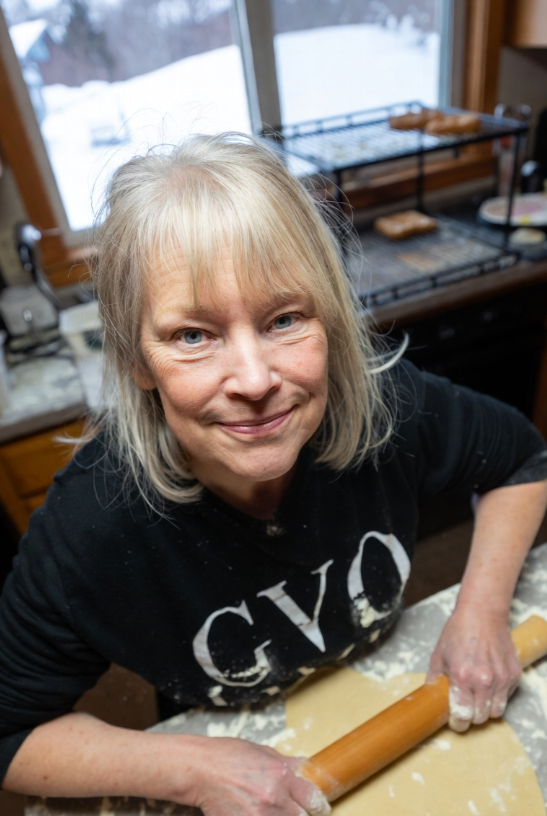
About the cook who shared this
Linda Johansson
Week 150 of Linda’s 30-year story
· Duluth, Minnesota
Linda is a sixty-three-year-old retired nurse from Duluth, Minnesota, living alone in the house where she raised her children and said goodbye to her husband. She lost Paul to ALS in 2020 after two years of watching the kindest man she'd ever known lose everything but his dignity. She cooks Scandinavian comfort food and Minnesota hotdish and the pot roast Paul loved, and she sets two places at the table out of habit because it makes her feel less alone. Every recipe she writes is a person she's loved.
