
 By
By Mid-June. The cooking classes are running twice monthly with regular waitlists, and I have hired a part-time assistant — a cooking class student named Claire who has graduated from student to volunteer to paid helper, the trajectory that the classes produce: strangers who become students who become cooks who become collaborators. Claire handles registration, setup, and cleanup. I handle the teaching. The division is the scaling, the small-business version of the practice, the first time the practice has required another person to sustain it.
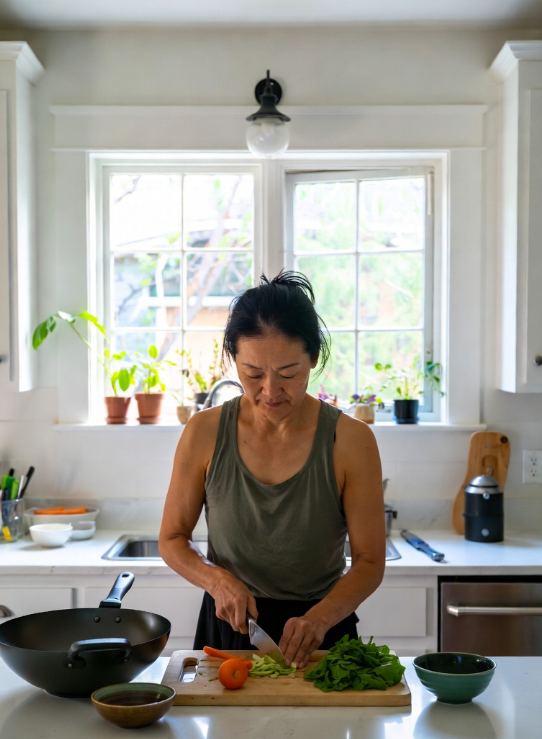
I made the summer cooking class menu: hiyashi chuka, cold tofu with toppings, shiso drinks. The summer class was the most fun I've taught — the food light, the mood warm, the students relaxed by the cold noodles and the iced shiso drinks and the specific pleasure of learning to cook something cold on a hot day. The teaching is the extending. The extending is the Dashi. The Dashi is everything now — the newsletter, the classes, the blog, the books, the column, all of it flowing from the same source: a woman standing in a kitchen, making food, writing about making food, teaching others to make food.
Miya finished fourth grade. She is nine, almost ten (August birthday). She has spent four years in Japanese Saturday school and can now read at a third-grade Japanese level, which means she can read most of Fumiko's recipe cards independently. The "most" is almost "all." The "all" is approaching. The approaching is the Japanese school paying its final dividends, the years of hard chairs and Saturday mornings producing a bilingual child who can read her great-grandmother's handwriting and who does, regularly, standing at the kitchen counter with the recipe card propped against the backsplash, reading the instructions aloud in Japanese and then cooking in English and the two languages flowing through the same dish.
The shiso drinks were the quiet star of that summer class — the moment the students tasted something cold and unexpected and their shoulders dropped two inches. That feeling, the specific relief of a beautiful cold drink on a hot teaching day, is what I keep coming back to. This Raspberry Refresher captures the same spirit: bright, simple, and generous enough to share with a full room of people you’re just getting to know. Claire and I made a big pitcher the next week, and Miya, reading Fumiko’s card at the counter, declared it “close enough to something Obāchan would approve of.”
Raspberry Refresher
Prep Time: 10 minutes | Cook Time: 5 minutes | Total Time: 15 minutes (plus chilling) | Servings: 6
Ingredients
- 2 cups fresh or frozen raspberries
- 1/2 cup granulated sugar
- 1/2 cup water (for simple syrup)
- 1/4 cup fresh lemon juice (about 2 lemons)
- 4 cups cold sparkling water or still water
- 1 cup ice cubes, plus more for serving
- Fresh raspberries and lemon slices, for garnish
- Fresh mint sprigs, optional
Instructions
- Make the simple syrup. Combine the sugar and 1/2 cup water in a small saucepan over medium heat. Stir until the sugar dissolves completely, about 3–4 minutes. Remove from heat and let cool for 5 minutes.
- Blend the raspberries. Add the raspberries to a blender along with the warm simple syrup and lemon juice. Blend until smooth, about 30 seconds.
- Strain. Pour the raspberry mixture through a fine-mesh strainer into a large pitcher, pressing the solids with a spoon to extract all the juice. Discard the seeds and pulp.
- Assemble the refresher. Add 1 cup of ice to the pitcher, then pour in the cold sparkling water. Stir gently to combine without losing too much carbonation.
- Taste and adjust. Taste the refresher and add more lemon juice for brightness or a little extra sugar if you prefer it sweeter.
- Serve. Pour over ice-filled glasses and garnish with fresh raspberries, a lemon slice, and a sprig of mint if using. Serve immediately.
Nutrition (per serving)
Calories: 90 | Protein: 0g | Fat: 0g | Carbs: 23g | Fiber: 2g | Sodium: 10mg