Waiting. The word for this week is waiting. The neurology appointment is September 20 — nine days — and every day between now and then feels like the pause between a question and an answer, stretched and airless.
I'm working. I'm cooking. I'm going to church on Sunday and the Damiano Center on Thursday and the garden is being put to bed for winter and I'm doing all of the things I always do, and underneath all of the things I always do is the waiting, humming like a generator in the basement that you can't hear unless you listen for it.
Paul is working too. Back in the classroom, teaching American history to sophomores who have no idea that their teacher's left hand doesn't work quite right, that his wife watches him at breakfast, that there's an appointment in Minneapolis in nine days that will determine — what? Something. We don't know what yet.
He hasn't mentioned the appointment. I haven't mentioned it either. We've developed a language of omission — the thing we don't talk about is as present as the things we do, and the not-talking is its own kind of conversation. I know he's scared because he's been reading more than usual, which is Paul's stress response. When Paul is worried, he reads. When he's very worried, he reads about shipwrecks. He's been reading about the SS Carl D. Bradley, which sank in 1958 with thirty-three crew. He's very worried.
I've been cooking compulsively. Not just meals — projects. This week: apple butter (ten jars, from Honeycrisp apples, cooked for six hours in the slow cooker until it's dark and thick and sweet). Green tomato relish from the tomatoes I pulled before the frost. Pickled beets, another batch, because Mamma says you can never have enough pickled beets and she's right. The pantry is bursting. The shelves are full. The house is stocked for winter as if I'm preparing for a siege, and maybe I am.
Sophie started her sophomore year at the U of M. She called on Tuesday — excited, busy, talking about her nursing courses and her clinical rotations and the cadaver lab and how she almost fainted the first day but didn't because she thought of me and what I would do and what I would do is not faint. "You wouldn't faint, Grandma." She's right. I wouldn't. I didn't, thirty-two years ago, in my own cadaver lab. I thought of Mamma and didn't faint, the same way Sophie thought of me. The thread.
I made a roasted chicken on Sunday — simple, perfect. Salt, pepper, butter under the skin, roasted at high heat until the skin is crackling and the juices run clear. You can't eat a roasted chicken and feel hopeless. That's not an opinion — it's a fact, tested over centuries by women who have roasted chickens in the face of uncertainty and found that the chicken helps.
Nine days. Eight now. Seven. The number gets smaller. The waiting doesn't.
The simple roasted chicken I made that Sunday reminded me that some recipes aren’t just food — they’re an argument against despair, a quiet insistence that life continues and is worth tending. This raspberry chicken is another version of that same conviction: sweet and savory and a little unexpected, the way hope sometimes is. When your hands need something purposeful to do and your heart needs something beautiful to put on the table, this is the recipe I reach for — it asks enough of you to keep you present, and it rewards you completely.
Raspberry Chicken
Prep Time: 10 minutes | Cook Time: 30 minutes | Total Time: 40 minutes | Servings: 4
Ingredients
- 4 boneless, skinless chicken breasts
- 1/2 teaspoon salt
- 1/4 teaspoon black pepper
- 1 tablespoon olive oil
- 1 tablespoon butter
- 3 cloves garlic, minced
- 1/2 cup raspberry preserves
- 2 tablespoons balsamic vinegar
- 1 tablespoon Dijon mustard
- 1/4 teaspoon crushed red pepper flakes (optional)
- 1/2 cup fresh or frozen raspberries
- 2 tablespoons fresh thyme leaves (or 1/2 teaspoon dried thyme)
Instructions
- Season the chicken. Pat the chicken breasts dry with paper towels. Season both sides evenly with salt and black pepper.
- Sear the chicken. Heat olive oil and butter in a large oven-safe skillet over medium-high heat. Once the butter is foaming, add the chicken breasts and sear for 4–5 minutes per side until golden brown. Transfer chicken to a plate and set aside.
- Build the sauce. Reduce heat to medium. Add the minced garlic to the same skillet and cook for 30 seconds until fragrant. Stir in the raspberry preserves, balsamic vinegar, Dijon mustard, and red pepper flakes if using. Whisk together and let the sauce bubble for 1–2 minutes until slightly thickened.
- Finish cooking. Return the chicken breasts to the skillet, spooning sauce over each piece. Reduce heat to medium-low, cover, and cook for an additional 10–12 minutes, or until the chicken reaches an internal temperature of 165°F.
- Add fresh raspberries. Scatter the fresh or frozen raspberries over the chicken in the last 2 minutes of cooking, allowing them to warm and soften slightly into the sauce.
- Rest and serve. Remove from heat and let rest for 5 minutes. Spoon the pan sauce generously over each breast and finish with fresh thyme leaves before serving.
Nutrition (per serving)
Calories: 310 | Protein: 34g | Fat: 9g | Carbs: 22g | Fiber: 2g | Sodium: 380mg
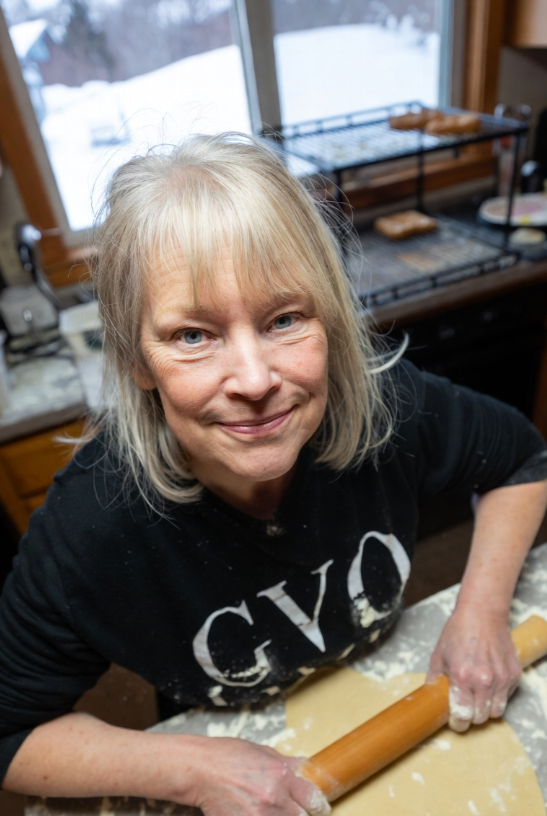
About the cook who shared this
Linda Johansson
Week 77 of Linda’s 30-year story
· Duluth, Minnesota
Linda is a sixty-three-year-old retired nurse from Duluth, Minnesota, living alone in the house where she raised her children and said goodbye to her husband. She lost Paul to ALS in 2020 after two years of watching the kindest man she'd ever known lose everything but his dignity. She cooks Scandinavian comfort food and Minnesota hotdish and the pot roast Paul loved, and she sets two places at the table out of habit because it makes her feel less alone. Every recipe she writes is a person she's loved.
