
 By
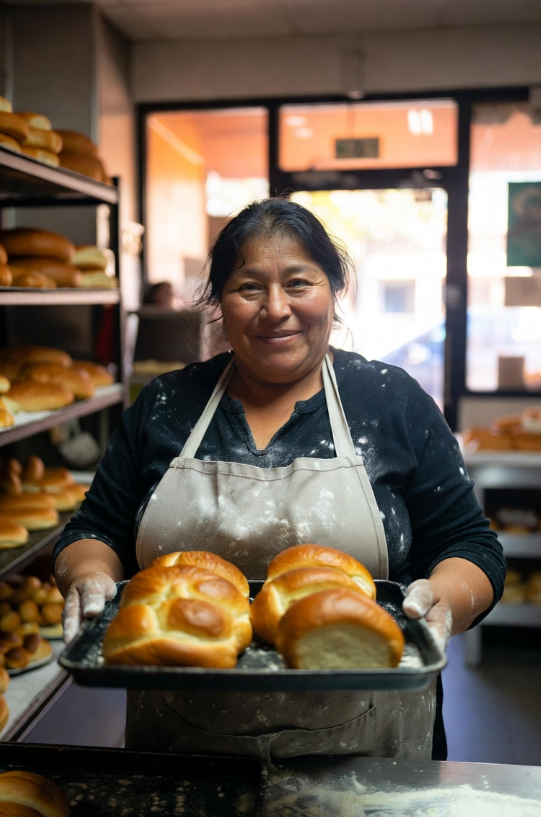
By Four years of this journal. Two hundred and eight weeks. One thousand four hundred and fifty-six days. And on this anniversary of the journal — the fourth year, the week that closes the circle and starts the next — I am standing in a bakery kitchen at 4 AM during a global pandemic, making bread for a world that is locked in its houses, and the bread is the bridge, and the bridge is still open, and the opening is the only thing that matters.
What the pandemic has taken: the dining room. The farmers' market. Forty percent of revenue. My salary. The ability to hug Doña Esperanza. The ability to sit with customers. The sound of the morning rush — the clinking plates, the conversations, the particular hum of a room full of people eating bread. The pandemic has taken the hum. The kitchen is quiet in a way it has never been quiet, and the quiet is not peaceful — it is surgical, the quiet of a body that has been cut open and is healing, slowly, without certainty.
What the pandemic has not taken: the conchas. The recipe. The oven at 350. The timer at fifteen minutes. Rosa's flour tortillas. Sofia's chocolate conchas. Diego's drone. Camila's voice. Isabella's whiteboard. Luis's van. Luis Jr.'s Sunday calls. Carmen's visits (at a distance, through the window, the saddest visits, the visits where love has to shout across six feet). The recipe notebook. The Juírez fund (smaller now, but there). The promise. The promise is still there. The promise is always there. The promise is the last thing the pandemic can take, because the promise is not a thing — it is a verb, an action, a daily choosing, the choosing to make bread for a world that can't come through the door but that can come to the door, and the door is enough, and the bread is enough, and the enough is the promise.
I made capirotada for Easter — a pandemic Easter, a lockdown Easter, a Holy Week without Mass (the church is closed, Father Morales is streaming, Camila is singing along on the couch in her pajamas, and the pajama Easter is the strangest Easter of my life). The capirotada was Rosa's recipe, unchanged, undiminished by pandemic. The bread pudding doesn't know there's a virus. The piloncillo doesn't care about lockdowns. The cinnamon is not socially distanced. The recipe is immune. The recipe has survived poverty and death and emigration and grief and it will survive COVID because recipes are the most resilient things humans have ever created — more resilient than buildings, more resilient than governments, more resilient than the people who make them. Rosa is dead. The capirotada is alive. And that is the sermon. That is the Easter message. The bread rises. The bread always rises. Even in a pandemic. Especially in a pandemic.
Capirotada was Rosa’s recipe—and I made it, and I will keep making it—but the dish I kept coming back to in those strange, quiet, surgical mornings was this strata: layered bread soaked through with egg and cream and pesto, held together by something that felt like stubbornness, baked until it rose in the oven the way bread always rises. I made it for the team the first week we shifted to contactless delivery, assembled the night before at midnight, slid into the oven at 4 AM, cut into squares and sent out in the van with Luis—a hot meal for people who needed to know someone was still cooking for them. The bread doesn’t know there’s a pandemic. That is the whole point. That is the whole recipe.
Prosciutto-Pesto Breakfast Strata
Prep Time: 25 min | Cook Time: 55 min | Total Time: 1 hr 20 min (plus overnight rest) | Servings: 8
Ingredients
- 1 loaf (about 1 lb) day-old Italian or sourdough bread, cut into 1-inch cubes
- 3 oz prosciutto, torn into rough pieces
- 1/3 cup prepared basil pesto
- 1 cup shredded mozzarella cheese, divided
- 1/4 cup grated Parmesan cheese
- 8 large eggs
- 2 cups whole milk
- 1/2 cup heavy cream
- 1/2 tsp kosher salt
- 1/4 tsp black pepper
- 1/4 tsp crushed red pepper flakes (optional)
- 2 tbsp unsalted butter, for the baking dish
- 1/4 cup sun-dried tomatoes, drained and roughly chopped
- 2 green onions, thinly sliced, for garnish
Instructions
- Prepare the dish. Butter a 9x13-inch baking dish generously. Spread half the bread cubes in an even layer across the bottom.
- Layer the fillings. Scatter the prosciutto and sun-dried tomatoes evenly over the first bread layer. Drop spoonfuls of pesto across the filling, then sprinkle with half the mozzarella. Add the remaining bread cubes on top.
- Make the custard. In a large bowl, whisk together the eggs, milk, heavy cream, salt, pepper, and red pepper flakes until fully combined and slightly frothy.
- Soak the strata. Pour the custard mixture slowly and evenly over the assembled layers, pressing the bread down gently with a spatula so every cube absorbs the liquid. Top with the remaining mozzarella and all of the Parmesan.
- Rest overnight. Cover tightly with plastic wrap and refrigerate for at least 8 hours or overnight. This is not optional—the rest is what makes the strata hold together and bake evenly.
- Bring to room temperature. Remove the dish from the refrigerator 30 minutes before baking. Preheat the oven to 350°F.
- Bake. Bake uncovered for 50–55 minutes, until the top is deeply golden and the center is set with no jiggle when the pan is gently shaken. If the top browns too quickly, tent loosely with foil after 35 minutes.
- Rest and serve. Let the strata rest for 10 minutes before cutting. Garnish with sliced green onions. Cut into squares and serve directly from the pan.
Nutrition (per serving)
Calories: 420 | Protein: 22g | Fat: 24g | Carbs: 31g | Fiber: 2g | Sodium: 780mg