The Damiano Center on Thursday: wild rice soup, fifty gallons, the same recipe I have been making for twenty-some years now. The constancy is the point. People come into the basement of that building hungry and uncertain and what they find is a fifty-gallon pot of wild rice soup that has been there every Thursday of every year, and they find Linda Johansson, who has been there too, and the constancy is the message: you can come back. You can come back. You can come back.
Lena (Anna's youngest, college freshman) is in college now. She calls me sometimes. The calls are about boys, mostly. I listen. I do not give advice. I am eighteen-year-old's grandmother. My credibility on boys is suspect at best. I tell her the kinds of things a grandmother is supposed to tell her: be careful, be brave, trust your gut, do not date the one who reminds you of someone you do not like. She thinks I am wise. I am, in fact, just old. The two get confused sometimes in the right direction.
Jakob (Anna's middle, recently graduated) has a job. He hates the job. He is figuring it out. He called me Tuesday for advice. I told him: that is what your twenties are for. The first job is supposed to be unsatisfying. The first job teaches you what you do not want. He said, "Grandma, that is not super helpful." I said, "It is the truth. Helpful is not always the same as comforting." He laughed. He hung up. He kept the job for now. He will figure it out.
I cooked Grilled summer feast this week. Burgers, brats, corn on the cob, potato salad, watermelon. The Independence Day spread. The Memorial Day spread. Repeated as needed.
The Damiano Center on Thursday. I have served soup at this center for twenty-some years. I know the regulars by name. I know the seasons of the crowd. I know that the first cold snap brings new faces. I know that the days after holidays bring the lonely ones. I know that the worst weeks of the year are not the ones that feel the worst — they are the ones in February when the cold has worn everyone down and the city has run out of tenderness.
Paul would have liked this dinner. Paul would have liked this week. Paul would have liked this life. I tell him about it anyway. The telling is the keeping. I have been told, by a grief counselor, by friends, by my own children at certain anxious moments, that perhaps the constant tell-Paul thing is not healthy. I do not agree. I think it is exactly healthy. I think it is, in fact, the structural beam of my emotional architecture. The beam is solid. The house stands.
It is enough. Paul is not here. Mamma is not here. Pappa is not here. Erik is not here. They are all here in the kitchen, in the smell, in the taste, in the wooden spoon and the bread pans and the marble slab. The dead are not where the body went. The dead are in the kitchen.
The lake from the kitchen window has been doing what the lake does for as long as there has been a lake. The lake has carried fish and ships and the bodies of drowned sailors and the names of Ojibwe villages and the granite-cold of melted glaciers. The lake does not notice the lives along its shore. The lives notice the lake. That is the deal. That has always been the deal.
It is enough.
The grilled summer feast is always the same spread — burgers, brats, corn, watermelon — and that sameness is exactly the point. What I reach for to fill in the rest of the plate is Potatoes O’Brien: skillet potatoes with peppers and onion, crispy at the edges, soft in the middle, colorful enough to look like a celebration. It is the kind of side dish that does not need to announce itself. It just belongs there, the way certain things belong without anyone having to say so.
Potatoes O’Brien
Prep Time: 15 min | Cook Time: 25 min | Total Time: 40 min | Servings: 6
Ingredients
- 2 lbs russet potatoes (about 4 medium), scrubbed and cut into 1/2-inch dice
- 1 medium green bell pepper, diced
- 1 medium red bell pepper, diced
- 1 medium yellow onion, diced
- 3 tablespoons vegetable oil, divided
- 1 teaspoon garlic powder
- 1/2 teaspoon smoked paprika
- 3/4 teaspoon kosher salt, plus more to taste
- 1/4 teaspoon black pepper
- 2 tablespoons fresh flat-leaf parsley, roughly chopped (optional, for serving)
Instructions
- Parboil the potatoes. Place diced potatoes in a medium saucepan and cover with cold salted water. Bring to a boil over high heat, then cook for 5 minutes until just barely tender — they should hold their shape. Drain well and pat dry with a clean kitchen towel. Drying them thoroughly is what gives you the crispy edges.
- Heat the skillet. Warm 2 tablespoons of the oil in a large cast-iron or heavy-bottomed skillet over medium-high heat until shimmering. You want a pan that holds heat evenly — this is not a dish to rush.
- Crisp the potatoes. Add the parboiled potatoes in a single layer. Season with garlic powder, smoked paprika, salt, and pepper. Let them cook undisturbed for 5–7 minutes until a deep golden crust forms on the bottom, then stir and continue cooking another 5–6 minutes, turning occasionally, until golden and crispy on most sides.
- Add the vegetables. Push the potatoes to the edges of the pan. Add the remaining 1 tablespoon of oil to the center and add the diced onion and bell peppers. Cook, stirring the vegetables occasionally (and letting the potatoes continue to sit), for 5–6 minutes until the onion is translucent and the peppers are tender but still have a little bite.
- Combine and finish. Stir everything together and cook for 2 more minutes, letting it all get acquainted in the pan. Taste and adjust salt and pepper. Remove from heat.
- Serve. Transfer to a warm serving dish and scatter parsley over the top if using. Serve immediately alongside burgers, brats, or anything else coming off the grill.
Nutrition (per serving)
Calories: 195 | Protein: 4g | Fat: 7g | Carbs: 31g | Fiber: 3g | Sodium: 310mg
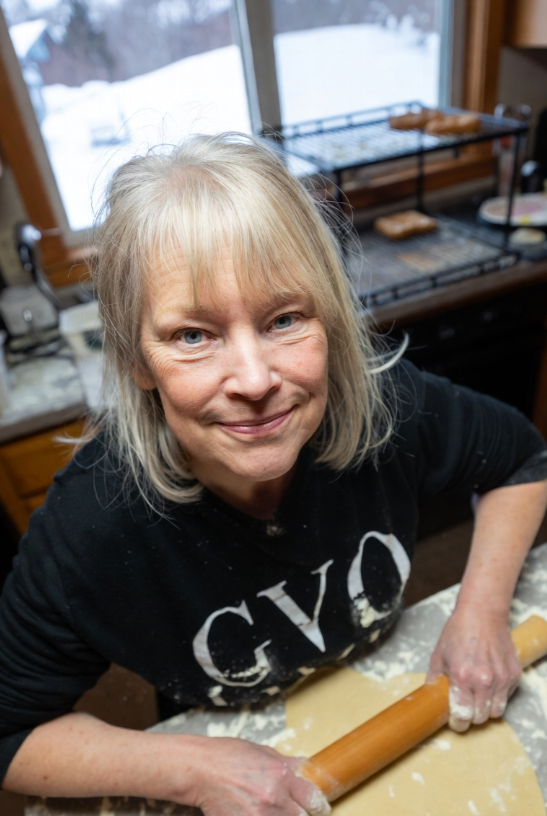
About the cook who shared this
Linda Johansson
Week 439 of Linda’s 30-year story
· Duluth, Minnesota
Linda is a sixty-three-year-old retired nurse from Duluth, Minnesota, living alone in the house where she raised her children and said goodbye to her husband. She lost Paul to ALS in 2020 after two years of watching the kindest man she'd ever known lose everything but his dignity. She cooks Scandinavian comfort food and Minnesota hotdish and the pot roast Paul loved, and she sets two places at the table out of habit because it makes her feel less alone. Every recipe she writes is a person she's loved.
