
 By
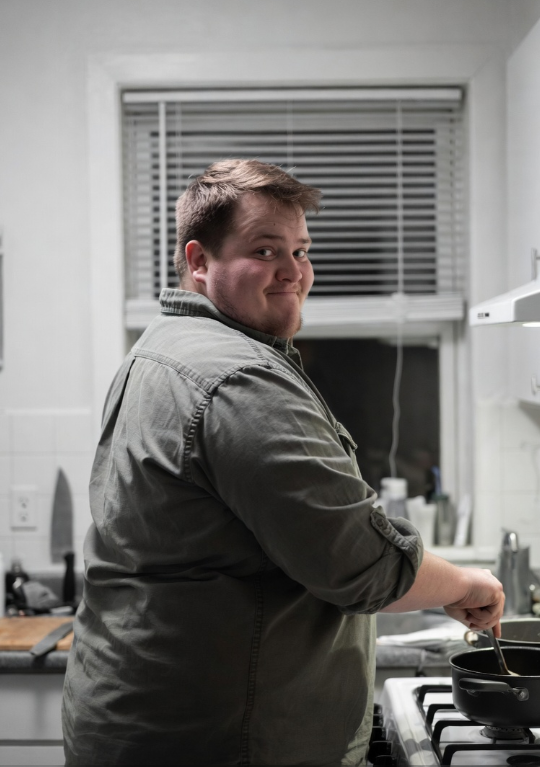
By The brisket was already shredded, the onions had been low-and-slow in the cast iron for forty minutes until they went mahogany and sweet, and I needed something to do with my hands — something that required enough attention to quiet the noise but not so much that I couldn’t think. Babcia’s dough was the answer, the way it always is. These potato pockets are the closest thing I had in my repertoire to what I ended up making that night: a sturdy dough wrapped around something rich and savory, the kind of food you make when the world outside is too loud and the kitchen needs to be the one room that holds.
Potato Pockets
Prep Time: 45 min | Cook Time: 30 min | Total Time: 1 hr 15 min | Servings: 6 (about 24 pockets)
Ingredients
- Dough
- 3 cups all-purpose flour, plus more for dusting
- 1 teaspoon salt
- 1 large egg
- 3/4 cup sour cream
- 2 tablespoons unsalted butter, softened
- Filling
- 2 cups mashed potatoes (prepared, cooled)
- 1 1/2 cups leftover smoked brisket, shredded
- 2 large yellow onions, thinly sliced
- 2 tablespoons unsalted butter
- 1 tablespoon olive oil
- 1/2 teaspoon salt
- 1/4 teaspoon black pepper
- 1/2 cup sharp cheddar or farmer’s cheese, shredded (optional)
- For Finishing
- 4 tablespoons unsalted butter
- Sour cream and fresh chives, for serving
Instructions
- Caramelize the onions. In a heavy skillet over medium-low heat, melt 2 tablespoons butter with the olive oil. Add sliced onions and salt. Cook, stirring every 5–8 minutes, for 35–40 minutes until deeply golden and mahogany. Don’t rush this. Set aside to cool.
- Make the filling. Combine cooled mashed potatoes, shredded brisket, caramelized onions, and cheese if using. Season with salt and pepper. The filling should be thick enough to hold its shape — if it feels loose, refrigerate for 15 minutes.
- Make the dough. In a large bowl, whisk together flour and salt. Make a well in the center and add the egg, sour cream, and softened butter. Mix until a shaggy dough forms, then turn out onto a lightly floured surface and knead 4–5 minutes until smooth and elastic. Wrap in plastic and rest 30 minutes at room temperature.
- Roll and cut. On a floured surface, roll dough to about 1/8-inch thickness. Cut circles using a 3-inch round cutter or the rim of a glass.
- Fill and seal. Place about 1 tablespoon of filling in the center of each round. Fold dough over to form a half-moon and press edges firmly to seal. Crimp with a fork. Place finished pockets on a lightly floured baking sheet.
- Boil. Bring a large pot of salted water to a boil. Working in batches, drop pockets in and cook 3–4 minutes after they float to the surface. Remove with a slotted spoon and drain.
- Pan-fry (optional but recommended). In a large skillet over medium-high heat, melt remaining 4 tablespoons butter. Add boiled pockets in a single layer and cook 2–3 minutes per side until golden and lightly crisp.
- Serve. Plate with a dollop of sour cream and a scatter of fresh chives. These are best eaten immediately, but they reheat well in a buttered skillet.
Nutrition (per serving)
Calories: 520 | Protein: 22g | Fat: 24g | Carbs: 54g | Fiber: 3g | Sodium: 610mg