
 By
By Rosa's tenth death anniversary. September 15, 2026. A decade without her. The number is both enormous and familiar — enormous because a decade is a continent of time, and familiar because I have been crossing that continent for ten years, one day at a time, and the crossing has made the continent manageable, the way any distance is manageable if you measure it in steps instead of miles.
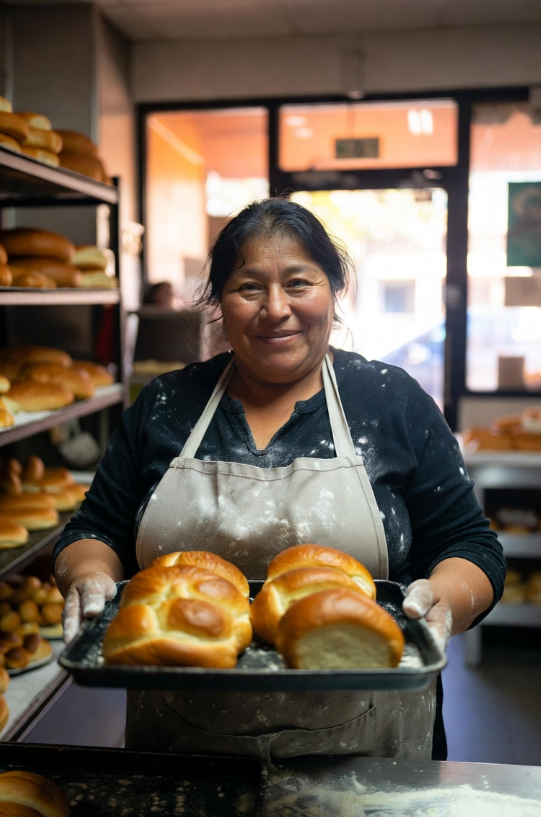
This year the candles were lit in three places: St. Patrick's Cathedral (me, as always, on the stone floor, on my knees, the same prayer, the same stones), the El Paso bakery (Sofia, the ofrenda, the five faces), and the Anapra bakery (Lupita, a candle on the counter, Rosa's photograph, the first Día de los Muertos in the bakery that bears Rosa's name in the neighborhood where Rosa lived and died). Three candles. Three locations. Three points on the map where Rosa's flame burns, and the three flames together make a triangle, and the triangle is the geometry of legacy: the church, the bakery, the bakery. The holy, the commercial, the homecoming. All three are Rosa. All three are the same flame.
I made chile colorado. Year ten. The decade. The second decade begins now. The first decade was the promise. The second decade is the spreading. The promise was: the recipes will not die. The spreading is: the recipes will multiply. They are already multiplying — in Lupita's hands, in the Anapra kitchen, in the maquiladora women who buy conchas at 5 AM and who don't know Rosa's name but who eat Rosa's recipe and the eating is the knowing, even without the name, even without the story, the eating is the knowing.
I made the chile colorado in both kitchens — the El Paso kitchen and the Anapra kitchen, simultaneously. Sofia at one stove. Maria Elena at the other. Lupita at the Anapra stove. Three women. Three kitchens. One recipe. The chile colorado made in triplicate on September 15 is the symbol of the second decade: the recipe spreading, the kitchen multiplying, Rosa going home and staying home and feeding the neighborhood from the home she never left.
Chile colorado is the recipe I made that day — the one that traveled between three kitchens and three sets of hands — but it is this pork, stripped to its essence and cooked fast and hot over an open flame, that captures what I want to bring to your table: the same bold red-chile heat, the same tenderness, the same insistence that Rosa’s food belongs everywhere now. Pork tenderloin fajitas are what happens when the chile colorado travels light — when the promise fits into a weeknight, into a pan, into a tortilla you can hand to someone who never knew her name but will taste, for a moment, exactly what we tasted on September 15.
Pork Tenderloin Fajitas
Prep Time: 20 min | Cook Time: 15 min | Total Time: 35 min | Servings: 4
Ingredients
- 1 lb pork tenderloin, trimmed and sliced into thin strips
- 2 tablespoons olive oil, divided
- 2 teaspoons chili powder
- 1 teaspoon smoked paprika
- 1 teaspoon ground cumin
- 1/2 teaspoon garlic powder
- 1/2 teaspoon onion powder
- 1/4 teaspoon cayenne pepper
- 1/2 teaspoon salt
- 1/4 teaspoon black pepper
- 1 red bell pepper, seeded and sliced
- 1 green bell pepper, seeded and sliced
- 1 medium yellow onion, sliced
- 2 cloves garlic, minced
- 1 tablespoon fresh lime juice
- 8 small flour tortillas, warmed
- Optional toppings: sour cream, salsa, sliced avocado, fresh cilantro
Instructions
- Season the pork. In a large bowl, combine chili powder, smoked paprika, cumin, garlic powder, onion powder, cayenne, salt, and black pepper. Add the pork strips and toss to coat evenly. Let sit for 10 minutes while you prep the vegetables.
- Cook the vegetables. Heat 1 tablespoon of olive oil in a large cast-iron skillet or heavy pan over medium-high heat. Add the bell peppers and onion and cook, stirring occasionally, for 5–6 minutes until softened and lightly charred at the edges. Add the minced garlic and cook 1 minute more. Transfer to a plate.
- Sear the pork. Add the remaining 1 tablespoon of olive oil to the same skillet over high heat. Add the seasoned pork strips in a single layer — work in batches if needed to avoid crowding. Sear for 2–3 minutes per side until cooked through and browned. The internal temperature should reach 145°F.
- Combine and finish. Return the vegetables to the skillet with the pork. Stir together over high heat for 1 minute. Squeeze lime juice over everything and toss once more.
- Warm the tortillas. Heat tortillas directly over a gas flame for 15–20 seconds per side, or wrap in a damp paper towel and microwave for 30 seconds.
- Serve. Spoon pork and vegetable mixture onto warm tortillas. Add your choice of toppings and serve immediately.
Nutrition (per serving)
Calories: 410 | Protein: 31g | Fat: 13g | Carbs: 38g | Fiber: 3g | Sodium: 620mg