
 By
By My week. Concrete pour was Saturday. I'd taken Friday off the plant — vacation day — to prep. Drove to Home Depot at seven Friday morning, rented the mixer, bought twenty-two eighty-pound bags of concrete, four lengths of rebar, four 2x4s for the form, a bag of gravel, a roll of plastic sheeting. The Charger could not haul it. I borrowed Reggie's truck again. Reggie does not know how often I borrow his truck. Darius and I have an agreement: if Reggie ever asks, we pretend it was for a different project.
Friday afternoon I dug out the four inches of dirt where the pad would go, built the wood form, laid the gravel base, set the rebar grid. Darius came after work and inspected my prep. He said the form was square but the gravel needed another bag for the corners. He was right. He's always right about concrete. I added the gravel. We were ready.
Saturday morning at six, Darius and I started mixing. Twenty-two bags is a lot of concrete. The mixer holds two bags at a time. We mixed, poured, troweled, leveled. Mixed, poured, troweled, leveled. By eleven we'd poured and screeded and bull-floated the whole pad. Took a break for lunch — I'd prepped pulled pork in the slow cooker overnight, so we ate pulled pork sandwiches on the porch with cole slaw I'd thrown together that morning. Darius said the pork was the best he'd ever had, which is what Darius says about all my food, but I'll take it.
Afternoon we floated and edged the pad, then covered it with plastic sheeting to slow-cure for the next three days. Concrete that cures slow is concrete that cures strong. By four we were done. I paid Darius in pulled pork sandwiches and a six-pack of his preferred beer. He said it was the best payday he'd had all year.
I sat on the porch after he left and looked at my pad. Eight by ten feet of new gray concrete, smooth and slightly damp, stretched out in front of the back porch like a runway. The smoker would go on the left. The kettle on the right. A prep table along the back. A flat-top griddle eventually, when I could afford it. I sat there until the sun went down and I could see my breath and my knee was complaining. Some days you build things. Some days you just live. This was both.
Sunday at Mama's. I told her about the pad. She said, "Show me a picture." I held up my phone. She zoomed in. She said, "You poured that yourself?" I said with Darius's help. She said, "You boys turned out alright." She said it casual. Like it didn't matter. It mattered. She made fried catfish for dinner — cornmeal-dredged, fried in lard like her mother taught her, served with hush puppies and tartar sauce and lemon wedges. Pop ate three pieces. Cheryl shot him a look. He pretended not to see it.
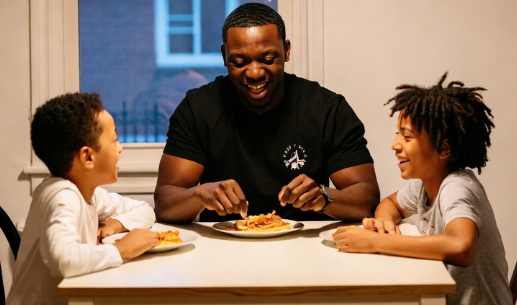
The kids came over Sunday night. Aiden saw the pad and said, "Whoa." Zaria said she wanted to draw on it with chalk. I said maybe in a few days when it's fully cured. She accepted this with surprising grace. The future runs on small concessions and shared excitement. We are building this house, the four of us, one weekend at a time.
The pulled pork that fed Darius on pour day was slow-cooker simple — set it and forget it while I was out digging forms and laying rebar. But once the pad was cured and the work was behind me, I wanted something that felt like a proper sit-down, something with a little more intention. Pork Tenderloin Diane is that meal: quick enough for a weeknight, but the pan sauce makes it feel like you meant to do something nice for yourself. After a weekend like that one, you owe yourself at least that much.
Pork Tenderloin Diane
Prep Time: 10 min | Cook Time: 20 min | Total Time: 30 min | Servings: 4
Ingredients
- 1 1/2 lbs pork tenderloin, sliced into 1-inch medallions
- 1/2 teaspoon kosher salt
- 1/2 teaspoon black pepper
- 2 tablespoons unsalted butter, divided
- 1 tablespoon olive oil
- 3 cloves garlic, minced
- 2 tablespoons shallots, finely chopped
- 1 tablespoon Dijon mustard
- 1 tablespoon Worcestershire sauce
- 2 tablespoons brandy or dry sherry
- 1/2 cup low-sodium chicken broth
- 2 tablespoons heavy cream
- 1 tablespoon fresh chives, chopped
- 1 tablespoon fresh parsley, chopped
Instructions
- Prep the pork. Place medallions between plastic wrap and pound lightly to about 3/4-inch thickness. Pat dry with paper towels and season both sides with salt and pepper.
- Sear the medallions. Heat 1 tablespoon butter and the olive oil in a large skillet over medium-high heat until shimmering. Add pork medallions in a single layer and sear 3–4 minutes per side until golden brown and cooked through (internal temp 145°F). Transfer to a plate and tent loosely with foil.
- Build the sauce base. Reduce heat to medium. Add the remaining tablespoon of butter to the same skillet. Add shallots and cook 1–2 minutes until softened. Add garlic and cook 30 seconds until fragrant.
- Deglaze the pan. Add brandy or sherry and stir, scraping up all the browned bits from the bottom of the pan. Cook 1 minute until the liquid reduces by half.
- Finish the sauce. Whisk in Dijon mustard and Worcestershire sauce. Pour in chicken broth and bring to a simmer. Cook 3–4 minutes until slightly reduced. Stir in heavy cream and simmer 1 more minute.
- Return the pork. Nestle the seared medallions back into the pan. Spoon the sauce over them and warm through for 1–2 minutes over low heat.
- Garnish and serve. Transfer to a serving platter, spoon remaining sauce over the top, and finish with fresh chives and parsley. Serve immediately with roasted potatoes, egg noodles, or crusty bread.
Nutrition (per serving)
Calories: 310 | Protein: 36g | Fat: 15g | Carbs: 4g | Fiber: 0g | Sodium: 420mg