
 By
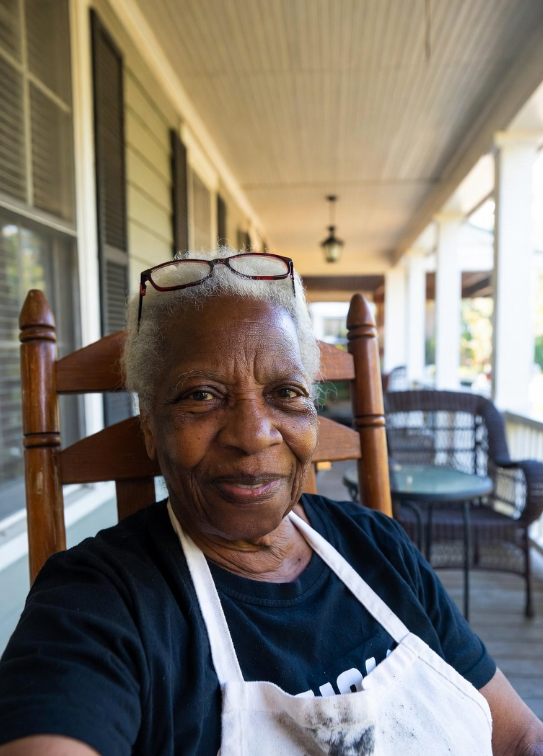
By The okra is at war. It is producing faster than I can pick it, and if you don't pick okra every other day it gets big and woody and you might as well be eating a branch. So I have been out there every morning at six, before the heat hits, picking okra pods that are three inches long and perfect, and by noon there are new ones growing in their place. The okra does not care about my schedule. The okra has its own agenda. I respect that.
I made pickled okra this week. Twelve jars. You pack the pods upright in sterilized jars with garlic, dill, mustard seed, and peppercorns, then pour hot vinegar brine over them and process in a water bath. Six weeks from now they'll be crunchy and tangy and spicy, perfect for snacking, perfect on a relish tray, perfect for handing to someone who says they don't like okra and watching their face change on the first bite. I give pickled okra for Christmas. People think it's a strange gift until they open the jar.
I also made okra soup — a Gullah classic, with tomatoes and shrimp and the holy trinity of onion, celery, and bell pepper. The okra thickens the soup naturally, the way it was designed to, and the whole pot goes silky and rich. This is the soup of my ancestors, baby. This is the soup that came across the Atlantic in the memory of women who carried an entire cuisine in their heads because they were allowed to carry nothing else. Every time I stir this pot I am connected to them — the unnamed, the unwritten, the women who cooked on plantations and in shotgun houses and in church halls and who passed down these recipes not in books but in hands. My hands. Hattie Pearl's hands. Her mama's hands. Back and back and back.
Kayla helped me can the okra on Saturday. She came over in the morning with her hair wrapped up and said, "Put me to work, Grandma." So I did. She sterilized jars and packed pods and heated brine, and we worked side by side in the kitchen for three hours, and we talked about everything and nothing — her summer at the clinic, Marcus and Tasha's honeymoon photos, whether peach cobbler or peach pie is superior (cobbler, and this is not a debate). By the end, twelve jars were cooling on the counter and Kayla's hands smelled like vinegar and dill. She said, "I love this." I said, "I know you do, baby. That's why I taught you."
Now go on and feed somebody.
The soup fed us that night, warm and silky and full of memory — but it’s the pickled okra that will carry this summer forward into winter. If you’ve got okra coming in faster than you can eat it, this is the recipe I want you to have: the one Kayla and I made side by side with our hair wrapped up and the brine steaming on the stove. Pack these jars tight, process them properly, and six weeks from now you’ll understand exactly why I give them for Christmas.
Dorothy’s Pickled Okra
Prep Time: 30 minutes | Cook Time: 15 minutes | Total Time: 45 minutes + 6 weeks curing | Servings: 4 pints (about 32 servings)
Ingredients
- 2 lbs fresh okra pods, 2–3 inches long, stems trimmed to 1/2 inch
- 4 cups white distilled vinegar (5% acidity)
- 2 cups water
- 3 tablespoons pickling salt (not iodized table salt)
- 4 cloves garlic, peeled and halved (1 per jar)
- 4 teaspoons dill seed (1 teaspoon per jar)
- 2 teaspoons mustard seed (1/2 teaspoon per jar)
- 1 teaspoon whole black peppercorns (1/4 teaspoon per jar)
- 1/2 teaspoon crushed red pepper flakes (optional, 1/8 teaspoon per jar for heat)
Instructions
- Sterilize your jars. Wash four pint-sized mason jars, lids, and bands in hot soapy water. Place jars in a large water-bath canner, cover with water, and bring to a boil. Boil for 10 minutes to sterilize. Keep jars hot until ready to fill. Place lids in a small saucepan of hot (not boiling) water to soften the sealing compound.
- Make the brine. Combine vinegar, water, and pickling salt in a medium saucepan. Bring to a full rolling boil over medium-high heat, stirring until salt dissolves. Reduce heat and keep brine hot while you pack the jars.
- Pack the jars. Remove one hot jar at a time using jar tongs. Into each jar place 1 garlic clove half, 1 teaspoon dill seed, 1/2 teaspoon mustard seed, 1/4 teaspoon peppercorns, and the red pepper flakes if using. Pack okra pods vertically — stem end up — as tightly as you can without bruising them. Alternate the direction of some pods if needed to fit more. A tight pack keeps the okra crisp.
- Fill with brine. Ladle hot brine over the okra, leaving 1/2 inch headspace at the top. Run a clean chopstick or bubble remover along the inside edge of the jar to release any trapped air bubbles. Wipe jar rims clean with a damp cloth. Center a lid on each jar and screw on the band to fingertip-tight (firm but not cranked down).
- Process in a water bath. Lower filled jars into the canner rack. Make sure jars are covered by at least 1 inch of water. Bring water to a full boil, then process for 10 minutes (adjust for altitude: add 5 minutes for 1,001–6,000 feet; add 10 minutes above 6,000 feet). Turn off heat, remove the lid, and let jars rest in the water for 5 minutes.
- Cool and check seals. Remove jars to a folded towel and let cool undisturbed for 12–24 hours. Do not tighten bands or press down on lids while cooling. Once fully cool, check each seal by pressing the center of the lid — it should not flex up and down. Remove bands for storage. Refrigerate any jars that did not seal and use within 2 weeks.
- Wait (the hardest part). Store sealed jars in a cool, dark place. Let them cure for at least 4–6 weeks before opening. The flavor deepens every week. Properly sealed jars keep for up to 18 months. Once opened, refrigerate and use within 3 months.
Nutrition (per serving, approximately 3–4 pods)
Calories: 12 | Protein: 0.5g | Fat: 0g | Carbs: 2g | Fiber: 1g | Sodium: 210mg