
 By
By The first weekend after school let out. Diego is officially done with junior year. He took his last final Thursday and walked out of the building at noon and texted me a single word — done — and that was the punctuation on his eleventh-grade career. The twins finished elementary school Friday, which is its own threshold — they are heading to middle school in August, the same school Diego went to and Sofia went to before him, and it is the threshold where the casual adorableness of elementary kids gets traded for the lurching self-consciousness of pre-teens. The twins are ready. They have been ready for a year. Marco has been agitating to leave the elementary school since fourth grade because, in his words, "they treat you like a baby there." Elena has been quieter about it but has been mentally cataloging her readiness in her own way. They are graduating from being children. We have one more summer of children. Then we have something else.
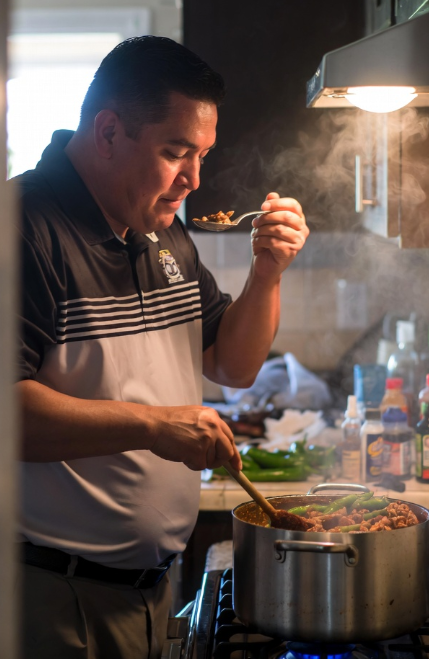
Saturday afternoon I made carne asada for a small dinner — just the six of us. (Hayley was at her family's lake place for the weekend. Sofia's friends were at a different lake place. The twins' friends were everywhere except our backyard.) The marinade I have been refining for fifteen years — lime juice, orange juice, garlic, smoked paprika, oregano, cumin, soy sauce in small amounts because soy sauce in small amounts is one of those secret weapons that food writers do not tell you about, fresh cilantro, a glug of olive oil, and a single chipotle in adobo for backbone. I marinated flank steak overnight. I grilled it hot and fast over hardwood — pecan, which I had a half-bag of from a Texas trip last spring — and I sliced it thin against the grain on a wood board on the patio table.
Diego came out and asked if he could grill the corn. I said yes. This is a recent development. Until about a year ago, Diego watched me grill but did not put hands on the grill. Sometime around the end of his junior year he started saying, casually, "I will do the corn." Or, "I will flip the chicken." Or, "I will start the fire." And I have been letting him, with the unstated understanding that he is preparing for the version of his life where he is not going to be at this grill anymore — that he is taking notes by hand, that he is internalizing the rhythm of how a Saturday afternoon cookout actually happens. I have not said anything about this. I have just handed him the tongs.
Saturday he did the corn. He brushed each ear with butter and a sprinkle of red chile and a squeeze of lime. He laid them on the hot side of the grill and turned them every two minutes for ten minutes. The kernels charred. The butter sizzled. He brought them in on a tray and Lisa applauded like he had cured cancer. Marco said, "Diego made the corn." Elena said, "I know, dummy. We were watching." Marco said, "Do not call me dummy." Elena said, "Sorry." Lisa intervened with a look. Peace was restored.
We ate at the patio table at six. Carne asada, grilled corn, charro beans Lisa had been simmering for three hours, fresh tortillas, a salsa I had made from tomatillos and serranos that morning. The twins ate with their hands. Sofia ate carefully but with an unusual level of enthusiasm — she had run a hard workout that morning and was hungry in a way she has not been hungry in months. Diego ate enough for two. Lisa ate the way she has always eaten on Saturdays after a long week — slowly, with savor, with the kind of present-moment attention that says I am not going to rush through this. I ate with the silent satisfaction of a man who has cooked dinner for his family for nineteen years and has not gotten tired of it yet, and may not, ever.
Diego sat across from me at the table. We did not say much. We looked at each other a few times and grinned. Some of it was about the corn. Some of it was about the year. Some of it was about the fact that the boy across the table was about to be a senior, and that the man across the table — me — was going to coach him for one more season, and that whatever happened next would be a thing we would both remember for the rest of our lives. We did not have to say any of it. The grin was enough. Feed your people. The game is won at the table.
I had used pecan wood from a Texas trip last spring to grill the flank steak that night, and when dinner was cleared and the kids drifted off to their various corners of the house, I still had a half-pound of chopped pecans in a bag on the counter — left over from a batch of buttercrunch I had been meaning to make all spring and never gotten around to. Closure and beginnings both deserve something sweet. I melted the butter and cooked the sugar and made something crunchy and simple and good, the kind of thing that does not require explanation, the kind of thing that just sits on a tray and gets picked at until it is gone.
Pecan Buttercrunch
Prep Time: 10 minutes | Cook Time: 20 minutes | Total Time: 30 minutes + 1 hour cooling | Servings: 24 pieces
Ingredients
- 1 cup (2 sticks) unsalted butter
- 1 cup granulated sugar
- 2 tablespoons water
- 1 tablespoon light corn syrup
- 1/4 teaspoon fine salt
- 1 teaspoon pure vanilla extract
- 1 1/2 cups chopped pecans, divided
- 1 cup semi-sweet chocolate chips (optional)
Instructions
- Prepare the pan. Line a rimmed baking sheet with parchment paper or a silicone baking mat. Spread 3/4 cup of the chopped pecans in an even layer across the bottom of the pan and set aside.
- Cook the toffee base. In a heavy-bottomed saucepan over medium-high heat, combine the butter, sugar, water, corn syrup, and salt. Stir constantly until the butter is fully melted and the mixture is smooth. Once melted, stop stirring and cook undisturbed until a candy thermometer reads 300°F (hard crack stage), about 12–15 minutes. Watch carefully — the color will shift to a deep amber just before it is ready.
- Finish the toffee. Remove the pan from heat. Working quickly and carefully, stir in the vanilla extract and the remaining 3/4 cup chopped pecans.
- Pour and spread. Immediately pour the hot toffee over the pecan layer on the prepared baking sheet. Use a heat-resistant spatula to spread it into an even layer about 1/4 inch thick.
- Add chocolate (optional). Scatter the chocolate chips over the surface of the hot toffee. Let them sit undisturbed for 2 minutes to melt, then spread the softened chocolate into an even layer with the spatula.
- Cool completely. Let the buttercrunch cool at room temperature for at least 1 hour, or refrigerate for 30 minutes, until the toffee and chocolate are fully hardened. Once set, break into irregular pieces by hand or with the back of a spoon.
- Store. Keep in an airtight container at room temperature, layered between sheets of parchment, for up to two weeks — if it lasts that long.
Nutrition (per serving)
Calories: 168 | Protein: 1g | Fat: 13g | Carbs: 14g | Fiber: 1g | Sodium: 52mg