
 By
By The corporate luncheon Wednesday November 11 went well. The small recurring revenue-stream continues into year four.
The small Tulsa-apartment continues to be the small home. The small two-bedroom rental in the small midtown Tulsa neighborhood has been the small Bryant-residence since the move from the smaller previous apartment in January 2021. The small twelve-unit walk-up building is the small working-class pocket the small family of three (then four, then five) has been built in.
The small Tulsa family-network continues. Shelly (Kaylee’s mother) is the small Dollar General assistant-manager in Broken Arrow. Cody (Kaylee’s brother) is in the small halfway-house in Tulsa working at the small car-wash and trying to stay clean. Shelly’s boyfriend Roy drives a small bread-truck. The small geography of the small family rests on the small Tulsa-Broken-Arrow corridor.
The small Wednesday-night-dinners with Shelly at the small Kaylee-and-Dustin-apartment are the small family-business of a small kind. The small Shelly-plays-with-the-grandkids while Kaylee-cooks routine. The small closest-thing-to-a-normal-family-dinner Kaylee never had growing up. The small ritual has held for years.
The small budget-cooking-blog is the small Kaylee-creative-outlet. The small posts-with-the-receipts ($3.47-for-the-chicken-bake, $2.12-for-the-soup). The small audience of young-moms and small broke-families who want to eat well on the small tight-budget. The small Kaylee-message: you can feed five-on-$5-a-meal and here is how.
Dustin’s HVAC-career continues. The small shift from apprentice to journeyman-licensed has been the small career-trajectory. The small Dustin-makes-decent-money-for-Tulsa rate. The small future-house-down-payment-saving is the small two-or-three-year plan.
The small Dustin-Turner-parents-in-Owasso are the small in-law family network. The small annual-and-frequent visits the small twenty-minute-Owasso-drive enables. The small Turner-family is the small adjacent-stable-family Kaylee married into.
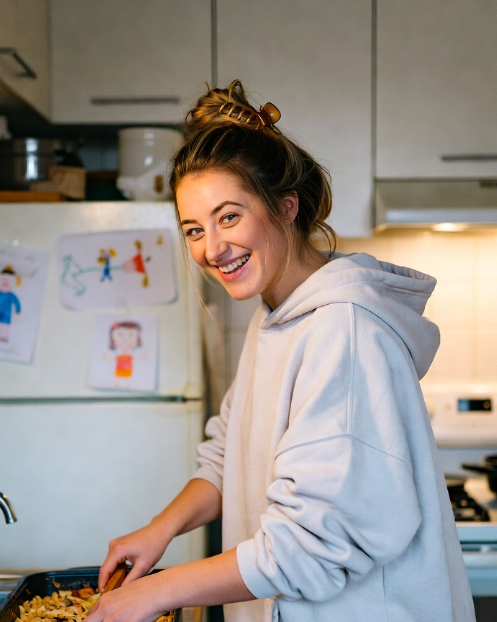
The small Sunday-publishing-rhythm of the recipe blog continues to be the small organizing-spine of the small week. The small Sunday-cooking happens in the small late-morning-to-early-afternoon window. The small photographing of the finished dish happens at the small three-PM kitchen-light-window. The small writing-up of the recipe happens at the small four-PM workspace at the kitchen-counter. The small final-edit happens at the small five-PM. The small post publishes at seven PM. The small ritual has been running for years.
The small recipe-development-philosophy continues to be the small small-batch-test-then-publish approach. The small first cook of a small new recipe happens on the small Saturday afternoon. The small adjustments are noted in the small kitchen-notebook. The small second cook happens Sunday with the small adjustments incorporated. The small Sunday-cook is the small version that gets photographed and published. The small two-test process catches the small recipe-flaws before they reach the small reader.
The small kitchen-equipment-inventory has the small key-pieces that show up in nearly every recipe. The small heavy-bottomed Dutch oven for the small braises. The small twelve-inch cast-iron skillet for the small sears and the small pan-roasts. The small half-sheet baking-pans for the small roasted vegetables and the small cookies. The small wooden-spoon-collection in the small ceramic-pitcher on the counter. The small chef’s-knife and the small paring-knife and the small bread-knife that are the small daily-tools.
The small grocery-shopping rhythm runs through the small Tuesday-evening trip and the small Saturday-morning top-off. The small Tuesday-trip is the small weekly-stock-up for the small staples and the small produce and the small protein. The small Saturday-trip is the small quick-fill for whatever the small Sunday-recipe requires that is not already in the small pantry. The small two-trip-per-week pattern keeps the small grocery-bill manageable and the small food-waste low.
The small meal-planning happens on the small Sunday-evening for the small week-ahead. The small dinners are mapped out across the small Monday-through-Saturday. The small repeating-meals are slotted in (the small pasta-Monday, the small taco-Tuesday or similar pattern). The small new-recipes are slotted for the small Wednesday-or-Thursday for the small variety. The small planning ahead reduces the small daily what-are-we-making-for-dinner stress.
The small weekday-cooking is the small efficient-and-fast mode. The small Sunday-cooking is the small slow-and-careful mode. The small two-modes serve the small two-different-needs. The small weekday-cooking has to be on the small table within forty-five minutes of getting home from the small work-or-school-pickup. The small Sunday-cooking can take three hours and benefit from every minute of that time.
The small recipe-archive on the small blog has grown to many hundreds of recipes over the years. The small archive is the small searchable-resource for the small weekday-meal-planning. The small reader-feedback in the small comments-section helps refine the small recipes over time. The small note-from-a-reader who tried a small substitution that worked better than the small original gets incorporated into the small recipe-revision.
The small Sunday-cooking-and-writing rhythm is the small thing that has held across years of life-changes and family-events and small ordinary-weekday-disruptions. The small constant is the small Sunday. The small constant is the small recipe. The small constant is the small posting-at-seven-PM ritual. The small constant is the small reader on the other end of the small post who is going to read the small recipe and try the small recipe in the small reader’s own kitchen.
Wednesday’s luncheon wrapped up the way the good ones always do — quietly, with clean plates and a polite thank-you at the door — and I drove home thinking about the small fact that this little catering revenue stream has now quietly held for four years, the same four years we’ve been in this apartment, the same four years I’ve been publishing on Sundays at seven. The Pecan Butter Tarts are the reason that client keeps calling. I tested them on a Saturday, adjusted the sugar ratio in my kitchen notebook, cooked them again Sunday, photographed them at three in the afternoon light, and published them the way I publish everything — and somehow they became the recipe that built a small, steady, bittersweet little business out of a Tulsa midtown kitchen.
Pecan Butter Tarts
Prep Time: 25 min (plus 30 min chill) | Cook Time: 22 min | Total Time: ~1 hr 20 min | Servings: 12 tarts
Ingredients
- Pastry Shell
- 1 1/4 cups all-purpose flour
- 1/4 tsp salt
- 1/2 cup cold unsalted butter, cut into small cubes
- 3–4 tbsp ice water
- Pecan Filling
- 1/2 cup packed dark brown sugar
- 1/4 cup unsalted butter, melted and slightly cooled
- 1/4 cup light corn syrup (or pure maple syrup for a richer flavor)
- 1 large egg, lightly beaten
- 1 tsp pure vanilla extract
- 1/4 tsp salt
- 3/4 cup pecans, roughly chopped
Instructions
- Make the pastry. Whisk together flour and salt in a medium bowl. Add cold butter cubes and work in with your fingertips or a pastry cutter until the mixture resembles coarse crumbs with a few pea-sized pieces remaining. Add ice water one tablespoon at a time, mixing gently with a fork just until the dough comes together. Shape into a disc, wrap tightly, and refrigerate for at least 30 minutes.
- Preheat and prep. Heat oven to 375°F. Lightly grease a standard 12-cup muffin tin.
- Roll and cut the shells. On a lightly floured surface, roll the chilled dough out to about 1/8-inch thickness. Using a 3 1/2-inch round cutter (or the rim of a wide glass), cut 12 circles. Press each circle gently into a muffin cup, nudging it up the sides. Refrigerate the prepared shells while you make the filling.
- Mix the filling. In a medium bowl, whisk together the melted butter, brown sugar, corn syrup, beaten egg, vanilla, and salt until smooth and fully combined. Do not overmix.
- Fill the shells. Divide the chopped pecans evenly among the chilled pastry shells, placing them in the bottom of each cup. Pour the filling over the pecans, filling each shell about 3/4 full — the filling will puff as it bakes.
- Bake. Bake at 375°F for 20–22 minutes, until the filling is set around the edges but still has a very slight jiggle at the center and the pastry is golden. Do not overbake; a little soft in the middle is correct.
- Cool completely. Let tarts cool in the pan for 10 minutes, then run a thin knife around each edge and transfer to a wire rack. Cool at least 20 minutes before serving. The filling will firm as it cools. Store covered at room temperature up to 2 days or refrigerate up to 5 days.
Nutrition (per serving)
Calories: 278 | Protein: 3g | Fat: 18g | Carbs: 28g | Fiber: 1g | Sodium: 118mg