
 By
By The light is back with a vengeance — sixteen hours and climbing, the Alaskan spring that compensates for winter with the generosity of a friend who missed your birthday and brings twice the gifts. The mountains are shedding their snow. The creeks are running. The moose calves are everywhere — gangly, absurd, following their mothers through parking lots and across highways with the confidence of animals who don't know they weigh fifty pounds and will eventually weigh twelve hundred.
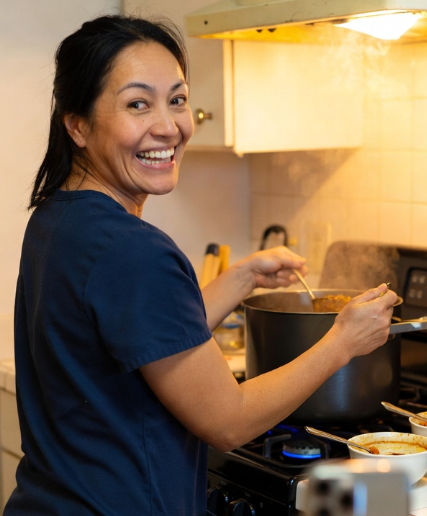
I'm writing more for the blog. Three posts this month — a pace I haven't maintained since the summer cooking marathon. The posts are less recipe-focused now and more story-focused, the recipes embedded in narratives about family and Alaska and the particular experience of being a second-generation Filipino-American who carries a country in her recipes but has never set foot in it. The audience for this kind of writing is specific — immigrant children, mostly, the ones who inherited the food but not the place, who make their parents' recipes in kitchens their parents never saw, who are homesick for a home they've never lived in.
There's a word for this in Filipino: "hiraya" — the fruit of one's hopes and dreams. There's another: "gigil" — the urge to squeeze something because it's so cute you can't contain the feeling. There's no word for what I feel about the Philippines — the longing for a place you've never been, the homesickness for a home that isn't yours except through blood and recipe and the particular vibration of your mother's voice when she says "Iloilo."
I made pinakbet this week — the Ilocano vegetable stew with bitter melon — and I thought about words and the lack of them and how cooking is the language that fills the gaps. The bitter melon was bitter. The shrimp paste was funky. The squash was sweet. All of it together was something that no single ingredient could be alone, the combination creating a flavor that is more than the sum of its parts. Like me. Like the blog. Like the particular alchemy of a woman who speaks English and cooks Filipino and dreams in a language she doesn't fully understand.
The pinakbet was good. The bitter melon added its necessary edge. The writing continues. The Iloilo Fund grows. The light is sixteen hours. The moose calves are absurd. The spring is here. The spring is generous. The kitchen is the room where all the languages I speak come together and make a meal.
The pinakbet was the centerpiece this week — the bitter melon doing its honest, difficult work — but it’s the side dishes that teach me the same lesson every time: vegetables don’t need much to be themselves. This quick pea pod and onion dish is what I made alongside it, the bright, clean sweetness of snap peas and soft onion acting as a kind of counterpoint to all that funk and bitterness, a reminder that a meal, like a language, is built from contrast. It’s barely a recipe — fifteen minutes, a pan, a handful of ingredients — but it holds its own at the table the way a single true word holds its own in a paragraph.
Pea Pods with Onion
Prep Time: 5 min | Cook Time: 10 min | Total Time: 15 min | Servings: 4
Ingredients
- 1 lb fresh sugar snap peas or snow peas, strings removed
- 1 medium yellow onion, thinly sliced
- 2 tablespoons butter
- 1 tablespoon olive oil
- 2 cloves garlic, minced
- 1/2 teaspoon salt
- 1/4 teaspoon black pepper
- 1/4 teaspoon sugar (optional, to enhance sweetness)
- 1 tablespoon water or vegetable broth
Instructions
- Prep the vegetables. Rinse the pea pods and pat dry. Remove any tough strings along the seams. Slice the onion into thin half-moons and mince the garlic.
- Soften the onion. Heat butter and olive oil together in a large skillet over medium heat. Add the sliced onion and cook, stirring occasionally, for 4–5 minutes until softened and just beginning to turn golden at the edges.
- Add garlic. Stir in the minced garlic and cook for 30 seconds until fragrant, being careful not to let it brown.
- Cook the pea pods. Add the pea pods to the skillet along with the water or broth. Toss to coat. Cook over medium-high heat for 3–4 minutes, stirring frequently, until the peas are bright green and just tender-crisp — they should still have a little snap.
- Season and serve. Season with salt, pepper, and a pinch of sugar if desired. Toss once more and transfer to a serving dish. Serve immediately alongside rice or as a simple side to any main.
Nutrition (per serving)
Calories: 110 | Protein: 3g | Fat: 7g | Carbs: 9g | Fiber: 3g | Sodium: 310mg