April. The garden is calling. The soil is thawing. The rhubarb shoots are pushing through the dirt like small red fists, determined and Scandinavian. I got on my knees on Saturday and checked the beds — the garlic planted last fall is sprouting, green tips poking through the mulch, alive, having survived the winter underground the way everything in Duluth survives the winter: stubbornly, invisibly, emerging when the time is right.
I planted peas. The first planting of the season, the same act of faith I've performed every April since 1989. Peas don't mind the cold. Peas are the advance guard. You put them in and you trust the dirt and you wait.
Sven watched from a sunny patch in the yard. He's thirteen. The number is real now — thirteen years of golden retriever, which is beyond the average, beyond the expectation, a bonus year that I hold gratefully and carefully, the way you hold a glass that's too full. He moves slowly. He sleeps deeply. He still follows me from room to room, but the following is slower, the padding of paws on hardwood measured and deliberate instead of the eager trotting of youth.
I don't think about the math. I said I wouldn't. I won't.
Elsa came for dinner on Tuesday. She's been different lately — lighter, happier, a quality to her voice that I haven't heard before. She talked about work (Jay Cooke, the spring programming, the school groups returning after COVID) and she talked about the trails and she talked about a canoe trip she's planning and she didn't talk about anything else but the not-talking had a shape — the shape of something unsaid, something held back, something coming.
I didn't push. Elsa will tell me when she's ready. Johansson women don't rush disclosures.
I made an April dinner: asparagus risotto. Not Swedish. Not even close. An Italian dish in a Swedish kitchen, the rice stirred for thirty minutes with broth and Parmesan and the first asparagus of the season. Paul would have said, "This is not Duluth food." I would have said, "Duluth food is whatever I make in Duluth." The argument would have been gentle and funny and the risotto would have been eaten regardless.
I ate the risotto. Two places. One plate. The risotto was creamy and green and tasted like April.
The peas are in the ground. The rhubarb is up. The risotto is good. Sven is sleeping in the sun.
April. The month of planting. The month of trust.
Paul was right that risotto isn’t Duluth food — and Pasta Boscaiola isn’t either, and I make it anyway, for the same reason I made the risotto: because good food doesn’t care about geography, and an April dinner deserves something rich and unhurried. This is a woodsman’s pasta, mushrooms and pancetta folded into cream, and it has the same quality as the risotto — the kind of dish that fills a kitchen with a smell that makes everything feel settled. I made it the following week, thinking about Elsa’s secret smile, and I stirred it the way I stir all things worth waiting for: slowly, with patience, trusting the process.
Pasta Boscaiola
Prep Time: 10 minutes | Cook Time: 25 minutes | Total Time: 35 minutes | Servings: 4
Ingredients
- 12 oz penne or rigatoni pasta
- 4 oz pancetta, diced (or thick-cut bacon)
- 1 medium yellow onion, finely diced
- 3 cloves garlic, minced
- 10 oz cremini or mixed mushrooms, sliced
- 1/2 cup dry white wine
- 1 cup heavy cream
- 1/2 cup chicken or vegetable broth
- 1/2 cup freshly grated Parmesan, plus more for serving
- 2 tablespoons olive oil
- Salt and black pepper to taste
- Fresh flat-leaf parsley, roughly chopped, for garnish
Instructions
- Cook the pasta. Bring a large pot of well-salted water to a boil. Cook pasta according to package directions until al dente. Reserve 1/2 cup pasta water before draining. Set aside.
- Render the pancetta. In a large deep skillet over medium heat, cook the diced pancetta until lightly golden and the fat has rendered, about 4–5 minutes. Remove pancetta with a slotted spoon and set aside, leaving the fat in the pan.
- Sauté the aromatics. Add the olive oil to the same skillet. Add the onion and cook over medium heat, stirring occasionally, until softened and translucent, about 4 minutes. Add the garlic and cook 1 minute more until fragrant.
- Cook the mushrooms. Add the sliced mushrooms to the pan in a single layer. Let them sit undisturbed for 2 minutes to brown, then stir and continue cooking until all liquid has evaporated and mushrooms are golden at the edges, about 6–7 minutes. Season with salt and pepper.
- Deglaze and build the sauce. Pour in the white wine and stir, scraping up any browned bits from the bottom of the pan. Let it reduce by half, about 2 minutes. Add the broth and cream. Bring to a gentle simmer and cook, stirring occasionally, until the sauce thickens slightly, about 4–5 minutes.
- Combine and finish. Return the pancetta to the pan. Add the drained pasta and toss to coat thoroughly. Stir in the Parmesan and a splash of reserved pasta water if the sauce is too thick. Taste and adjust seasoning.
- Serve. Divide among four shallow bowls. Top with additional Parmesan and a generous handful of fresh parsley. Serve immediately.
Nutrition (per serving)
Calories: 610 | Protein: 21g | Fat: 30g | Carbs: 63g | Fiber: 4g | Sodium: 690mg
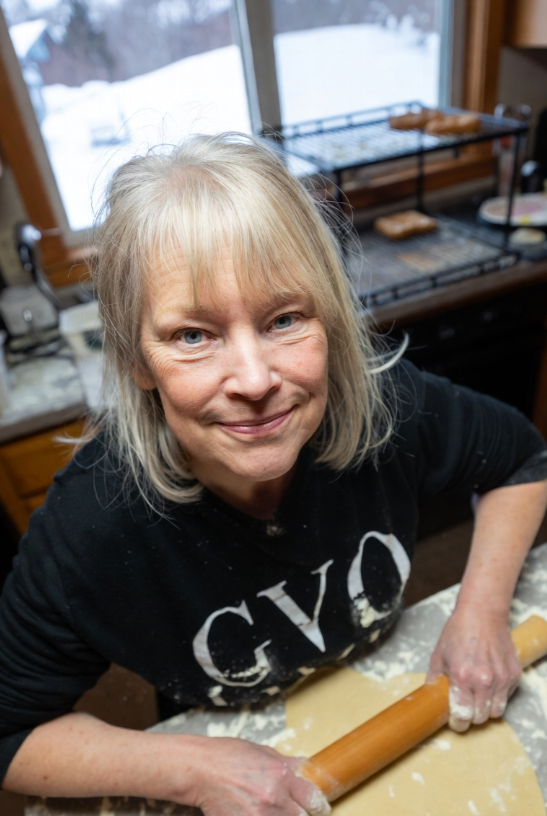
About the cook who shared this
Linda Johansson
Week 262 of Linda’s 30-year story
· Duluth, Minnesota
Linda is a sixty-three-year-old retired nurse from Duluth, Minnesota, living alone in the house where she raised her children and said goodbye to her husband. She lost Paul to ALS in 2020 after two years of watching the kindest man she'd ever known lose everything but his dignity. She cooks Scandinavian comfort food and Minnesota hotdish and the pot roast Paul loved, and she sets two places at the table out of habit because it makes her feel less alone. Every recipe she writes is a person she's loved.
