
 By
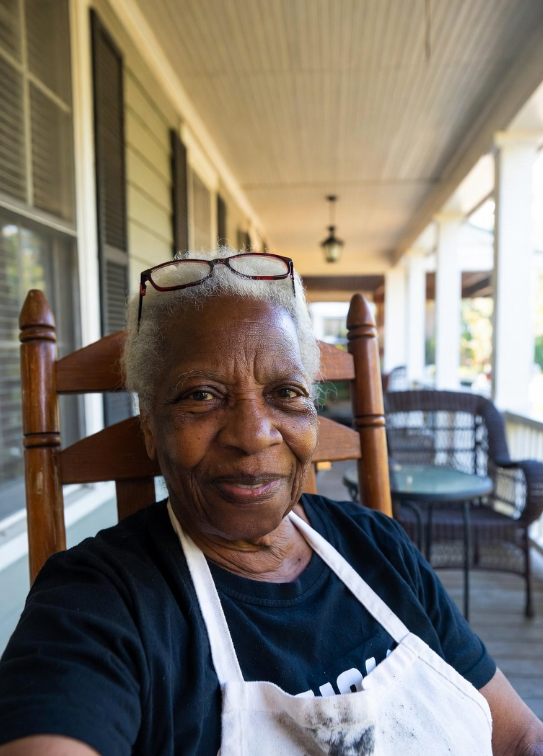
By Michael said "Gruh." He was looking at the collard greens on his plate — the tiny, chopped pieces I give him at every meal because collard greens are mandatory in this family and the mandate begins at birth — and he said, "Gruh." Not "greens." Not "collards." "Gruh." But the intent was clear. He was pointing at the greens. He was asking for more greens. He was saying the word that his brain has decided is the word for the dark, leafy, three-hours-cooked food that his great-grandmother puts on his plate at every single meal without exception.
"Gruh" is his thirteenth word. The vocabulary now includes: nah (everything), mo (more), mama, dada, na-na (me), hot (the stove), dog (all animals), ba (watermelon), shoe (any footwear), wa-wa (water), up (up and also down, he hasn't sorted the distinction yet), bye-bye (departure and also arrival), and now gruh (collard greens). The boy's first food word that isn't "mo" is COLLARD GREENS. I repeat: his first specific food word is collard greens. Not "cookie." Not "juice." Collard greens. The Henderson curriculum is working. The teaching is embedding. The greens are in his language now, the way the greens are in my language and Hattie Pearl's language and the language of every woman who has cooked them in this kitchen.
I called Gladys to tell her. "Gladys," I said, "my great-grandson's first food word is greens." Gladys said, "Dorothy, that's beautiful." I said, "Gladys, it's better than beautiful. It's proof that the Lord is on my side and the food is doing its work." Gladys laughed. Gladys understands. Gladys has been watching me cook greens for thirty years and she knows what the greens mean: they mean survival, they mean memory, they mean the continuation of a cuisine that was built by people who had nothing and made everything, and now a twenty-month-old boy is saying the word, and the word is the beginning of the knowing.
Made collard greens tonight. Three hours. Turkey neck. The whole pot, the full ritual. Because "gruh" deserves the full ritual. Because a boy who says "greens" at twenty months deserves the three-hour greens, the real greens, the greens that have been simmering in this family for a hundred years and will simmer for a hundred more.
Now go on and feed somebody.
When a twenty-month-old boy uses one of his first words to ask for a dark leafy green, you don’t just cook the greens — you cook everything that belongs beside them. The full table. The ritual spread. Because “gruh” wasn’t just a word; it was an invitation, and an invitation like that deserves a response. These oven-roasted vegetables are what I set alongside the pot that night — simple, honest, nothing hidden, the kind of cooking that teaches a child’s hands and mouth and memory all at once that vegetables are what we do, and we do them right.
Oven-Roasted Vegetables
Prep Time: 15 minutes | Cook Time: 40 minutes | Total Time: 55 minutes | Servings: 6
Ingredients
- 2 cups broccoli florets
- 2 medium carrots, peeled and cut into 1/2-inch coins
- 1 medium zucchini, sliced into 1/2-inch half-moons
- 1 red bell pepper, seeded and cut into 1-inch pieces
- 1 yellow bell pepper, seeded and cut into 1-inch pieces
- 1 medium red onion, cut into 1-inch wedges
- 3 cloves garlic, minced
- 3 tablespoons olive oil
- 1 teaspoon kosher salt
- 1/2 teaspoon black pepper
- 1/2 teaspoon garlic powder
- 1/2 teaspoon dried thyme
- 1/4 teaspoon smoked paprika
- Fresh parsley, chopped, for garnish (optional)
Instructions
- Preheat. Heat your oven to 425°F. Line a large rimmed baking sheet (or two standard sheets) with parchment paper or foil for easy cleanup.
- Prep the vegetables. Wash and cut all vegetables into similarly sized pieces so they roast evenly. Pat them dry with a clean kitchen towel — moisture is the enemy of a good roast.
- Season. Place all vegetables in a large bowl. Drizzle with olive oil and sprinkle with salt, black pepper, garlic powder, thyme, smoked paprika, and minced garlic. Toss well until every piece is evenly coated.
- Arrange. Spread the vegetables in a single layer across the prepared baking sheet(s). Do not crowd the pan — give them room to roast, not steam. Use two pans if needed.
- Roast. Roast for 20 minutes, then remove the pan and flip or stir the vegetables. Return to the oven and roast for another 15–20 minutes, until the edges are golden and caramelized and the carrots are fork-tender.
- Finish and serve. Remove from the oven. Taste and adjust salt if needed. Garnish with fresh parsley if using. Serve immediately alongside your main — or right next to a big pot of long-cooked greens, the way it was meant to be.
Nutrition (per serving)
Calories: 110 | Protein: 3g | Fat: 7g | Carbs: 11g | Fiber: 3g | Sodium: 310mg