Sophie stayed through the week. We cooked together every day — not because I planned it that way but because she kept appearing in the kitchen with questions. "Grandma, how do you know when the bread dough is ready?" "Grandma, why does your gravy taste different from restaurant gravy?" "Grandma, show me how you hold the knife." She's hungry for knowledge in the way that nursing students are hungry for knowledge — not just the facts but the feel of it, the muscle memory, the instinct.
I taught her to make limpa rye bread. The full process — measuring the flour by weight, not volume (this is a hill I will die on), proofing the yeast, mixing the dough by hand because the stand mixer doesn't give you the feedback you need, kneading for ten minutes until the dough is smooth and slightly tacky. She kneaded with the focused intensity of a future nurse and the dough responded. "It feels alive," she said. "It is alive," I said. "You're feeding yeast. They're eating sugar and breathing out carbon dioxide." She said, "That's kind of beautiful." She's right. It is.
I also taught her to make Pappa's favorite — fiskgratäng, a fish gratin with a béchamel sauce, layered with sliced potatoes and dill, baked until golden. It's the most Swedish comfort food I know — fish, cream, dill, potatoes, everything from the lake and the garden — and it was the meal Mamma made on Pappa's birthday every year without fail, even in the years after he died, because she made it for Pappa and Pappa's birthday still happens even if Pappa doesn't.
Sophie listened to this and said, "Cooking is how you keep people." I said, "Yes." She said, "Even after they're gone." I said, "Especially after they're gone."
Nineteen years old and she understands the thing that took me decades to learn. Some people arrive at the truth faster than others. Sophie is one of those people.
Paul gave Sophie a shipwreck book before she left — "The Wreck of the Edmund Fitzgerald: Complete Account" — inscribed: "For Sophie, who has her grandmother's hands and her grandfather's curiosity." Sophie hugged him. Paul is not a hugger but he accepted it with grace and a slight clearing of the throat that is the Paul Johansson equivalent of sobbing.
She drove back to Minneapolis on Sunday. The house was quiet again. I stood in the kitchen and the flour was still on the counter and Sophie's apron was still on the hook and I left both of them there for a day because I wanted the evidence of her presence to last a little longer.
I made a quiet dinner: eggs. Scrambled eggs with dill and rye bread. The simplest meal I know. After a week of teaching and cooking and feeling, sometimes simple is all you have left. And simple is enough.
Sophie asked me why the fiskgrätäng tasted like home, and I told her it was because the ingredients were honest — fish, cream, dill, potatoes, nothing hiding behind anything else. This one-pan orzo with tuna and zucchini belongs to the same family of thinking: simple, warm, built around fish and whatever the garden offers, ready in under thirty minutes on a weeknight when you want something nourishing but don’t have the afternoon that a proper gratin demands. I made this the Tuesday of her visit, between the bread and the béchamel lesson, and she ate two bowls. That’s all the review a recipe needs.
One Pan Orzo with Tuna and Zucchini
Prep Time: 10 min | Cook Time: 25 min | Total Time: 35 min | Servings: 4
Ingredients
- 2 tablespoons olive oil
- 1 medium yellow onion, finely diced
- 3 cloves garlic, minced
- 2 medium zucchini, cut into 1/2-inch dice
- 1 cup orzo pasta (about 6 oz)
- 2 1/2 cups low-sodium vegetable or chicken broth
- 2 cans (5 oz each) tuna packed in water, drained well
- 1/2 cup cherry tomatoes, halved
- 1 lemon, zested and juiced
- 3 tablespoons fresh dill, roughly chopped (or 2 tablespoons flat-leaf parsley)
- 1/4 teaspoon red pepper flakes (optional)
- Salt and freshly ground black pepper to taste
- Grated Parmesan or Pecorino for serving
Instructions
- Soften the aromatics. Heat olive oil in a large, wide skillet or sauté pan over medium heat. Add the diced onion and cook, stirring occasionally, until softened and translucent, about 5 minutes. Add the garlic and cook 1 minute more, until fragrant but not browned.
- Cook the zucchini. Add the diced zucchini to the pan. Season with a pinch of salt. Cook, stirring occasionally, until the zucchini has softened slightly and taken on a little color at the edges, about 4 minutes. You want it tender but not mushy — it will continue cooking with the orzo.
- Toast the orzo. Add the dry orzo directly to the pan and stir to coat every piece in the oil. Cook for 1 to 2 minutes, stirring constantly, until the orzo smells lightly nutty and looks just faintly golden. This step builds flavor and helps the orzo hold its shape.
- Simmer until absorbed. Pour in the broth and bring to a boil, scraping up any bits from the bottom of the pan. Reduce heat to medium-low and simmer uncovered, stirring every couple of minutes to prevent sticking, until the orzo is just tender and has absorbed most of the liquid, 10 to 12 minutes. If it tightens up before the orzo is done, add broth or water a splash at a time.
- Add the tuna and tomatoes. Nestle the drained tuna into the pan, breaking it into flakes as you go. Add the halved cherry tomatoes, lemon zest, and lemon juice. Stir gently and cook 2 to 3 minutes until everything is heated through and the tomatoes have softened.
- Finish with herbs and serve. Remove the pan from heat. Stir in the fresh dill and red pepper flakes if using. Taste and adjust salt and pepper. Divide into bowls and top generously with grated Parmesan. Serve immediately.
Nutrition (per serving)
Calories: 375 | Protein: 28g | Fat: 9g | Carbs: 44g | Fiber: 3g | Sodium: 510mg
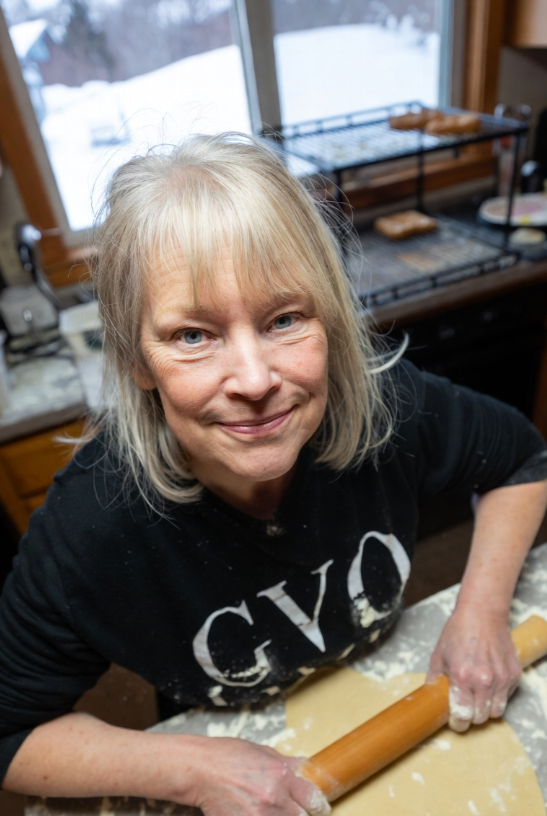
About the cook who shared this
Linda Johansson
Week 60 of Linda’s 30-year story
· Duluth, Minnesota
Linda is a sixty-three-year-old retired nurse from Duluth, Minnesota, living alone in the house where she raised her children and said goodbye to her husband. She lost Paul to ALS in 2020 after two years of watching the kindest man she'd ever known lose everything but his dignity. She cooks Scandinavian comfort food and Minnesota hotdish and the pot roast Paul loved, and she sets two places at the table out of habit because it makes her feel less alone. Every recipe she writes is a person she's loved.
