
 By
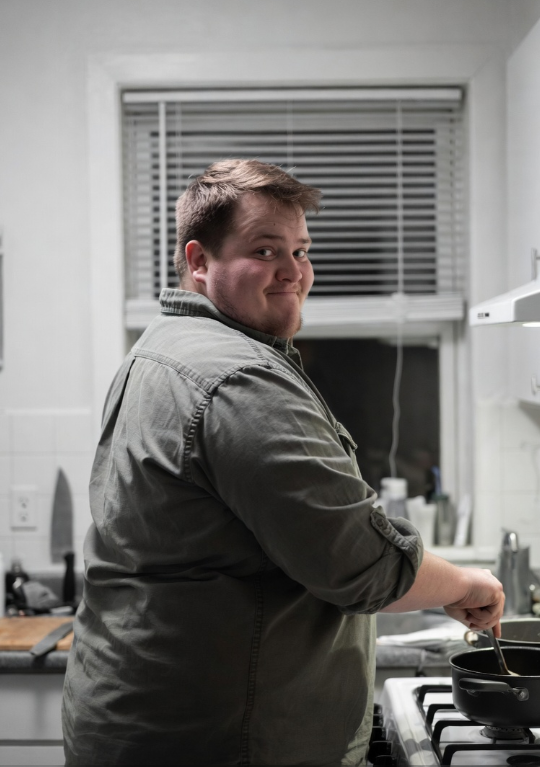
By The bread was the thing I was most proud of that day — my second attempt ever, and it actually worked. I’d been scared of yeast for years, convinced I’d kill it or under-proof it or end up with a dense brick, but there’s something about being snowed in with nowhere to go that makes you brave. Old-Fashioned Oat Bread was the recipe I landed on: the oats give it a little chew and a slightly nutty flavor, the crust goes golden and crackly, and the whole apartment smelled like a bakery while Mike and his girlfriend warmed up on the couch. It’s the kind of loaf that makes people feel like you really have your life together, even when you’re wearing the same sweatpants you slept in.
Old-Fashioned Oat Bread
Prep Time: 25 min | Cook Time: 35 min | Total Time: 2 hrs 30 min (includes rise time) | Servings: 14 slices
Ingredients
- 1 cup boiling water
- 1 cup old-fashioned rolled oats, plus extra for topping
- 1/3 cup molasses
- 2 tablespoons unsalted butter, softened
- 1 1/2 teaspoons salt
- 1 package (2 1/4 teaspoons) active dry yeast
- 1/4 cup warm water (about 110°F)
- 1 teaspoon sugar
- 3 to 3 1/2 cups all-purpose flour, divided
- 1 egg white, lightly beaten (for brushing)
Instructions
- Soak the oats. In a large bowl, pour the boiling water over the rolled oats. Stir in the molasses, butter, and salt. Let the mixture cool until it reaches about 110°F, roughly 15 to 20 minutes — warm to the touch but not hot.
- Proof the yeast. In a small bowl, combine the warm water and sugar. Sprinkle the yeast over the top and let it sit for 5 to 10 minutes, until foamy. If it doesn’t foam, your yeast may be old — start over with a fresh packet.
- Mix the dough. Stir the yeast mixture into the cooled oat mixture. Add 2 cups of flour and stir until a shaggy dough forms. Continue adding flour, 1/4 cup at a time, until the dough pulls away from the sides of the bowl and is tacky but not sticky.
- Knead. Turn the dough out onto a lightly floured surface and knead for 8 to 10 minutes, until smooth and elastic. The dough should spring back when poked. Add flour sparingly — a slightly tacky dough bakes up lighter than an over-floured one.
- First rise. Place the dough in a lightly oiled bowl and turn to coat. Cover with a clean towel or plastic wrap and let rise in a warm spot until doubled in size, about 1 hour.
- Shape the loaf. Punch the dough down and turn it onto a lightly floured surface. Shape it into a smooth log and place it seam-side down in a greased 9x5-inch loaf pan. Cover and let rise again until the dough crowns about 1 inch above the rim of the pan, 30 to 45 minutes.
- Bake. Preheat the oven to 375°F. Brush the top of the loaf with the beaten egg white and sprinkle with a handful of oats. Bake for 30 to 35 minutes, until deep golden brown. The loaf should sound hollow when tapped on the bottom.
- Cool. Let the bread cool in the pan for 10 minutes, then transfer to a wire rack. Resist cutting into it for at least 20 minutes — the crumb needs time to set, and you’ll get cleaner slices and a better texture if you wait.
Nutrition (per serving)
Calories: 165 | Protein: 5g | Fat: 2g | Carbs: 31g | Fiber: 2g | Sodium: 260mg