Christmas Eve. The julbord. Twenty-two people at the table. The meatballs in the center. The candles lit. The herring on its platter. Everything the same as every year except everything is different because I know something that most of the people at this table don't know, and the knowing sits inside me like a stone.
Paul and I decided to wait until after Christmas to tell the kids. "Let them have Christmas," Paul said. I agreed because he was right and because I needed Christmas too — one more Christmas where the word hadn't been spoken aloud to anyone except Dr. Andersen and the two of us, one more Christmas where the table was set for celebration and not for grief.
Paul gave his toast. He stood at the head of the table — his spot, next to Mamma's spot — and he held his glass in his right hand (his left hand was in his lap, hidden, not holding anything) and he said: "To this table. To the people at it. To the cook who made it possible." He looked at me. "To Linda." Everyone raised their glasses. I smiled. My smile was the best performance of my life.
Mamma brought her meatballs. Three hundred, as always. She sat in her chair and ate everything and drank her aquavit without wincing and she was eighty-seven (her birthday was Thursday) and fierce and alive and she looked at Paul during the toast and something passed across her face — a flicker, a question — and I thought: she sees it. Mamma sees something. Mamma, who has been watching her children and their spouses for sixty years, who noticed when Pappa started drinking more after Lars, who noticed when Erik started sleeping less after the mill — Mamma sees that something is different about Paul.
She didn't say anything. She ate her meatballs. She's waiting. She's doing what I'm doing: watching. Waiting. Knowing without knowing.
Peter came. He came and he looked better than Thanksgiving — still thin, still haunted, but he ate and he talked and he sat with Elsa and argued about wolves versus ships (Elsa's favorite topic versus Paul's, a holiday tradition) and for two hours he was Peter again, the Peter from before the marriage went wrong.
The rice pudding. The almond. Sophie found it this year. She held it up and grinned and the table cheered and I thought: good luck for the year. She'll need it. We'll all need it. Every scrap of luck available.
Paul dropped a serving spoon during dinner. It clattered on the table and he said, "Butterfingers," and laughed, and everyone laughed except me and except Mamma, who looked at the spoon and then at me with eyes that were sixty years of watching people and I looked away because if Mamma's eyes met mine for one more second I would break.
I did the dishes at midnight. Alone. The kitchen. The water. The platters. The same ritual as last year. But last year I stood at this sink and felt full and this year I stand at this sink and feel the fullness and the emptiness at the same time and both are real and both are heavy.
The julbord was perfect. The word doesn't cancel Christmas.
But the spoon dropped. And Mamma saw. And the year is ending. And the new year is bringing something I can't stop, and I rolled the meatballs and I set the table and I fed the family and I did the dishes and none of it — none of it — will fix what's coming.
Happy Christmas. God jul. The candles are out. The house is sleeping. I am writing this at one AM at the kitchen table and Paul is asleep and Sven is asleep and the meatball platters are clean and the year is almost over and next year will be the hardest year of my life.
I know this. I know this the way I know the lake is there in the dark — by feel, by weight, by the sound of something enormous and unchangeable.
Mamma’s meatballs were the center of the table — three hundred of them, same as every year — and I have made this recipe my own in the years since I learned to roll them beside her at the kitchen counter, both of us quiet in the particular way you are quiet when something matters too much to say out loud. These Norwegian vegetarian meatballs are not exactly hers — hers are a family secret I will carry until I pass it on — but they are close enough in spirit to belong on a julbord, close enough to mean something when meaning is what you need most. I made them this year because my hands needed something to do, and because the table deserved to be full, and because some rituals you keep not in spite of what’s coming but because of it.
Norwegian Vegetarian Meatballs
Prep Time: 20 minutes | Cook Time: 25 minutes | Total Time: 45 minutes | Servings: 6 (approximately 24 meatballs)
Ingredients
- 1 cup cooked green or brown lentils, drained and patted dry
- 1 cup old-fashioned rolled oats
- 1/2 cup finely grated Parmesan or aged Jarlsberg (or nutritional yeast for fully vegan)
- 1/2 cup finely diced yellow onion
- 2 cloves garlic, minced
- 2 large eggs (or 2 flax eggs for vegan: 2 tbsp ground flaxseed + 6 tbsp water, rested 5 minutes)
- 2 tbsp unsalted butter or olive oil, divided
- 1 tsp allspice
- 1/2 tsp ground nutmeg
- 1/2 tsp white pepper
- 1 tsp fine sea salt
- 1 tbsp soy sauce or tamari
- 2 tbsp fresh flat-leaf parsley, finely chopped
For the pan gravy:
- 2 tbsp unsalted butter
- 2 tbsp all-purpose flour
- 1 1/2 cups warm vegetable broth
- 1/2 cup whole milk or oat milk
- 1 tsp Dijon mustard
- Salt and white pepper to taste
Instructions
- Sauté the aromatics. Melt 1 tablespoon of the butter in a skillet over medium heat. Add the diced onion and cook until soft and translucent, about 5 minutes. Add the garlic and cook 1 minute more. Remove from heat and let cool slightly.
- Build the mixture. In a large bowl, combine the lentils, oats, cheese (or nutritional yeast), sauteed onion and garlic, eggs, soy sauce, allspice, nutmeg, white pepper, salt, and parsley. Stir well until everything is evenly incorporated. The mixture should hold together when pressed — if it feels too wet, add a tablespoon of oats; if too dry, add a teaspoon of water.
- Rest the mixture. Cover the bowl and refrigerate for 15 minutes. This helps the oats absorb moisture and makes rolling much easier.
- Roll the meatballs. Using slightly damp hands, roll the mixture into balls about 1 1/4 inches in diameter (roughly the size of a large walnut). Place on a parchment-lined baking sheet. You should get approximately 24 meatballs.
- Pan-fry until golden. Heat the remaining tablespoon of butter in a wide skillet over medium-high heat. Working in batches to avoid crowding, cook the meatballs 6–8 minutes total, turning gently every 2 minutes, until deeply golden on all sides. Transfer to a plate and keep warm.
- Make the gravy. In the same skillet, melt 2 tablespoons butter over medium heat. Whisk in the flour and cook 1 minute until the paste turns pale gold. Gradually pour in the warm broth, whisking constantly to prevent lumps. Add the milk and Dijon mustard. Simmer 3–4 minutes until the gravy thickens to a pourable, glossy consistency. Season with salt and white pepper.
- Finish and serve. Return the meatballs to the skillet and spoon the gravy over them. Let everything warm together for 2 minutes before serving. Traditionally served alongside boiled or mashed potatoes, lingonberry jam, and pickled cucumber.
Nutrition (per serving)
Calories: 285 | Protein: 13g | Fat: 12g | Carbs: 30g | Fiber: 6g | Sodium: 540mg
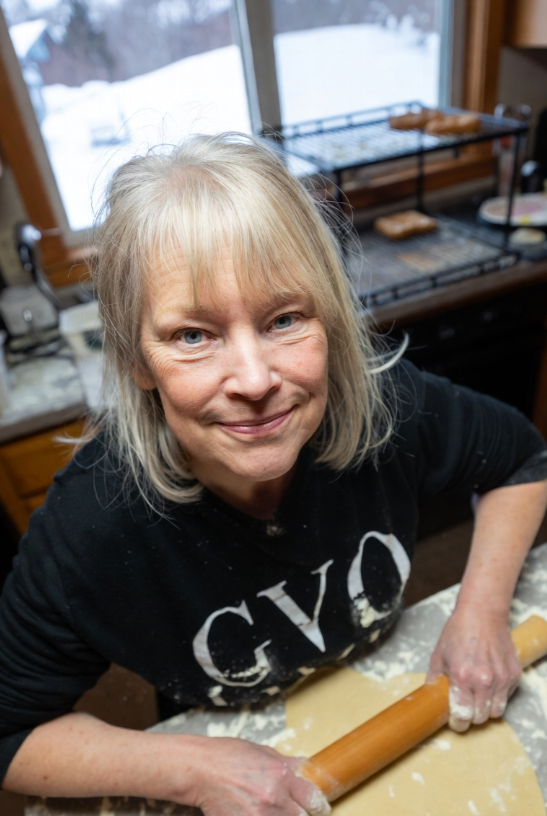
About the cook who shared this
Linda Johansson
Week 92 of Linda’s 30-year story
· Duluth, Minnesota
Linda is a sixty-three-year-old retired nurse from Duluth, Minnesota, living alone in the house where she raised her children and said goodbye to her husband. She lost Paul to ALS in 2020 after two years of watching the kindest man she'd ever known lose everything but his dignity. She cooks Scandinavian comfort food and Minnesota hotdish and the pot roast Paul loved, and she sets two places at the table out of habit because it makes her feel less alone. Every recipe she writes is a person she's loved.
