
 By
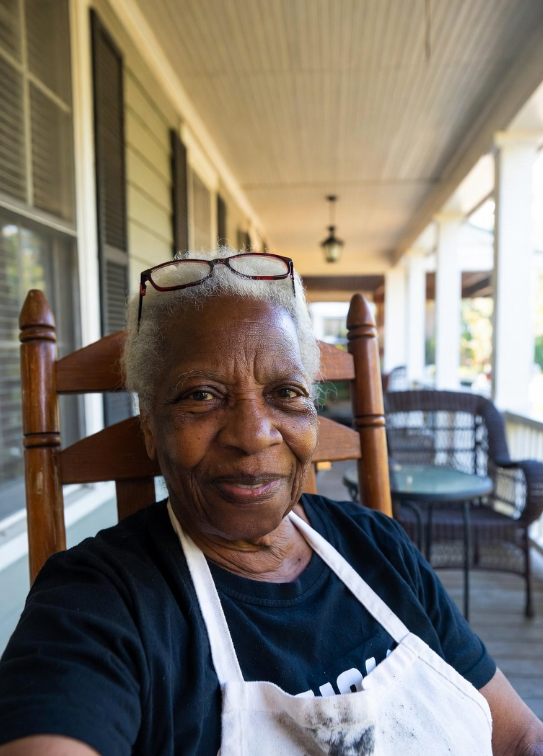
By New Year's Eve 2027. The end of a year that gave me Pearl and took nothing. Read that again: took nothing. No deaths. No funerals. No sitting in black in the third pew. Earl Jr.'s cancer came and went and left him alive. Ruthie Mae is still in Augusta, still foggy, still sometimes knowing me and sometimes not — but alive. Miss Vernelle is eighty-nine and still pulling shrimp. Gladys is still baking cobbler. The church is still standing. The table is still set.
A year that took nothing. Do you know how rare that is? In this family? In any family? A year where the only direction is addition? Where the only math is more? This family has known years of subtraction — the year Michael died, the year Earl died, the years that took James Jr. and Bernice and Clarence. We know subtraction. We are experts in subtraction. But 2027 was addition. Only addition. Pearl was born. Michael turned two. Earl Jr. survived cancer. The cooking class taught six people to feed themselves. The watermelon grew for the third year. The boil fed two hundred and fifty-one people. And nobody died. Nobody left. Nobody's chair went empty.
I am sitting in the kitchen at nine p.m. — not even trying for midnight, not even pretending — with journal volume twenty-nine and the last cup of tea of 2027. The tea is unsweetened. The journal is full. The year is finished. And I am grateful in a way that goes past grateful and into something I don't have a word for but that tastes like relief and smells like the kitchen and sounds like a two-year-old saying "na-na" and a two-month-old baby named Pearl breathing in a crib twelve minutes away.
Made black-eyed peas. Brown rice. The tradition. The luck that isn't luck. The food that says: next year will hold us. Next year will feed us. Next year will find us at this table, in this kitchen, with these hands and this skillet and this love that doesn't end when the year does.
Happy New Year, baby. May your table be long and your greens be three hours and your cornbread have no sugar.
Now go on and feed somebody.
After the black-eyed peas and the brown rice — after the luck and the ritual and the quiet prayer of it all — I always want something sweet to pull apart with my hands, something that asks you to reach in and share. This Monkey Bread is that thing: a bread that doesn’t slice, doesn’t portion, doesn’t divide neatly — it just gives itself away, piece by piece, to whoever is sitting at the table. In a year of only addition, that felt exactly right. You don’t cut this one. You just pull, and pass, and eat, and stay.
Monkey Bread
Prep Time: 20 minutes | Cook Time: 35 minutes | Total Time: 55 minutes (plus 1 hour rise) | Servings: 10–12
Ingredients
- 3 cans (7.5 oz each) refrigerated biscuit dough, cut into quarters
- 3/4 cup granulated sugar
- 2 teaspoons ground cinnamon
- 1/2 teaspoon ground nutmeg
- 1/2 cup (1 stick) unsalted butter
- 3/4 cup packed light brown sugar
- 1 teaspoon pure vanilla extract
- 1/4 teaspoon fine sea salt
- Cooking spray or softened butter, for the pan
Instructions
- Prep the pan. Preheat your oven to 350°F. Generously grease a 10- or 12-cup Bundt pan with cooking spray or softened butter, making sure to coat all the ridges.
- Make the cinnamon sugar coating. In a large zip-top bag or wide bowl, combine the granulated sugar, cinnamon, and nutmeg. Stir or shake to mix.
- Coat the dough pieces. Working in batches, add the quartered biscuit pieces to the cinnamon sugar and toss until every piece is well coated. Layer the coated pieces evenly into the prepared Bundt pan.
- Make the caramel pour. In a small saucepan over medium heat, melt the butter with the brown sugar, vanilla, and salt. Stir until the sugar dissolves and the mixture is smooth and just beginning to bubble, about 2–3 minutes. Remove from heat.
- Assemble. Pour the warm caramel sauce evenly over the dough pieces in the pan, letting it seep down into the gaps.
- Bake. Bake on the center rack for 30–35 minutes, until the top is deep golden brown and the caramel is bubbling up the sides. If it browns too quickly, tent loosely with foil for the last 10 minutes.
- Rest and invert. Let the bread cool in the pan for exactly 5 minutes — no longer, or the caramel will harden and stick. Place a large plate or platter over the top of the pan and carefully invert in one confident motion. Let the pan sit for 30 seconds before lifting it off.
- Serve warm. Serve immediately, pulling pieces apart by hand. This is not a slicing bread. Reach in, pull, share.
Nutrition (per serving)
Calories: 390 | Protein: 4g | Fat: 16g | Carbs: 58g | Fiber: 1g | Sodium: 520mg