
 By
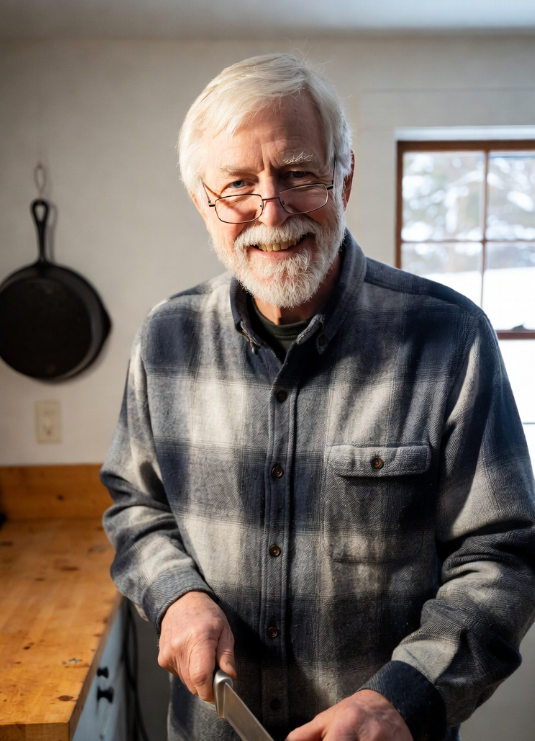
By Snow all week. Not a blizzard — Vermont doesn't do blizzards with the drama of the Midwest, we just get a steady, relentless accumulation that adds up to eighteen inches by Friday and requires shoveling the walkway every six hours, which is exercise I didn't ask for and my left leg didn't vote for. The shrapnel has opinions about shoveling. The shrapnel's opinion is: don't. I overrule the shrapnel. The walkway isn't going to shovel itself, and I'm not hiring someone to do what a Bergstrom has always done himself.
I made minestrone. The Italian answer to winter, if the Italians had to deal with Vermont-grade winter, which they don't, and I suspect that's by design. The recipe is Helen's adaptation of something from a cookbook she bought in 1985 and has modified every year since: cannellini beans, diced tomatoes (from our summer canning), carrots, celery, onion, garlic, zucchini (frozen from the August surplus), pasta, spinach added at the end. Parmesan on top. It's a kitchen-sink soup in the best sense — everything goes in, everything contributes, and the whole is greater than the sum of its parts, which is true of soup and families and, I suspect, Vermont itself.
The house during a snowstorm is my favorite version of the house. The windows rattle slightly — they're old, they've been rattling since my parents' time — and the snow piles up on the sills and the world outside disappears into white and the world inside contracts to the stove, the chair, the book, the dog. It's Thoreau's "Simplicity, simplicity, simplicity" made physical. You don't need anything from out there. Everything you need is in here. The beans are on the shelf. The wood is by the stove. The bread is in the box. Simplify.
Helen read two novels this week. She reads during snowstorms the way I cook: intensely, without interruption, with the focus of someone who has found the thing that makes the day make sense. She sat in the chair by the window with a blanket and Frost at her feet and a cup of tea and she was, for those hours, completely unreachable and completely content. I didn't disturb her. You don't disturb a person who's reading. That was the first thing I taught my students. That and Hemingway.
Sarah called Saturday. She and Tom are trying for the second baby. She said it quietly, the way you say things you want but are afraid to want too much. I said, "Good." I meant: I hope you get everything you want. I said "Good" because I'm a Bergstrom and that's how we say the big things. In small words. Quietly. And hope they land.
The snow stopped Sunday. The plows came. The world returned. The minestrone is gone. Make more.
Helen’s minestrone is the soup I cook every Vermont winter and will keep cooking until my arms won’t let me lift the pot — but when the last of it is gone and the week has been long and the shrapnel is still voicing its opinions, you need something that works by the same logic without requiring you to start from scratch. This Mediterranean Pasta Primavera is that dish: pantry beans, frozen zucchini from August, canned tomatoes from the shelf, pasta from the box. Everything goes in, everything contributes, and the kitchen smells like you knew what you were doing all along. That’s all you can really ask of a winter recipe.
Mediterranean Pasta Primavera
Prep Time: 15 minutes | Cook Time: 25 minutes | Total Time: 40 minutes | Servings: 6
Ingredients
- 12 oz penne or farfalle pasta
- 3 tablespoons olive oil
- 4 cloves garlic, minced
- 1 medium zucchini, sliced into half-moons
- 1 yellow bell pepper, diced
- 1 cup cherry tomatoes, halved
- 1 can (14 oz) artichoke hearts, drained and quartered
- 1/2 cup Kalamata olives, pitted and halved
- 2 tablespoons capers, drained
- 1 can (15 oz) cannellini beans, drained and rinsed
- 1 teaspoon dried oregano
- 1/2 teaspoon red pepper flakes
- Salt and black pepper to taste
- Juice of 1 lemon
- 1/4 cup fresh basil leaves, torn
- 1/2 cup grated Parmesan cheese, plus more for serving
Instructions
- Cook the pasta. Bring a large pot of well-salted water to a boil. Cook pasta according to package directions until al dente. Before draining, reserve 1/2 cup of pasta cooking water. Drain and set aside.
- Build the base. Heat olive oil in a large skillet or Dutch oven over medium heat. Add garlic and cook, stirring, for about 1 minute until fragrant but not browned.
- Sauté the vegetables. Add zucchini and bell pepper to the skillet. Cook 5–6 minutes, stirring occasionally, until tender and beginning to pick up a little color at the edges.
- Add the Mediterranean elements. Stir in cherry tomatoes, artichoke hearts, olives, capers, and cannellini beans. Season with oregano, red pepper flakes, salt, and black pepper. Cook 3–4 minutes until tomatoes begin to soften and the beans are warmed through.
- Combine with pasta. Add the drained pasta directly to the skillet and toss everything together. Add reserved pasta water a few tablespoons at a time as needed to help the sauce coat the pasta evenly.
- Finish and serve. Remove from heat. Squeeze lemon juice over the top and scatter torn basil across the pan. Divide into bowls and finish with a generous handful of Parmesan. Serve immediately, with extra cheese on the side.
Nutrition (per serving)
Calories: 415 | Protein: 16g | Fat: 12g | Carbs: 63g | Fiber: 8g | Sodium: 510mg