The cane arrived on Tuesday. Black, adjustable, rubber-tipped. It came in a box from Amazon and I unpacked it in the kitchen and leaned it against the counter and it looked like an accusation. A cane. My husband needs a cane.
Paul looked at it and said, "Does it come in shipwreck pattern?" I laughed. I laughed because Paul is still Paul and Paul makes jokes when the world cracks and the jokes are the glue.
He used it for the first time on Wednesday, for his morning walk. Shorter now — not the lakewalk, just around the block — but he walked. Right hand on the cane. Left arm at his side. His gait was cautious, deliberate, the gait of a man who knows the ground isn't trustworthy anymore. But he walked. He came home and said, "I feel like my grandfather." I said, "Your grandfather used two canes." He said, "I'm working up to it."
The physical therapy started on Thursday. A therapist named Maria comes to the house — twice a week, an hour each time. She's young and competent and she works Paul through exercises: leg stretches, balance work, core strengthening. Paul tolerates it with the patience of a man who has been tolerating things since June 2017 and has gotten very good at it.
I watch the PT sessions from the kitchen. I can't watch from the room — I'd interfere, I'd correct, I'd be a nurse instead of a wife. So I watch from the kitchen doorway and I make food while Maria makes Paul stronger, and the parallel activities — strengthening the body, feeding the body — are the two things I can do.
Mamma called on Sunday. "How is Paul?" Always the first question. I said, "He's using a cane now." She was quiet. Then she said, "Your father used a cane at the end." Pappa. The last months of his cancer. The cane by the door. I remember it — black, wooden-handled, the tap-tap-tap on the hallway floor. I remember the sound of my father becoming smaller.
I said, "It's different, Mamma." She said, "It's always different. It's always the same."
She's right. The cane is different. The disease is different. The man is different. But the sound is the same — the tap of wood on floor, the rhythm of a body asking for help, the particular music of decline.
I made kalops — Swedish beef stew — because October is approaching and stew weather is here and because the stew is warm and thick and can be eaten with a spoon in one hand and doesn't require cutting or stabbing or any of the motor skills that are leaving Paul's body one by one.
Paul ate a bowl and said, "The cane isn't so bad." I said, "No." He said, "It's a tool. Like a reading stand. Like adaptive silverware." I said, "Yes." He said, "It's not who I am. It's what I use."
It's what I use. Not who I am. Paul, the historian, the teacher, the man who understands that people are not their limitations. People are what they carry. And Paul carries a cane now, and the carrying doesn't diminish him. The carrying is just carrying.
I made this stew the same week Paul brought home his cane — because October asked for it, because the PT sessions left him tired and hungry, and because a bowl you can eat with one hand and a spoon felt like the kindest thing I could offer. Kalops is the Swedish stew of my childhood, but this meatball version is what I reach for when I want something thick and grounding and easy to get onto a spoon without ceremony. It’s the kind of food that doesn’t ask anything of the person eating it — and some weeks, that’s everything.
Meatball Stew
Prep Time: 20 min | Cook Time: 45 min | Total Time: 1 hr 5 min | Servings: 6
Ingredients
- 1 lb ground beef (85% lean)
- 1/4 cup plain breadcrumbs
- 1 large egg
- 1 tsp garlic powder
- 1 tsp salt, divided
- 1/2 tsp black pepper, divided
- 2 tbsp olive oil
- 1 medium yellow onion, diced
- 3 medium carrots, sliced into 1/2-inch rounds
- 3 stalks celery, sliced
- 3 medium Yukon Gold potatoes, cut into 1-inch cubes
- 4 cups low-sodium beef broth
- 1 can (14.5 oz) diced tomatoes, undrained
- 2 tbsp tomato paste
- 1 tsp dried thyme
- 1 bay leaf
- 2 tbsp cornstarch
- 2 tbsp cold water
- Fresh parsley, chopped, for serving (optional)
Instructions
- Form the meatballs. In a medium bowl, combine ground beef, breadcrumbs, egg, garlic powder, 1/2 tsp salt, and 1/4 tsp pepper. Mix until just combined — do not overwork. Roll into 1-inch balls (about 24 meatballs).
- Brown the meatballs. Heat olive oil in a large Dutch oven or heavy pot over medium-high heat. Working in batches, brown the meatballs on all sides, about 3–4 minutes per batch. Transfer to a plate; they do not need to be cooked through at this stage.
- Sauté the vegetables. In the same pot, reduce heat to medium. Add onion, carrots, and celery. Cook, stirring occasionally, until softened, about 5 minutes. Scrape up any browned bits from the bottom of the pot.
- Build the stew base. Add potatoes, beef broth, diced tomatoes with their juices, tomato paste, thyme, bay leaf, and remaining 1/2 tsp salt and 1/4 tsp pepper. Stir to combine and bring to a boil over medium-high heat.
- Simmer the vegetables. Reduce heat to medium-low, cover, and simmer until potatoes are just beginning to soften, about 15 minutes.
- Add the meatballs. Return the browned meatballs to the pot. Cover and continue simmering until meatballs are cooked through and potatoes are tender, about 10–12 more minutes.
- Thicken the broth. In a small bowl, whisk cornstarch with cold water until smooth. Stir the slurry into the simmering stew and cook uncovered, stirring gently, until the broth thickens, about 3 minutes. Remove and discard the bay leaf.
- Serve. Ladle into bowls and top with chopped fresh parsley if desired. Serve with crusty bread or over egg noodles.
Nutrition (per serving)
Calories: 330 | Protein: 22g | Fat: 13g | Carbs: 30g | Fiber: 4g | Sodium: 670mg
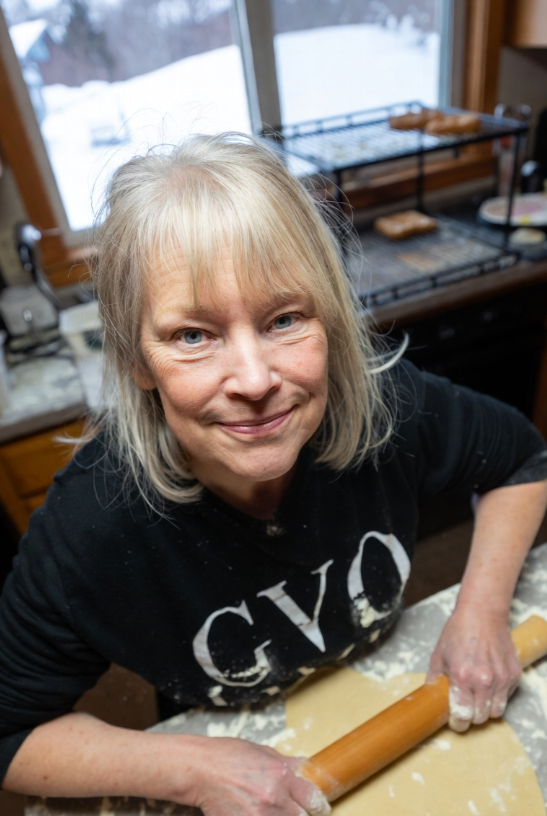
About the cook who shared this
Linda Johansson
Week 131 of Linda’s 30-year story
· Duluth, Minnesota
Linda is a sixty-three-year-old retired nurse from Duluth, Minnesota, living alone in the house where she raised her children and said goodbye to her husband. She lost Paul to ALS in 2020 after two years of watching the kindest man she'd ever known lose everything but his dignity. She cooks Scandinavian comfort food and Minnesota hotdish and the pot roast Paul loved, and she sets two places at the table out of habit because it makes her feel less alone. Every recipe she writes is a person she's loved.
