
 By
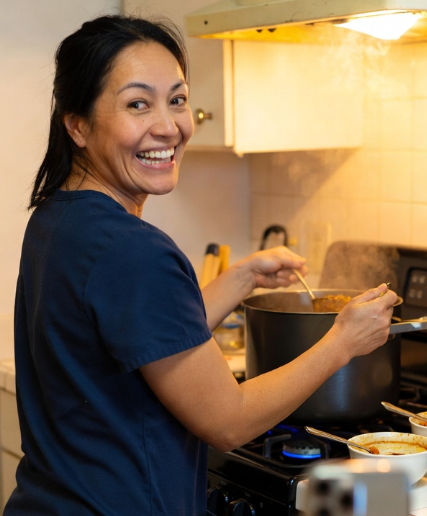
By A quiet week at the ER. Not objectively quiet — there is no objectively quiet in an ER — but quiet by pandemic standards, the January lull between the holiday surge and whatever comes next. I used the quiet to write. A long blog post about cooking in deep winter — the specific Alaskan challenge of January cooking, when the darkness outside is so total that the kitchen becomes the entire world, the only lit room, the only warm room, the room where all living happens.
I wrote about the ingredients of January: frozen salmon from Joseph's Kodiak catch. Root vegetables from the fall harvest, stored in the garage where the cold is a natural refrigerator. Canned goods. Dried goods. The pantry staples that carry an Alaskan kitchen through the months when fresh produce is a plane ride away and costs more than some people's rent. I wrote about the creativity of constraint — how cooking in Alaska in January is an exercise in limitation that produces some of the most interesting food, the way a sonnet's fourteen lines produce some of the most interesting poetry. The limitation is the freedom. The constraint is the canvas.
The post did well. Ten thousand views. The readers in the Lower 48 are fascinated by the specifics of Alaskan isolation — the cost of groceries in rural villages, the impossibility of fresh herbs in January, the fact that a gallon of milk can cost sixty dollars if you live in the wrong zip code. The fascination is its own kind of connection. They read about my kitchen. I imagine their kitchens. The imagining is the bridge.
I made salmon fried rice — leftover salmon from Sunday's sinigang, broken into flakes, fried with day-old rice and garlic and soy sauce and a fried egg on top. The efficiency of it — the transformation of leftovers into a new meal — is the January philosophy: nothing wasted. Every ingredient has a second life. Every leftover has a future. The salmon fried rice was simple and perfect and I ate it standing up and then sat down because standing while eating is the tell and sitting is the correction and the correction is the practice and the practice is the life.
That salmon fried rice reminded me how much I love a marinade — the way a handful of pantry ingredients can transform a plain piece of fish into something that tastes intentional and complete. Catfish is the kind of fish that rewards that same philosophy: humble, accessible, and absolutely alive when you give it time to soak up something good. This marinated catfish has become my go-to when I want the satisfaction of a real meal without the complexity, which is exactly the mood January produces in me — the desire for something grounding, something that requires patience but not performance.
Marinated Catfish Fillets
Prep Time: 15 min + 30 min marinating | Cook Time: 10 min | Total Time: 55 min | Servings: 4
Ingredients
- 4 catfish fillets (about 6 oz each)
- 1/4 cup soy sauce
- 2 tablespoons olive oil
- 2 tablespoons fresh lemon juice
- 1 tablespoon Worcestershire sauce
- 3 cloves garlic, minced
- 1 teaspoon onion powder
- 1/2 teaspoon smoked paprika
- 1/2 teaspoon black pepper
- 1/4 teaspoon cayenne pepper (optional)
- 2 tablespoons chopped fresh parsley, for serving
- Lemon wedges, for serving
Instructions
- Make the marinade. In a small bowl, whisk together the soy sauce, olive oil, lemon juice, Worcestershire sauce, garlic, onion powder, smoked paprika, black pepper, and cayenne (if using) until well combined.
- Marinate the fish. Place the catfish fillets in a shallow dish or zip-top bag. Pour the marinade over the fillets, turning to coat evenly. Cover and refrigerate for at least 30 minutes and up to 2 hours. Do not marinate longer than 2 hours or the lemon juice will begin to break down the fish.
- Bring to room temperature. Remove the fillets from the refrigerator 10 minutes before cooking and let them rest at room temperature. Pat them lightly dry with paper towels, leaving some marinade clinging to the surface.
- Heat the pan. Heat a large cast-iron skillet or heavy-bottomed pan over medium-high heat. Add a light drizzle of olive oil and let it shimmer but not smoke.
- Cook the fillets. Add the catfish fillets in a single layer. Cook for 4—5 minutes per side, depending on thickness, until the fish is golden brown on the outside and flakes easily with a fork at its thickest point. Avoid moving the fillets while they cook so a proper crust forms.
- Rest and serve. Transfer the cooked fillets to a plate and let rest for 2 minutes. Sprinkle with fresh parsley and serve with lemon wedges alongside rice, roasted vegetables, or crusty bread.
Nutrition (per serving)
Calories: 290 | Protein: 34g | Fat: 14g | Carbs: 4g | Fiber: 0g | Sodium: 820mg