
 By
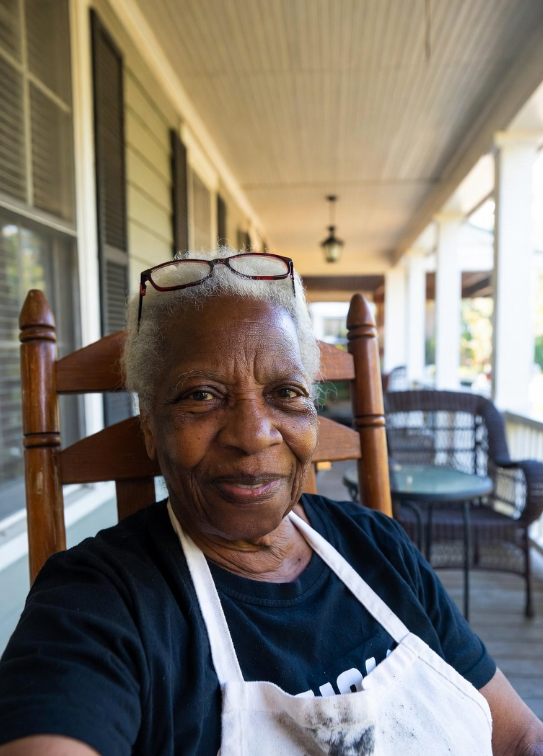
By I drove by the Thunderbolt house this week. I don't do it often — it's not on the way to anything anymore, not the way it used to be when I lived there and everywhere was on the way from there. But I had a doctor's appointment near the marsh and the route home went past our street, Earl's street, the street where we raised four children and buried the memory of a fifth.
The house looks good. The young couple from Atlanta — I don't remember their names, which bothers me, but I remember they promised to keep the garden — they've painted the trim. Blue. Earl would have opinions about blue trim. Earl had opinions about everything related to that house because he maintained it for thirty years with his own hands, replacing what needed replacing, fixing what needed fixing, keeping what needed keeping. The garden is still there. I could see it from the road — the raised beds Earl built, the tomato cages, the pepper patch. Different plants but the same bones. The bones are what matter.
I didn't stop. I wanted to, but stopping would mean getting out of the car, and getting out of the car would mean standing on the sidewalk in front of the house where my husband died and my son's memory lived and my grandchildren played in the sprinkler on Saturday mornings, and I wasn't ready for that today. Some days you can look at the past from the car. Some days you have to drive by and keep going.
Came home and sat in the garden. Not the Thunderbolt garden — the garden here, at the house, the one Robert helped me plant. It's smaller. The soil is different. The light comes from a different angle. But the tomatoes don't care about any of that. The tomatoes just grow. The peppers just flower. The okra just reaches. The garden doesn't mourn the old garden. The garden just does what gardens do: it produces. It feeds. It lives in the present tense.
I should learn from the garden.
Made fried okra tonight. The garden's first offering of the season — small pods, tender, not yet tough. Sliced, dredged in cornmeal, fried in the cast iron. Crispy outside, soft inside, the way okra wants to be when you treat it right. Served with hot sauce — my hot sauce, from the Sapelo peppers, the sixth generation — and white rice. Simple. Present tense. Enough.
Now go on and feed somebody.
The okra was supper. But the garden kept giving after supper was done — the peppers still heavy on the vine, the tomatoes splitting in the heat — and gardens don’t wait for grief to finish its business. Mamma’s Caponata is what I make when the garden is ahead of me: a little eggplant, a little pepper, tomatoes, olives, the sweet-sour pull of vinegar and sugar that somehow tastes like being taken care of. It lives in the same present tense as the fried okra, as the cast iron, as the raised beds Earl built that are still standing in a yard I no longer own. You make it with whatever’s ready. You serve it warm or at room temperature. You don’t overthink it.
Mamma’s Caponata
Prep Time: 20 minutes | Cook Time: 35 minutes | Total Time: 55 minutes | Servings: 6
Ingredients
- 1 large eggplant (about 1 1/2 lbs), cut into 3/4-inch cubes
- 1 teaspoon kosher salt, plus more to taste
- 3 tablespoons olive oil, divided
- 3 stalks celery, sliced 1/4-inch thick
- 1 medium yellow onion, diced
- 3 cloves garlic, minced
- 1 can (14 oz) diced tomatoes, drained
- 1/2 cup green olives, pitted and roughly chopped
- 2 tablespoons capers, drained and rinsed
- 3 tablespoons red wine vinegar
- 1 tablespoon sugar
- 1/4 cup toasted pine nuts
- 1/4 teaspoon black pepper
- Fresh basil leaves, torn, for serving
Instructions
- Salt the eggplant. Toss cubed eggplant with 1 teaspoon kosher salt in a colander. Let drain over the sink for 15 minutes, then pat dry with a clean kitchen towel. This draws out bitterness and helps the eggplant hold its shape in the pan.
- Brown the eggplant. Heat 2 tablespoons olive oil in a large, heavy skillet or cast-iron pan over medium-high heat. Add the eggplant in a single layer and cook, stirring occasionally, until golden brown on most sides, about 8 to 10 minutes. Transfer to a plate and set aside.
- Build the base. Reduce heat to medium. Add the remaining 1 tablespoon olive oil to the pan. Add celery and onion and cook, stirring often, until softened and beginning to turn golden at the edges, about 7 minutes. Add garlic and cook 1 minute more until fragrant.
- Add tomatoes and seasoning. Stir in the drained diced tomatoes, olives, and capers. Cook for 5 minutes, stirring occasionally, until the tomatoes break down slightly and the mixture thickens.
- Finish with sweet and sour. Stir in the red wine vinegar and sugar. Return the browned eggplant to the pan. Stir gently to combine everything without breaking up the eggplant. Taste and adjust salt and pepper. Cook together for 5 minutes more over low heat so the flavors come together.
- Rest and serve. Remove from heat and fold in the toasted pine nuts. Let the caponata sit for at least 10 minutes before serving — it improves as it rests. Serve warm or at room temperature, topped with torn fresh basil. Goes well alongside crusty bread, white rice, or as a side to simply prepared fish or chicken.
Nutrition (per serving)
Calories: 160 | Protein: 3g | Fat: 11g | Carbs: 15g | Fiber: 4g | Sodium: 410mg