April. The cruelest month, the poet said, and I don't disagree. The ice is out. The world is thawing. Paul sits in his wheelchair by the window and watches spring arrive from inside the glass and the glass is a border he can't cross because his body won't let him and the spring doesn't care.
Paul's speech is gone. Completely now. The whispered words of the morning — the ghost-voice I held onto — have stopped. The communication device is his voice now. He types with his right index finger, slowly, one letter at a time, and the machine speaks the words, and I have learned to hear Paul in the machine the way you learn to hear music in a recording — it's not the live performance, but the melody is there.
I read to him for two hours every evening now. Elsa reads the other nights. Between us, Paul hears a human voice for four or five hours a day, and the hearing is what keeps him connected to the world of language, which is the world he's lived in his entire life. A teacher without a voice. A historian without the ability to tell stories. The cruelty is specific.
But the typing is fast — faster than I expected. Paul's right index finger moves across the tablet with a determined speed that surprised Dr. Andersen at the last visit. He types full sentences, paragraphs, even. He types comments about what I'm reading. He types questions. He types jokes. He typed this week: "Linda, the machine says my words but it can't do my tone. Tell the machine I'm being sarcastic." I laughed. The machine can't do sarcasm. But Paul can type it.
I planted peas on Saturday. In the garden, in the cold dirt, kneeling, my hands in the soil. The same beds, the same varieties, the same faith in the season. Paul watched from the porch — Elsa wheeled him out, the ramp solid, the afternoon warm enough. He watched me plant and he typed: "The garden doesn't know anything has changed." The machine said it. I looked up from the dirt. "No," I said. "The garden just grows."
I made a spring soup: asparagus, the first of the season, blended smooth with leek and potato and cream. Green and bright and tasting like April. Paul drank it from the cup and typed: "Spring in a cup." Two weeks ago: the lake in a cup. This week: spring in a cup. Paul is cataloguing the world in cups now. The world, reduced to a volume he can swallow.
Spring in a cup. The garden doesn't know. The machine speaks. The finger types. The voice is gone.
But the man is here. And the peas are planted. And the asparagus is green.
April. Not cruel. Just real.
Paul typed “spring in a cup” after drinking the asparagus soup, and I haven’t stopped thinking about that phrase since — the way he still finds the exact words for things, even when the words have to travel through a machine to reach me. That week I kept making soups: bright, smooth, swallowable things that carried a whole season in one bowl. This lemony artichoke soup was one of them — pale gold where the asparagus was green, but just as April, just as hopeful, and made for the same reason: to give him the world in a volume he could hold.
Lemony Artichoke Soup
Prep Time: 15 min | Cook Time: 30 min | Total Time: 45 min | Servings: 6
Ingredients
- 2 tablespoons olive oil
- 1 medium yellow onion, diced
- 3 cloves garlic, minced
- 2 cans (14 oz each) artichoke hearts in water, drained and roughly chopped
- 1 medium Yukon Gold potato, peeled and diced
- 4 cups low-sodium vegetable broth
- 1/2 cup heavy cream (or full-fat coconut cream for dairy-free)
- 3 tablespoons fresh lemon juice (about 1 large lemon)
- 1 teaspoon lemon zest
- 1/2 teaspoon dried thyme
- 1/2 teaspoon kosher salt, plus more to taste
- 1/4 teaspoon white pepper
- Fresh parsley or chives, chopped, for garnish
- Good olive oil or a swirl of cream, for serving
Instructions
- Soften the aromatics. Heat olive oil in a large heavy pot over medium heat. Add the diced onion and cook, stirring occasionally, until soft and translucent, about 7 minutes. Add the garlic and cook 1 minute more until fragrant.
- Build the base. Add the artichoke hearts, diced potato, thyme, salt, and white pepper. Stir to coat everything in the oil. Cook for 2 minutes, letting the flavors begin to meld.
- Simmer until tender. Pour in the vegetable broth. Bring to a boil over medium-high heat, then reduce to a gentle simmer. Cook uncovered for 20 minutes, or until the potato is completely tender when pierced with a fork.
- Blend until silky. Remove the pot from heat. Using an immersion blender, blend the soup directly in the pot until completely smooth. Alternatively, carefully transfer in batches to a standing blender, venting the lid to release steam.
- Finish with lemon and cream. Return the pot to low heat. Stir in the heavy cream, lemon juice, and lemon zest. Taste and adjust salt as needed. Warm gently for 3–4 minutes; do not boil.
- Serve. Ladle into bowls or cups. Finish with a drizzle of olive oil or cream and a scatter of fresh parsley or chives. Serve immediately.
Nutrition (per serving)
Calories: 185 | Protein: 5g | Fat: 10g | Carbs: 21g | Fiber: 6g | Sodium: 390mg
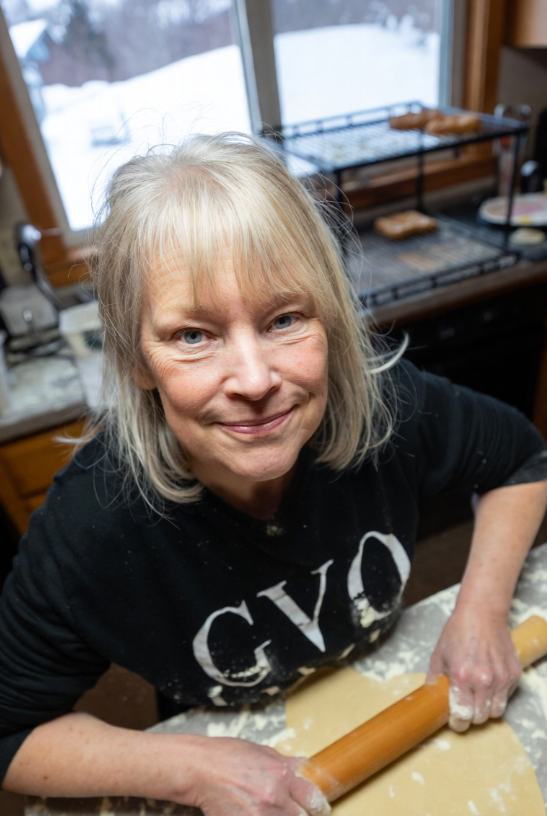
About the cook who shared this
Linda Johansson
Week 157 of Linda’s 30-year story
· Duluth, Minnesota
Linda is a sixty-three-year-old retired nurse from Duluth, Minnesota, living alone in the house where she raised her children and said goodbye to her husband. She lost Paul to ALS in 2020 after two years of watching the kindest man she'd ever known lose everything but his dignity. She cooks Scandinavian comfort food and Minnesota hotdish and the pot roast Paul loved, and she sets two places at the table out of habit because it makes her feel less alone. Every recipe she writes is a person she's loved.
