
 By
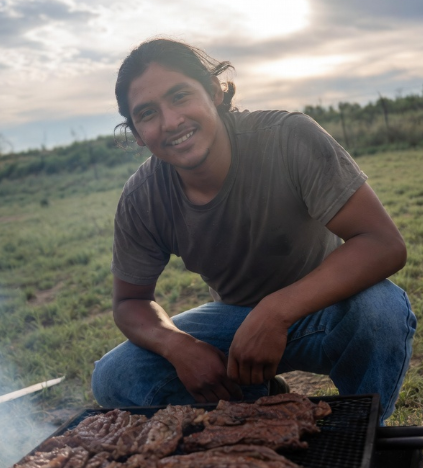
By Sunday after. Kai and Danielle and Tommy left at noon. The house got quieter and quieter as the day went on, and by sunset the property was the property again, just me and Hannah and the dogs and the tarps still up because we hadn't taken them down yet. We sat on the porch. We didn't talk much. The aftermath of a thing well done is a particular kind of silence.
Hannah said, late, after dark: forty-three people. Twelve in 2040. Forty-three this year. I said: yeah. She said: forty next year is what we said in August. I said: forty-three this year. She said: shut up. We laughed. The growth wasn't the goal. The growth happened because what we're doing here is what people want to come do. The food, the language, the land. The combination is rare. People feel it.
I broke down the tarps Monday and Tuesday. Took the tables back into the workshop. Cleaned the smoker. Did the post-event accounting in my head — the food cost, the wood cost, what we'll need to plan for at fifty next year because we're going to plan for fifty next year. The number can't keep doubling. At some point it has to stabilize, and stabilizing is a different problem than growing.
Caleb came Saturday. We didn't fix anything specific. He helped me clean up odds and ends from the gathering — pulled a couple stakes I'd missed, swept the workshop, did the kind of light cleanup that doesn't need doing but which gives him a reason to be here. Over lunch he said: I want to keep coming. After the property work is done. I said: there's no after. There's always property work. He said: then I'll keep coming. I said: come.
Wednesday I taught. The cohort had heard about the Gathering — most of them are local Cherokee, some of them know people who came — and the questions were of a different kind than usual. Less technique, more about the property, about what I do, about how I got from where I was to where I am. I answered some and deflected some. The class is welding class. The personal stuff has its place.
The fall greens are up. The kale and collards are six inches tall and the turnips are showing their first true leaves. The winter rye Caleb broadcast in the empty squash bed is up too — emerald green stripes where he laid it down. I walked it Sunday at sunset, the day after the gathering, alone, and I thought: this is what stewardship looks like. Not big actions. Small ones, repeated. Caleb laid down seed in September. The seed came up in October. In April, when we till it under, the bed will be richer than it was. That is the whole story of land — small actions, repeated, enriching what comes after.
The kale and collards are six inches tall and the leeks I’d left in the ground through the gathering are fat and ready—the kind of thing you don’t notice until the crowd is gone and you’re walking the beds alone at dusk. Leeks au gratin felt exactly right for the week after: warm, unhurried, a dish that asks something of you but not too much. The gathering was loud and full and good. This was the quiet counterpoint—just Hannah and me and something soft and golden from the oven.
Leeks au Gratin
Prep Time: 15 min | Cook Time: 40 min | Total Time: 55 min | Servings: 4
Ingredients
- 4 large leeks, white and light green parts only, halved lengthwise and cleaned
- 2 tablespoons unsalted butter
- 2 tablespoons all-purpose flour
- 1 1/2 cups whole milk, warmed
- 1/2 cup heavy cream
- 1/2 teaspoon kosher salt, plus more for blanching
- 1/4 teaspoon freshly ground black pepper
- 1/8 teaspoon freshly grated nutmeg
- 3/4 cup Gruyère cheese, grated, divided
- 1/4 cup Parmesan cheese, grated
- 1 tablespoon fresh thyme leaves (or 1/2 teaspoon dried)
Instructions
- Preheat and prep. Preheat your oven to 400°F (200°C). Butter a 9x13-inch or similar shallow baking dish and set aside.
- Blanch the leeks. Bring a large pot of salted water to a boil. Add the halved leeks and blanch for 4–5 minutes until just tender but still holding their shape. Drain carefully and pat dry with kitchen towels. Arrange them cut-side up in a single layer in the prepared baking dish.
- Make the béchamel. Melt the butter in a medium saucepan over medium heat. Whisk in the flour and cook, stirring constantly, for 1–2 minutes until the mixture smells lightly nutty. Gradually whisk in the warmed milk and cream, pouring in a slow, steady stream. Continue whisking until the sauce thickens and comes to a gentle simmer, about 5–7 minutes.
- Season the sauce. Remove from heat. Stir in the salt, pepper, nutmeg, thyme, and 1/2 cup of the Gruyère. Taste and adjust seasoning as needed.
- Assemble the gratin. Pour the béchamel evenly over the leeks. Scatter the remaining Gruyère and all of the Parmesan over the top.
- Bake. Place the dish in the preheated oven and bake uncovered for 25–30 minutes, until the top is deeply golden and bubbling at the edges. If needed, finish under the broiler for 2–3 minutes to deepen the color.
- Rest and serve. Let the gratin sit for 5 minutes before serving. It holds well and is excellent alongside roasted chicken, crusty bread, or simply on its own with a green salad.
Nutrition (per serving)
Calories: 320 | Protein: 11g | Fat: 21g | Carbs: 22g | Fiber: 2g | Sodium: 480mg