The kitchen is the room I live in. The other rooms are storage for memories — the dining room with its china cabinet, the living room with Paul's shipwreck books, the upstairs bedrooms where the kids grew up and which I have not entered (except to dust) in years. The kitchen is where the present happens. The kitchen is where the food is made and the dog is fed and the morning begins and the evening ends. The kitchen is the entire territory of my daily life now, and I find that this is enough.
Karin and I talked Sunday. Stockholm in winter is dark. Duluth in winter is dark. We compared darknesses. We laughed. Karin said: "Linda, do you remember the time Pappa drove us to Two Harbors in a blizzard because Mamma wanted lutefisk?" I said yes. The story unspooled across the phone for twenty minutes. I had forgotten half of it. Karin remembered all of it. The memory was, briefly, complete between us.
Mamma's hands shake more than they did last month. I do not point it out. I notice. I notice everything. The shake is small — barely visible when she is at rest, more visible when she lifts her coffee cup, most visible when she is trying to thread a needle. She still threads needles. She still bakes. She still calls me on Tuesdays at 10. The hands shake. The shaking does not stop the doing. The doing is what Mamma is.
I cooked Roasted root vegetables this week. Carrots, parsnips, beets, sweet potatoes, onion, with thyme and olive oil. Roasted hot until edges char.
Thursday at the Damiano Center: I made an extra pot of pea soup, the way Mamma taught me — yellow split peas, ham hock, onion, the whole of Sunday afternoon dedicated to its slow simmer. Gerald said, "Variety. We approve." The regulars approved too. One older woman ate three bowls and asked if she could take some home. I sent her home with a quart in a glass jar. She is bringing the jar back next Thursday. We have an arrangement.
I walked to the lake on Saturday. I stood at the spot where Paul and I used to walk — the bench at the end of the lakefront trail, the one with the brass plaque about a different Paul who died in 1972. I told my Paul about the week. About the kids. About the dog. About the soup. I do not feel foolish doing this. The lake is patient. The lake has, in some real sense, become my husband by proxy. I would not have predicted this in 1988. It has turned out to be true anyway.
It is enough. It has to be. And on a morning like this, with the lake doing what the lake does and the dog at my feet and the bread on the counter and the kitchen warm enough to live in, it is.
I have come to think that grief is not a problem to be solved. Grief is a country. You move into it. You learn its language. You make a life there. You do not leave the country, but you also do not spend every minute thinking about the fact that you live in it. You make breakfast. You walk the dog. You write a blog post. The country is the country. You live there now.
It is enough.
The bread I mentioned — the one sitting on the counter Saturday morning while the dog settled at my feet — was this one. I started feeding the starter on Friday night without much intention behind it, and by the time I came back from the lake the next afternoon, the loaf had already done most of the work without me. That is the thing about sourdough made this way: it does not ask for your full attention. It just asks that you show up at the right intervals, which is, I have decided, a reasonable thing for bread to ask.
A Lazy Girl’s Guide to Sourdough
Prep Time: 20 minutes (plus 12–16 hours rest) | Cook Time: 45 minutes | Total Time: About 14 hours, mostly hands-off | Servings: 1 loaf (12 slices)
Ingredients
- 3 cups (360g) bread flour, plus more for shaping
- 1/4 cup (50g) active sourdough starter, fed 4–6 hours before using
- 1 cup plus 2 tablespoons (270ml) room-temperature water
- 1 1/2 teaspoons fine sea salt
Instructions
- Mix the dough. The night before baking, combine the flour, starter, and water in a large bowl. Stir until no dry flour remains — it will be shaggy and rough. Cover the bowl with a damp towel or plastic wrap and let it rest 30 minutes.
- Add salt and fold. Sprinkle the salt over the dough and use wet hands to work it in, pinching and folding until incorporated. Perform 4 sets of stretch-and-folds over the next 2 hours, spaced 30 minutes apart: grab one side of the dough, stretch it up, fold it over the center. Rotate and repeat on all four sides. Cover between folds.
- Bulk ferment overnight. After the final fold, cover the bowl and leave it at room temperature (68–72°F) for 8–12 hours, or until the dough has risen by 50–75% and looks airy and slightly domed. Cooler kitchens take longer; warmer kitchens go faster.
- Shape the loaf. In the morning, lightly flour your work surface. Turn the dough out gently. Fold the edges toward the center, flip it seam-side down, and use your hands to drag it toward you in a circular motion until the surface is taut. Let it rest uncovered for 20 minutes.
- Final proof. Line a medium bowl or proofing basket with a well-floured kitchen towel. Place the dough seam-side up. Cover loosely and refrigerate for 1–2 hours (or up to overnight if you want to bake the next day).
- Preheat the Dutch oven. Place a Dutch oven with its lid in the oven and preheat to 500°F (260°C) for at least 45 minutes. You want it very, very hot.
- Score and bake covered. Cut a piece of parchment to fit the bottom of your Dutch oven. Turn the cold dough out onto it seam-side down. Score the top with a sharp knife or bread lame — one confident slash at a 30-degree angle is all you need. Carefully lower the dough (parchment and all) into the hot Dutch oven. Cover and bake for 20 minutes.
- Bake uncovered to finish. Remove the lid, reduce the oven to 450°F (230°C), and bake for another 20–25 minutes until the crust is deep brown and the loaf sounds hollow when tapped on the bottom.
- Cool completely. Transfer the loaf to a wire rack and resist cutting into it for at least 1 hour. The interior is still setting. It is worth the wait.
Nutrition (per slice)
Calories: 130 | Protein: 4g | Fat: 0.5g | Carbs: 26g | Fiber: 1g | Sodium: 240mg
About the cook who shared this
Linda Johansson
Week 442 of Linda’s 30-year story
· Duluth, Minnesota
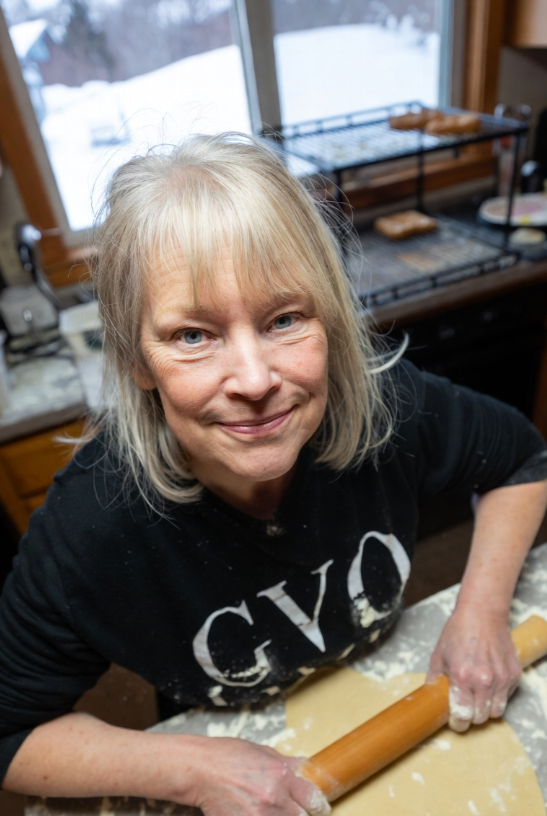
Linda is a sixty-three-year-old retired nurse from Duluth, Minnesota, living alone in the house where she raised her children and said goodbye to her husband. She lost Paul to ALS in 2020 after two years of watching the kindest man she'd ever known lose everything but his dignity. She cooks Scandinavian comfort food and Minnesota hotdish and the pot roast Paul loved, and she sets two places at the table out of habit because it makes her feel less alone. Every recipe she writes is a person she's loved.
