The Bayou City BBQ Festival is in three weeks. My second solo competition of the year. I'm entering brisket only — focus over breadth. One category. One chance. One brisket to beat the Lockhart guys.
Practice cooks have been happening every weekend. I've refined the lemongrass finishing butter — the ratio is now two parts butter, one part lemongrass-ginger paste, a tablespoon of fish sauce, and a pinch of MSG. Applied at the 11-hour mark, thirty minutes before pulling. The butter melts into the bark and creates a glaze that's savory and aromatic and unlike anything else in Texas BBQ.
Emma has been my official taster. She approaches each practice slice with the seriousness of a wine sommelier — she smells it first, examines the smoke ring, tests the tenderness by pulling a fiber, then tastes. Her notes are more detailed than the judges' scorecards. "The bark has good pepper balance but the lemongrass could be more forward. The smoke ring is consistent at 8mm. The moisture level is excellent — the butcher paper is doing its job."
She's fifteen. She's giving me notes on competition brisket. I should feel threatened. I feel proud.
Tyler's been helping with the fire management — he understands heat flow and combustion from auto shop in a way that translates directly to smoker management. He can look at the smoke coming out of the stack and tell me whether the fire needs more wood or more airflow. It's a mechanical skill, and he's mechanical.
Lily designed new signage for the competition table: "BOBBY TRAN BBQ — HOUSTON, TX" with a drawing of a smoker wrapped in a Vietnamese flag and an American flag. The graphic design is questionable but the sentiment is perfect.
Knee status: Darnell gave me a brace to wear during long cooks. It's ugly and effective. I wore it during last Saturday's fourteen-hour practice cook and the difference was significant — less grinding, less stiffness the next morning. The brace stays.
Ma asked what I was practicing for. I said, "A competition." She said, "You already won." I said, "I got second." She said, "At something you do for fun. That's winning." She's not wrong. But I want first.
Between practice cooks, when I’m not fourteen hours deep into a brisket, I come back to this recipe — Korean meatballs — because it’s where I first started trusting the flavor logic that became my finishing butter. The ginger, the soy, the heat layered under something sweet: that’s the same architecture I’m chasing when I fold lemongrass paste into clarified butter at the 11-hour mark. Emma actually tasted these meatballs early in the process and said, “That’s what the bark should feel like.” She was right. If you want to understand what I’m trying to do to a brisket, start here.
Korean Meatballs
Prep Time: 15 min | Cook Time: 22 min | Total Time: 37 min | Servings: 5 (about 20 meatballs)
Ingredients
- 1 lb ground beef (80/20)
- 1/4 cup panko breadcrumbs
- 1 large egg
- 3 cloves garlic, minced
- 1 tsp fresh ginger, finely grated
- 2 tbsp soy sauce
- 1 tbsp sesame oil
- 3 green onions, thinly sliced (divided)
- 1/2 tsp black pepper
- 1/4 tsp kosher salt
- For the sauce:
- 3 tbsp gochujang
- 2 tbsp soy sauce
- 1 tbsp honey
- 1 tbsp rice vinegar
- 1 tsp sesame oil
- 2 cloves garlic, minced
- 1 tsp fresh ginger, grated
- For garnish:
- 1 tsp sesame seeds
- Remaining sliced green onions
Instructions
- Preheat oven. Set oven to 400°F. Line a rimmed baking sheet with foil and place a wire rack on top. Lightly coat the rack with cooking spray.
- Mix meatballs. In a large bowl, combine ground beef, panko, egg, garlic, ginger, soy sauce, sesame oil, half the green onions, black pepper, and salt. Mix with your hands until just combined — do not overwork the meat or the texture will tighten up.
- Form and arrange. Roll mixture into 1.5-inch balls (about 20 total) and place on the prepared rack, spaced evenly. Uniform size matters for even cooking.
- Bake. Roast for 18–22 minutes until cooked through and lightly browned on the outside. Internal temperature should reach 165°F.
- Make the sauce. While meatballs bake, whisk together gochujang, soy sauce, honey, rice vinegar, sesame oil, garlic, and ginger in a small saucepan over medium-low heat. Stir for 2–3 minutes until slightly thickened and fragrant. Remove from heat.
- Glaze and serve. Transfer baked meatballs to a large bowl. Pour sauce over top and toss gently to coat every meatball. Plate and finish with sesame seeds and remaining green onions.
Nutrition (per serving)
Calories: 275 | Protein: 21g | Fat: 15g | Carbs: 13g | Fiber: 1g | Sodium: 720mg
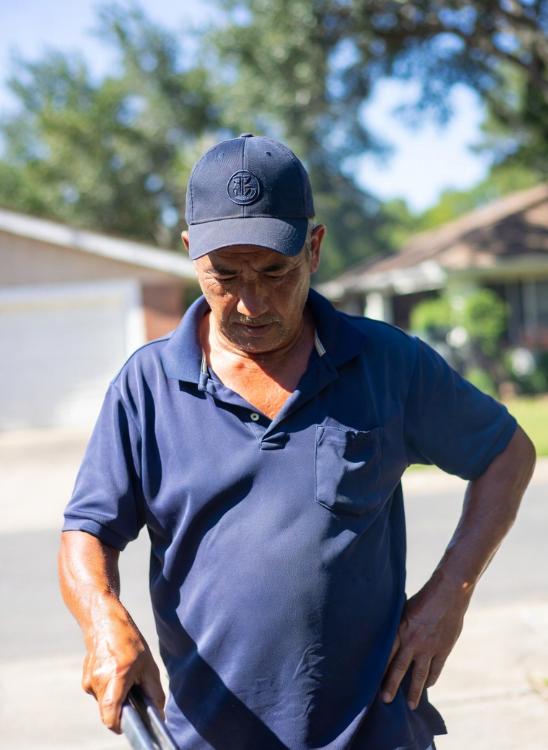
About the cook who shared this
Bobby Tran
Week 158 of Bobby’s 30-year story
· Houston, Texas
Bobby Tran was born in a refugee camp in Arkansas to parents who fled Saigon with nothing. He grew up in Houston straddling two worlds — Vietnamese at home, Texan everywhere else — and learned to cook from his mother's pho and a neighbor's BBQ smoker. He's a former shrimper, a recovering alcoholic, a divorced dad of three, and the guy who marinates brisket in fish sauce and lemongrass because he doesn't believe in borders, especially when it comes to flavor.
