The Damiano Center on Thursday: wild rice soup, fifty gallons, the same recipe I have been making for twenty-some years now. The constancy is the point. People come into the basement of that building hungry and uncertain and what they find is a fifty-gallon pot of wild rice soup that has been there every Thursday of every year, and they find Linda Johansson, who has been there too, and the constancy is the message: you can come back. You can come back. You can come back.
Lena (Anna's youngest, college freshman) is in college now. She calls me sometimes. The calls are about boys, mostly. I listen. I do not give advice. I am eighteen-year-old's grandmother. My credibility on boys is suspect at best. I tell her the kinds of things a grandmother is supposed to tell her: be careful, be brave, trust your gut, do not date the one who reminds you of someone you do not like. She thinks I am wise. I am, in fact, just old. The two get confused sometimes in the right direction.
Jakob (Anna's middle, recently graduated) has a job. He hates the job. He is figuring it out. He called me Tuesday for advice. I told him: that is what your twenties are for. The first job is supposed to be unsatisfying. The first job teaches you what you do not want. He said, "Grandma, that is not super helpful." I said, "It is the truth. Helpful is not always the same as comforting." He laughed. He hung up. He kept the job for now. He will figure it out.
I cooked Spring lamb with mint this week. A leg of lamb, roasted with garlic and rosemary, served with mint sauce and roasted potatoes. The Easter centerpiece in years when the family gathers.
Damiano Center, Thursday. New volunteer this week — a young woman named Sara, just out of college, looking lost and brave. I showed her how to ladle. She caught on quickly. She asked me how long I had been doing this. I said: "Long enough that I do not count." She laughed. She will be back. The good ones come back.
Paul's chair is at the head of the table. His glasses are on the shelf. The arrangement is permanent. The arrangement is the love. The arrangement has been remarked on, gently, by various people over the years — Anna, mostly, and well-meaning friends. The arrangement persists. I do not require justification for it. The chair is the chair.
It is enough. Paul is not here. Mamma is not here. Pappa is not here. Erik is not here. They are all here in the kitchen, in the smell, in the taste, in the wooden spoon and the bread pans and the marble slab. The dead are not where the body went. The dead are in the kitchen.
I have started, in the last few years, to think about what I will leave behind. Not in a morbid way. In a practical way. The recipes are written down. The notebook is on the counter. The kitchen is in good order. The house is in Anna's name (we did the legal work in 2032; the kids agreed; it was the practical thing). The grandchildren and great-grandchildren each have a few small specific things — a wooden spoon, a bread pan, a particular cast iron skillet — that I have already labeled with their names on small pieces of masking tape. Nobody knows about the masking tape labels. They will find them when they find them.
It is enough.
The leg of lamb I roasted this week was for the Easter table — garlic, rosemary, mint sauce, the same as always — but the recipe I keep returning to when I want lamb that is a little less ceremonial and a little more weeknight is kofta: ground lamb, spiced simply, formed around a skewer and cooked fast over high heat. Paul liked them. I still make them. The chair is at the head of the table and the kofta are on the platter and that is how it is.
Kofta Kabobs
Prep Time: 20 min | Cook Time: 12 min | Total Time: 32 min | Servings: 4
Ingredients
- 1 1/2 lbs ground lamb (or a mix of lamb and beef)
- 1 small yellow onion, grated
- 3 cloves garlic, minced
- 1/4 cup fresh flat-leaf parsley, finely chopped
- 2 tablespoons fresh mint, finely chopped
- 1 teaspoon ground cumin
- 1 teaspoon ground coriander
- 1/2 teaspoon smoked paprika
- 1/2 teaspoon ground cinnamon
- 1/4 teaspoon cayenne pepper
- 1 teaspoon kosher salt
- 1/2 teaspoon black pepper
- 1 tablespoon olive oil, for brushing
- 8 metal or pre-soaked wooden skewers
Instructions
- Prepare the meat mixture. In a large bowl, combine the ground lamb, grated onion, garlic, parsley, mint, cumin, coriander, paprika, cinnamon, cayenne, salt, and pepper. Mix with your hands until everything is evenly incorporated. Do not overwork the meat.
- Rest the mixture. Cover the bowl and refrigerate for at least 15 minutes (up to 2 hours) to let the flavors come together and the mixture firm up slightly.
- Form the kabobs. Divide the mixture into 8 equal portions. With damp hands, press and shape each portion around a skewer, forming a cylinder roughly 5 to 6 inches long. Squeeze firmly so the meat adheres to the skewer.
- Heat the grill or grill pan. Preheat an outdoor grill or a cast iron grill pan over medium-high heat. Brush the grates or pan lightly with olive oil.
- Cook the kabobs. Brush the formed kofta with olive oil and place on the hot grill. Cook for 10 to 12 minutes total, turning every 3 to 4 minutes, until the meat is cooked through and the outside is nicely charred. Internal temperature should reach 160°F.
- Rest and serve. Let the kabobs rest for 3 minutes before serving. Serve with warm flatbread, a simple cucumber-yogurt sauce, sliced tomatoes, and fresh mint.
Nutrition (per serving)
Calories: 390 | Protein: 28g | Fat: 28g | Carbs: 4g | Fiber: 1g | Sodium: 480mg
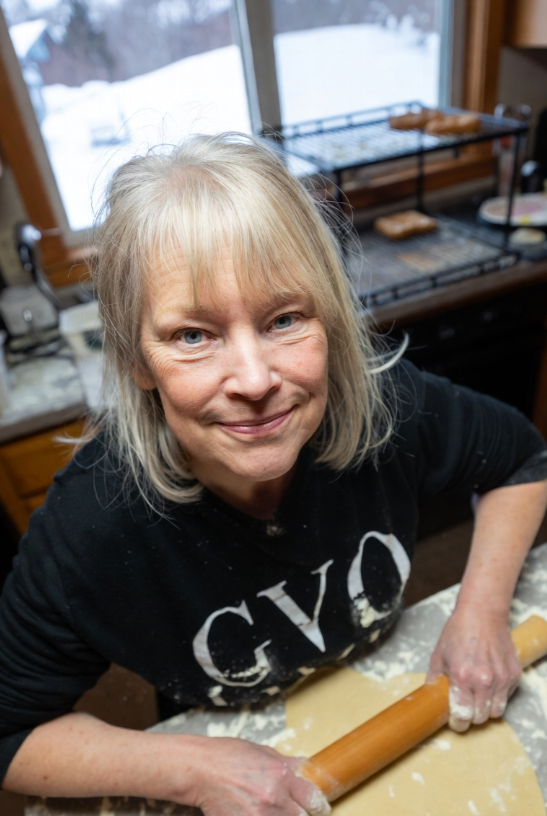
About the cook who shared this
Linda Johansson
Week 419 of Linda’s 30-year story
· Duluth, Minnesota
Linda is a sixty-three-year-old retired nurse from Duluth, Minnesota, living alone in the house where she raised her children and said goodbye to her husband. She lost Paul to ALS in 2020 after two years of watching the kindest man she'd ever known lose everything but his dignity. She cooks Scandinavian comfort food and Minnesota hotdish and the pot roast Paul loved, and she sets two places at the table out of habit because it makes her feel less alone. Every recipe she writes is a person she's loved.
