
 By
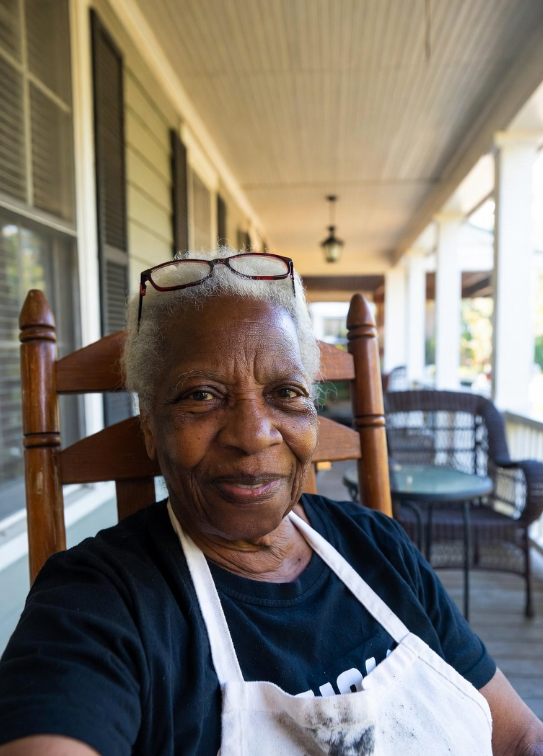
By I called Ruthie Mae this week. Wednesday afternoon, the usual time. The phone rang four times and then the nurse answered — not Ruthie Mae, never Ruthie Mae first anymore, always the nurse who manages the phone because Ruthie Mae can't manage it herself. "Mrs. Henderson," the nurse said, "she's having a good day." A good day. In dementia language, a good day means: she knows her name. She knows the room. She might know you.
They put Ruthie Mae on the phone. "Hello?" she said, and her voice was the voice I remember — not the voice she has most days, which is smaller and more uncertain, but the real voice, the Ruthie Mae voice, the voice of the baby sister who used to follow me around the house and steal my biscuits and laugh when I chased her. "Ruthie Mae," I said, "it's Dot." "Dot," she said. "My sister Dot." She knew me. Today she knew me.
I told her about Michael. Baby Michael. I said, "Ruthie Mae, Kayla had a baby. A boy. Named after our Michael." And there was a long silence, and I thought I'd lost her — lost her to the fog, to the place where names and faces dissolve — and then she said, "Michael? Our Michael? The one who died?" And I said, "Yes. Our Michael. They named the baby after him." And she said, "Oh, Dot. Oh, that's good. That's so good." And she was crying. Not the confused crying that dementia brings but the real crying, the crying that comes from a place the disease hasn't reached yet, a place where a sister's grandchild is still a miracle and a dead nephew's name on a living baby is still the most beautiful thing in the world.
We talked for eleven minutes. That's long for Ruthie Mae. Usually it's five, sometimes three, sometimes she hands the phone back before we finish. But today she stayed. She asked about Denise. She asked about the garden. She said, "Dot, are you still cooking?" I said, "Ruthie Mae, I will cook until they close my casket and even then I'll probably have cornbread in my pocket." She laughed. The laugh was Ruthie Mae. Pure, whole, undiminished. The disease takes everything, but it hadn't taken the laugh. Not yet.
Made red rice tonight. Ruthie Mae's favorite. The Gullah rice. The rice that tastes like the shotgun house and the east side and six children at a table that was too small for all of us and just right for how much we loved each other. I ate it alone, at my table, and I sent the taste to Augusta through the air, through the years, through the love that doesn't need a phone line.
Now go on and feed somebody.
I made Ruthie Mae’s red rice that night — the Gullah rice, the one that tastes like the shotgun house — but this kimchi cauliflower fried rice is what I reach for when I need the same comfort in half the time, when my hands need to be busy and the skillet needs to be loud and the smell of something good cooking needs to fill every corner of the room. It moves fast, like a good day does, and you eat it before you can think too hard about how rare the good days are. On the nights you get eleven minutes of your sister back, you deserve a hot skillet and something worth tasting.
Kimchi Cauliflower Fried Rice
Prep Time: 10 min | Cook Time: 15 min | Total Time: 25 min | Servings: 4
Ingredients
- 1 medium head cauliflower, riced (about 4 cups), or 1 (12 oz) bag pre-riced cauliflower
- 1 cup kimchi, roughly chopped, plus 2 tablespoons kimchi brine
- 2 tablespoons sesame oil, divided
- 1 tablespoon soy sauce (or tamari for gluten-free)
- 1 teaspoon gochujang or sriracha (optional, for extra heat)
- 3 cloves garlic, minced
- 1/2 cup frozen peas and carrots, thawed
- 3 green onions, sliced (whites and greens separated)
- 2 large eggs
- 1 teaspoon toasted sesame seeds, for garnish
- Salt and black pepper to taste
Instructions
- Rice the cauliflower. If using a fresh head, cut into florets and pulse in a food processor until it resembles coarse rice. Do not over-process — you want texture, not mush. Pat dry with paper towels to remove excess moisture.
- Heat the skillet. Place a large cast-iron skillet or wok over high heat. Add 1 tablespoon sesame oil and let it get hot — nearly smoking. High heat is the key to a good fried rice texture.
- Cook the aromatics. Add the green onion whites and garlic to the skillet. Stir-fry for 30 seconds until fragrant but not browned.
- Add kimchi and vegetables. Add the chopped kimchi, kimchi brine, and thawed peas and carrots. Stir-fry for 2–3 minutes until the kimchi softens slightly and the liquid reduces.
- Add the cauliflower rice. Push the kimchi mixture to one side of the skillet. Add the remaining 1 tablespoon sesame oil to the empty side, then add the cauliflower rice in an even layer. Let it sit undisturbed for 1–2 minutes to develop a slight char, then toss everything together. Stir-fry for 3–4 minutes until tender.
- Season and scramble the eggs. Drizzle in the soy sauce and gochujang if using. Push the rice mixture to the edges of the pan, creating a well in the center. Crack in both eggs and scramble them quickly in the center, then fold them into the rice before they fully set.
- Finish and serve. Taste and adjust seasoning with salt and pepper. Remove from heat. Plate and top with green onion greens and toasted sesame seeds. Serve immediately, straight from the skillet.
Nutrition (per serving)
Calories: 165 | Protein: 8g | Fat: 9g | Carbs: 14g | Fiber: 5g | Sodium: 520mg