
 By
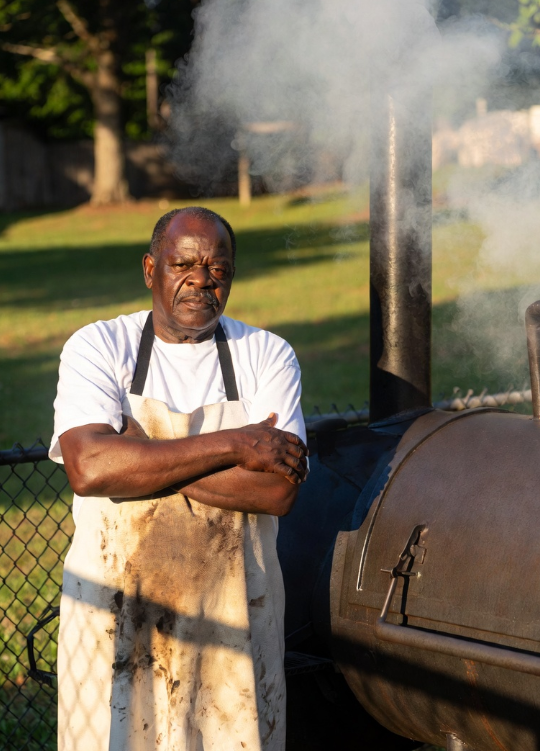
By My name is Earl Wayne Johnson. Most folks in my neighborhood call me Big E, a nickname I earned before I was old enough to earn anything else — I was nine pounds, four ounces at birth, and my mother Pearlie Mae has been reminding me of this fact for fifty-seven years with the regularity and conviction of a church deacon reading scripture. If you ask her, it’s the most remarkable thing I have ever done. I am inclined to disagree, but I have learned not to argue with Pearlie Mae Johnson about matters she considers settled.
I live in Orange Mound, Memphis, Tennessee, in the same house my wife Rosetta and I bought in 1986. I have been carrying mail for the United States Postal Service since 1979, which means I have spent thirty-six years walking other people’s neighborhoods and thinking my own thoughts, which is not a bad way to earn a living if you don’t mind your feet. I will walk approximately four miles this afternoon on my Midtown route, past the coffee shops on Cooper and the old houses on Evelyn Avenue where Mrs. Watkins’s poodle Senator has been declaring war on me since 2009. Senator has not won yet. Neither have I. We have reached an understanding that can best be described as mutually exhausting.
But before I put on the uniform, I want to tell you about something that happened last Saturday that I am still thinking about, because it involves pulled pork, an appliance I swore I would never use, and a six-year-old boy named DeAndre who made me feel like the richest man in Memphis with eleven words.
Let me start where everything in my life starts: with fire.
When I was eleven years old, my mother’s brother — Uncle Clyde, rest his soul — ran a BBQ stand on Lamar Avenue called Clyde’s Q. Nothing fancy. A steel drum smoker he had welded together himself, a hand-painted sign, and more patience than any man I have ever known since. Uncle Clyde smoked pork shoulders for fourteen hours over hickory wood. He mopped them with a thin vinegar sauce that stung your eyes if you got too close and made your mouth water from twenty feet away. He pulled the meat by hand, the way his own father had shown him, the way Black men in Memphis had been doing it since before there were restaurants to do it in.
I spent every weekend of my teenage years at that stand. Uncle Clyde was not a man of many words — he was built like a fire hydrant and had a handshake that could crack walnuts — but the words he did say were worth hearing. “BBQ is patience,” he told me when I was twelve and complaining about how long a shoulder took. “You can’t rush a shoulder any more than you can rush the Lord. Both work on their own time.” I took that to heart. I took everything Clyde gave me and held it, because I understood even then that he was handing me something that would last longer than anything I could buy or earn or be given by anybody else.
Uncle Clyde died in 2005, and I inherited his smoker. That old steel drum sits in my backyard right now — rusted, patched, beautiful in the way that only things which have been loved hard and used well can be beautiful. I fired it up last Saturday at four in the morning for a brisket I was taking to my grandson DeAndre’s T-ball end-of-season party. Twelve hours of smoke, hickory and cherry wood, low and slow. When I set that brisket on the folding table at the park in Cordova and started slicing, DeAndre looked up at his teammates with grass-stained knees and said, “My grandpa made this.” Six years old. The pride in his voice could have powered a city block.
I am telling you this so you understand where I come from before I tell you what I did last month, which is that I made pulled pork in an Instant Pot.
I know. I know.
My daughter-in-law Tamika — she’s married to my oldest, Walter Jr. — gave Rosetta an Instant Pot for her birthday back in March. Rosetta is a nurse and has no patience for anything that takes longer than forty-five minutes on a weeknight, which has always been a source of gentle theological disagreement between us, because I believe that good food requires time the way a marriage requires time, and she believes that a pressure cooker is a gift from God specifically designed for women who work double shifts and still come home and feed their families. We are both right. This is the secret to thirty-two years of marriage: finding the places where two different truths can sit at the same table without either one having to leave.
The Instant Pot sat on the counter for three weeks while Rosetta and I regarded it the way you regard a new neighbor you haven’t introduced yourself to yet. Polite distance. Cautious respect.
Then Walter Jr. called on a Tuesday and asked if I could pull together some BBQ for a family gathering that weekend — something I could bring over quickly, because things had gotten hectic with the kids. And I looked at Uncle Clyde’s smoker in the backyard, and I looked at the Instant Pot on the counter, and I thought: Clyde, forgive me.
Now. Here is what I will tell you about Instant Pot pulled pork, and I will tell it to you straight because I am fifty-seven years old and I have no time left for anything but the truth. It is not the same as sixteen hours over hickory. It will never be the same. The smoke is not there, the bark is not there, and something in the texture is different in a way I could not quite name but could feel. If you serve this to a Memphis pitmaster without telling him what it is, he will know something is different. I am telling you this so you trust me when I tell you the rest.
The rest is this: it is very, very good. And the family ate it with the same closed eyes and quiet sounds that good BBQ always produces, and Walter Jr. had three sandwiches, and little Aaliyah — she’s four and has opinions about everything — told me it was “the best meat,” which from a four-year-old is a Michelin star and a James Beard Award combined.
Uncle Clyde taught me patience. But Clyde also taught me something else, something I didn’t understand until I was grown: he cooked for people. The smoke and the fire and the sixteen hours — those were the means. The people eating, the family gathered, the love delivered on a paper plate — that was always the point. If the Instant Pot gets the pork to the table on a Tuesday night when your daughter-in-law is working a double and your grandkids are hungry, then the Instant Pot is doing what the smoker does. It’s feeding people. It’s carrying the inheritance forward, even if the method looks different than what Clyde handed me.
Rosetta walked into the kitchen while I was pulling the pork and looked at me with an expression I have seen thirty-two years of — satisfaction with a side of “I told you so” held in reserve for later. She didn’t say anything. She didn’t need to. She just handed me the vinegar sauce and went back to her book.
I’m going to share this recipe with you, friend. The rub is my own — a version of what Uncle Clyde taught me, adjusted over forty-five years to suit my hands and my taste. I won’t share all sixteen of the spices I use on the smoker, but I’ll share enough to make this work. And it will work. I wouldn’t put my name on something that didn’t.
Try it on a weeknight when time is short. Try it when you want to feed somebody and don’t have sixteen hours to give. And if you have the time, try the real thing someday — light a fire, find some hickory, and wait. Learn to wait. There is no substitute for the patience itself, even when there are substitutes for the method.
Clyde would have had thoughts about all this. He would have expressed those thoughts with one raised eyebrow and a silence that lasted about ten seconds. Then he would have tasted the pork. And then — I believe this in my bones — he would have nodded. Maybe once. Slowly. Which from Clyde was the equivalent of a standing ovation.
That’s good enough for me.
So here it is — my confession, my compromise, and my tribute to a man who taught me that good food is about feeding people, not proving yourself. I can’t give you sixteen hours on a Friday night, and I suspect Clyde wouldn’t have wanted me to let that stop me from feeding someone well. This recipe carries as much of that hickory-and-patience spirit as a pressure cooker can hold, and I’ve made my peace with that. Here’s how I make it.
Instant Pot Pulled Pork — A Pitmaster’s Confession That Shortcuts Can Be Sacred
Prep Time: 20 minutes | Cook Time: 1 hour 30 minutes | Total Time: 1 hour 50 minutes | Servings: 8–10
Ingredients
For the Dry Rub- 2 tablespoons brown sugar, packed
- 1 tablespoon smoked paprika
- 1 tablespoon kosher salt
- 2 teaspoons black pepper, coarsely ground
- 2 teaspoons garlic powder
- 1 teaspoon onion powder
- 1 teaspoon dry mustard powder
- 1 teaspoon cayenne pepper (less if you’re cooking for children, more if you’re cooking for people worth impressing)
- 1/2 teaspoon celery salt
- 4 to 5 pounds bone-in pork shoulder (also sold as pork butt — don’t let the name put you off, it’s the right cut)
- 2 tablespoons vegetable oil
- 1/2 cup apple cider vinegar
- 1/2 cup chicken broth
- 1 tablespoon Worcestershire sauce
- 1 teaspoon liquid smoke (this is where we make our peace with what we’re doing)
- Sandwich buns or white bread
- Your preferred BBQ sauce on the side (in Memphis, good pork doesn’t need it — but I won’t judge you)
- Dill pickles and thinly sliced white onion, if you’re doing this right
Instructions
- Make the rub. Combine all dry rub ingredients in a small bowl and mix well. This can be made ahead and stored in a jar — I keep mine in a mason jar on the counter and it improves after a day or two when the flavors settle in together.
- Season the pork. If the pork shoulder has a thick fat cap, score it with a knife in a crosshatch pattern, cutting down about 1/4 inch. Pat the pork completely dry with paper towels — dry meat browns better, and browning matters. Coat every surface generously with the dry rub and press it in with your hands. Don’t be shy. The rub is where the flavor lives.
- Sear the pork. Set your Instant Pot to the Sauté function on high. Add the vegetable oil and let it get hot — about two minutes. Place the pork in the pot fat-side down and sear without moving it for four to five minutes, until a deep brown crust forms. Turn and sear all sides, about three minutes each. This step matters. Don’t skip it. The crust is doing the work that the fire does on the smoker, building the flavor that will carry through the whole dish.
- Build the braising liquid. Remove the pork and set it on a plate. Pour in the apple cider vinegar and scrape up all the browned bits from the bottom of the pot — those are flavor, and leaving them behind would be a waste. Add the chicken broth, Worcestershire sauce, and liquid smoke. Stir to combine.
- Pressure cook. Return the pork to the pot, fat-side up. Lock the lid, set the valve to Sealing, and cook on High Pressure for 90 minutes. The pork should be at least 4 pounds — if yours is closer to 5 pounds, go 100 minutes. When the cook time is done, allow the pressure to release naturally for at least 20 minutes before switching the valve to Venting. Do not rush this. Natural release finishes the cooking and keeps the meat tender. This is the patience part. It still applies.
- Pull the pork. Transfer the pork to a large cutting board or baking sheet. It should be tender enough that it begins falling apart as you lift it — if it’s resisting, lock the lid again and cook on High Pressure for another 15 minutes. Remove the bone if using bone-in — it should slide out cleanly. Use two forks or, better yet, your hands (with gloves, the meat is hot) to pull the pork into shreds. Pull with the grain, not against it, and leave some larger chunks alongside the fine shreds for texture.
- Finish with the drippings. Skim the fat from the cooking liquid remaining in the pot. Pour two to three tablespoons of the defatted liquid over the pulled pork and toss to coat. Taste for salt. Adjust. The liquid has been doing its work this whole time and it belongs on the meat.
- Serve. Pile the pork onto buns or white bread with pickles and onion. Sauce on the side. Call your family to the table.
Nutrition (per serving)
Calories: 390 | Protein: 34g | Fat: 22g | Carbs: 8g | Fiber: 0g | Sodium: 720mg