
 By
By Sean took Liam to Fenway Saturday for his first real game — not the baby visit at fourteen months, the real one, age-four-and-understanding-some-of-it version. They left at 10 AM for a 1 PM start. Sean had bought tickets in the right-field bleachers because those are the seats he wants his son to experience first, because those are the seats of his own childhood. Liam wore the jersey. Sean wore the jersey. I made them both sandwiches for the road, which was pure fiction because Sean had already planned to buy two Fenway Franks. The sandwiches came home uneaten. I expected this.
Liam came home at 6 PM in a state I will remember. He walked in the door and did not speak for thirty seconds because his data buffer was full. Then he told me, in order, every play of the game. He got some of them wrong. He had the right shape of the story. He had a specific grievance about an umpire's call that Sean confirmed was factually accurate. He had learned the word "fielder's choice" and used it correctly. He had a souvenir cup and a mini bat and a foam hand. He was exhausted and euphoric and at 7 PM he fell asleep sitting up at the dinner table, mid-sentence, with a piece of chicken in his hand. Sean carried him to bed. Sean was also tired. Sean was also radiant. I made home fries for dinner — Sunday home fries with peppers and onions and the crispy edges, which is the specific meal Sean wants after a long day in the sun. He ate it all.
Nora and I had the day together. We went to the park in the morning. She pushed a stroller full of stuffed animals across the field for an hour. We came home. She napped. I gardened. I pruned the tomatoes, which are now knee-high and flowering, and I put down more mulch. Nora woke up and came into the yard and asked for "tomato." I explained that the tomatoes were not yet tomatoes. She accepted this. She watched me garden. She pulled a weed (which I had to redirect away from a lettuce plant at the last second). She put the weed in a small pile she called "Nora's weeds." She has been labeling her projects. This is new. She is two and a half.
The appointment is Thursday. I am not writing about it. I am writing around it. The form of writing around something will be familiar to anyone who has had something to write around. You notice the negative space. You see the shape of it in what is being pointedly not described. I know. I am doing it anyway. There are not better options available to me this week.
A patient died Monday at Mass General — I had cared for her for eighteen months — and a second one on Tuesday, which is a rare double week, and Wednesday I worked through lunch without realizing it until I got home and Sean said "you did not eat today" and made me a sandwich at 9 PM and then sat with me while I ate it and did not say "you have to take care of yourself" because he does not lecture, and because he knew.
Father's Day is next weekend. I have his card. I am ready. June marches.
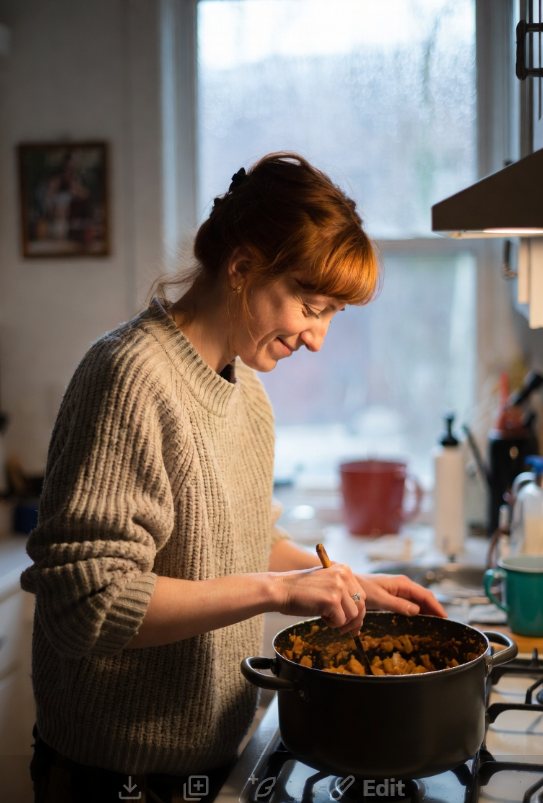
Home fries were Sean’s that night — his specific request, the crispy-edged ones with peppers and onions that I know how to make exactly right after a long day in the sun. But on the weeks that are heavier, when I want something that asks more of the kitchen and less of me at the stove, I make goulash instead: a pot that builds slowly, fills the house, and is ready whenever everyone finally arrives home. Hungarian goulash is the kind of recipe that suits a household that is moving in different directions all day and then, finally, converges at the table.
Hungarian Goulash
Prep Time: 20 minutes | Cook Time: 2 hours | Total Time: 2 hours 20 minutes | Servings: 6
Ingredients
- 2 lbs beef chuck, cut into 1 1/2-inch cubes
- 2 tablespoons vegetable oil
- 2 large yellow onions, diced
- 4 cloves garlic, minced
- 3 tablespoons sweet Hungarian paprika
- 1 teaspoon smoked paprika
- 1/2 teaspoon caraway seeds
- 2 tablespoons tomato paste
- 1 cup crushed tomatoes
- 2 cups beef broth
- 1 cup water
- 2 medium carrots, sliced into rounds
- 2 medium potatoes, peeled and cubed
- 1 red bell pepper, diced
- 1 teaspoon salt, plus more to taste
- 1/2 teaspoon black pepper
- 1 bay leaf
- Sour cream and fresh parsley, for serving
- Egg noodles or crusty bread, for serving
Instructions
- Brown the beef. Pat beef cubes dry and season with salt and pepper. Heat oil in a large Dutch oven over medium-high heat. Brown the beef in batches, about 3–4 minutes per side, without crowding the pot. Transfer to a plate and set aside.
- Soften the onions. Reduce heat to medium. Add the diced onions to the same pot and cook, stirring occasionally, until soft and golden, about 8–10 minutes. Add the garlic and cook 1 minute more.
- Build the spice base. Remove the pot from heat briefly and stir in the sweet paprika, smoked paprika, and caraway seeds. Return to low heat and stir for 30 seconds until fragrant. Add the tomato paste and stir to coat.
- Deglaze and combine. Pour in the crushed tomatoes, beef broth, and water, scraping up any browned bits from the bottom of the pot. Return the browned beef and any accumulated juices to the pot. Add the bay leaf.
- Simmer low and slow. Bring to a gentle boil, then reduce heat to low. Cover and simmer for 1 hour, stirring occasionally.
- Add the vegetables. Stir in the carrots, potatoes, and bell pepper. Replace the lid and continue simmering for another 45–55 minutes, until the beef is very tender and the vegetables are cooked through. Remove the bay leaf.
- Adjust and serve. Taste and adjust salt as needed. The broth should be rich and slightly thickened. Serve over egg noodles or with crusty bread, topped with a dollop of sour cream and a scattering of fresh parsley.
Nutrition (per serving)
Calories: 420 | Protein: 34g | Fat: 18g | Carbs: 28g | Fiber: 4g | Sodium: 620mg