
 By
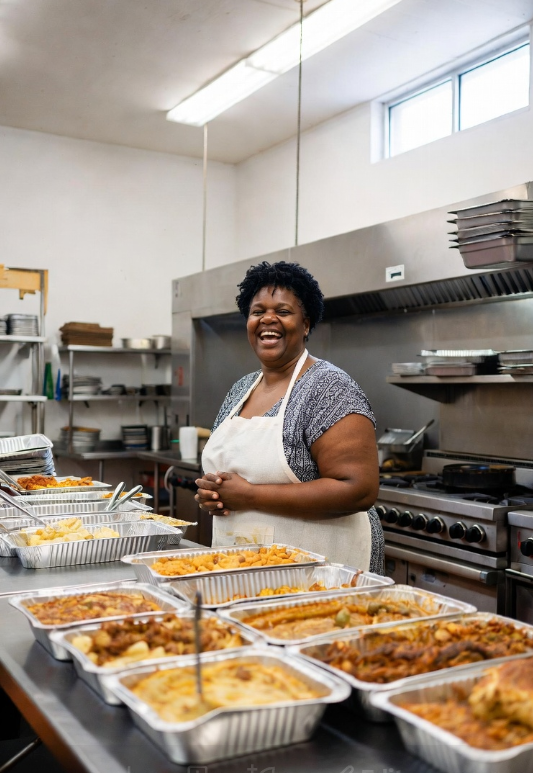
By New Year's Day, 2018. I have never been a woman who makes resolutions because I do not need a calendar to tell me what to do — I have a stove and a church and a family and a God who keeps me busy enough without adding self-improvement to the list. But I do make black-eyed peas. Every year. Because Mama made them, and her mama made them, and somewhere in the chain of women who came before me, someone decided that black-eyed peas on January first meant good luck for the year, and I am not about to break a chain that has held this family together through steel mill closings and Jim Crow and the specific challenges of being Black in Alabama, which is to say: all of it.
The peas were perfect. I soaked them overnight, the way Mama taught me, and simmered them with a ham hock and diced onion and a bay leaf and a dash of hot sauce — not too much, just enough to remind the peas who is in charge. Cornbread on the side, baked in the cast iron, golden and crumbly and made with buttermilk because I do not recognize cornbread made with regular milk. That is cake. Cornbread is buttermilk or it is nothing. Collard greens for prosperity — the greens are money, Mama said, and I have never had enough money to test the theory but I have always had enough greens and that is its own kind of wealth.
Marcus was at the table. He had stayed up until midnight, which I allowed because it was New Year's Eve and he is seventeen and the battles I choose do not include bedtimes on holidays. He was tired and bright-eyed at the same time, the way teenagers are — running on something that is not sleep and not food but is youth itself, the fuel that burns clean and hot and does not run out until you are forty and then it is gone and you wonder where it went. He ate his black-eyed peas and asked about Tuskegee. When do I register for classes, Mama? When do I move in? The questions were a drumbeat — steady, insistent, aimed at the future the way a compass aims at north.
I told him: August. You register in August. And between now and August you finish senior year and you keep your grades up and you eat your peas because your mama said so. He laughed. He has my laugh — loud, sudden, a sound that fills a room the way a hymn fills a sanctuary. Calvin looked up from his plate and smiled, and the smile was the quiet kind, the kind that means: this is good. This table. This food. This boy with his future and his appetite and his mother's laugh. This is good. And it was. On New Year's Day, 2018, sitting at my table with my family, eating black-eyed peas and cornbread and greens, everything was good. And good was enough. Good was everything.
Every year when I make those peas, people ask me how they get that depth — that low, smoky backbone that makes you feel like you’re sitting in someone’s grandmother’s kitchen. The ham hock gets the credit, but the truth is, it’s knowing how to work your pork that makes the difference, and salt pork is a tool I reach for just as often. If you want to carry this tradition into your own kitchen — into your own New Year’s Day table, your own collard greens, your own pot of luck — learning to dice salt pork properly is where you start.
How to Dice Salt Pork
Prep Time: 10 minutes | Cook Time: 0 minutes | Total Time: 10 minutes | Servings: 4
Ingredients
- 8 oz salt pork (rind on or off)
- Cold water, for rinsing
- Sharp chef’s knife
- Cutting board
Instructions
- Rinse the salt pork. Run the salt pork under cold water for 30 seconds to remove excess surface salt. Pat dry thoroughly with paper towels — a dry surface keeps the pork from slipping on the cutting board.
- Remove the rind if desired. If your salt pork has a thick rind, lay it flat and use a sharp knife to carefully slice it away in a single pass, keeping the blade parallel to the cutting board. The rind can be left on if you’re simmering it in a long-cooked dish like beans or greens, where it will soften completely.
- Slice into planks. Cut the salt pork into 1/4-inch thick slabs, keeping your cuts even and consistent so the pieces render at the same rate during cooking.
- Cut into strips. Stack two or three slabs at a time and cut lengthwise into 1/4-inch strips.
- Dice the strips. Rotate the strips 90 degrees and cut crosswise into 1/4-inch cubes. For a finer dice (ideal for incorporating into cornbread batter or seasoning greens), reduce to 1/8-inch cuts.
- Use immediately or store. Diced salt pork can be used right away to render in a Dutch oven before adding black-eyed peas, collard greens, or pinto beans. If not using immediately, refrigerate in an airtight container for up to one week, or freeze for up to two months.
Nutrition (per serving)
Calories: 210 | Protein: 4g | Fat: 22g | Carbs: 0g | Fiber: 0g | Sodium: 680mg