
 By
By The firehouse cooking program has completed its pilot phase. Four modules taught, two stations, twenty-four firefighters trained. Captain Torres submitted the pilot results to the battalion chief: crew meal spending down 35%, nutrition quality up (by Torres's assessment), and morale measurably improved. The recommendation: expand to six more stations in the spring. The budget request is in. I am writing the expanded curriculum. The seed is growing.
The program has changed something in me, too. Teaching cooking — standing in front of a group of adults and showing them how to hold a knife, how to season a stew, how to turn simple ingredients into something that nourishes — has clarified what I have always known but never articulated: I am meant to do this. Not just cook. Teach. Share. Pass it on. The restaurant dream is about serving food. The cooking program is about teaching people to serve themselves. Both are necessary. Both are me.
Veterans Day at the station: the ceremony, the flag, the silence. Then brisket. The annual tradition — fourteen hours, the competition recipe, served in the bay with the trucks and the flag. This year the brisket felt like more than food. It felt like a statement: we are still here, still cooking, still feeding each other, still showing up. Eight months of pandemic and the brisket is the same. The fire is the same. The commitment is the same.
Thanksgiving is in two weeks. The excitement in the house is palpable. Sofia has been counting the days on a calendar she made herself — construction paper, markers, each day crossed off with an X until the day marked "ABUELA AND ABUELO COME" in red. Diego does not understand calendars but he understands enthusiasm, and Sofia's enthusiasm is contagious, so he runs around the house yelling "ABUELA COMING" at intervals that suggest either joy or a warning system.
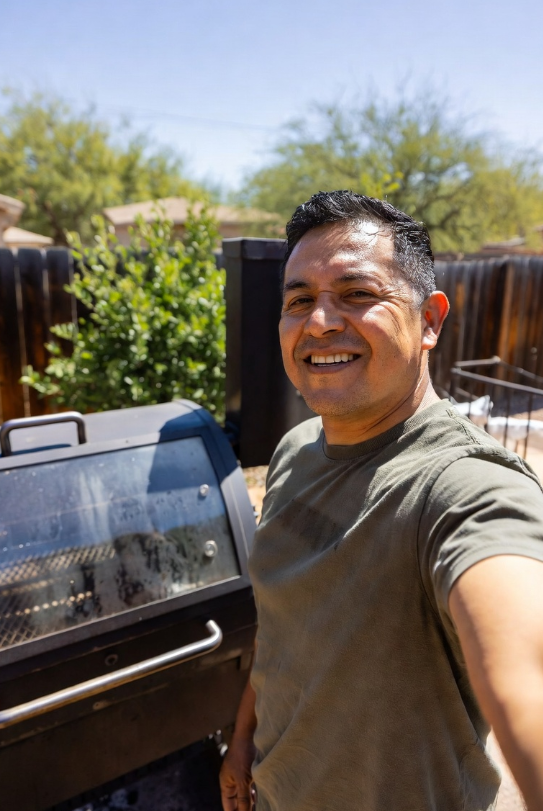
I have been prepping the backyard: extra chairs, heaters for the evening (December in Phoenix is cold by our standards — fifty-five degrees, which to Jim in Duluth is shorts weather but to us is arctic), the grill cleaned and oiled and ready for Roberto's hands for the first time since March. The cinder block grill in Maryvale will be cold on Thanksgiving. But the grill in my backyard will burn for two. Father and son. Side by side. Finally.
The brisket is the Veterans Day tradition — fourteen hours, the competition recipe, non-negotiable — but Thanksgiving calls for something my dad and I can build together in real time, side by side at the grill, the kind of cook that lets you talk while you work. A honey mustard glazed pork tenderloin is exactly that: fast enough to stay present, flavorful enough to feel like a celebration, and forgiving enough that two men who haven’t cooked together in eight months can find their rhythm again without pressure. This is the recipe I’m bringing to that grill the day Roberto’s hands are back on it.
Honey Mustard Glazed Pork Tenderloin
Prep Time: 15 min | Cook Time: 25 min | Total Time: 40 min | Servings: 6
Ingredients
- 2 pork tenderloins (about 1 lb each), trimmed of silver skin
- 1/4 cup Dijon mustard
- 3 tablespoons honey
- 1 tablespoon whole-grain mustard
- 2 cloves garlic, minced
- 1 tablespoon olive oil
- 1 teaspoon fresh thyme leaves (or 1/2 teaspoon dried)
- 1/2 teaspoon smoked paprika
- 1/2 teaspoon kosher salt
- 1/4 teaspoon black pepper
- Fresh parsley, chopped, for garnish
Instructions
- Make the glaze. In a small bowl, whisk together the Dijon mustard, honey, whole-grain mustard, garlic, olive oil, thyme, and smoked paprika until fully combined. Reserve 2 tablespoons of the glaze in a separate bowl for basting after cooking.
- Season the pork. Pat the tenderloins dry with paper towels and season all over with kosher salt and black pepper. Brush generously with the honey mustard glaze, coating all sides. Let rest at room temperature for 10 minutes while the grill heats.
- Preheat the grill. Heat a gas or charcoal grill to medium-high (about 400°F). Oil the grates well to prevent sticking.
- Sear the tenderloins. Place the tenderloins on the grill and sear, turning every 4–5 minutes, for about 20–25 minutes total, brushing with additional glaze each time you turn. Cook until an instant-read thermometer inserted into the thickest part reads 145°F.
- Rest and glaze. Transfer the tenderloins to a cutting board and brush immediately with the reserved glaze. Tent loosely with foil and rest for 5 minutes before slicing.
- Slice and serve. Cut into 1/2-inch medallions on a slight diagonal, arrange on a platter, and garnish with chopped fresh parsley. Serve warm.
Nutrition (per serving)
Calories: 245 | Protein: 32g | Fat: 8g | Carbs: 10g | Fiber: 0g | Sodium: 380mg