
 By
By Valentine's Day in a house where the patriarch is about to have open heart surgery is a particular flavor of celebration — muted, but necessary, because children need normalcy and normalcy means Kevin grills steak in his parka and I make chocolate cake and we all pretend the world is exactly the size of our kitchen table and no bigger.
I made Kevin's chicken fried steak because it's Valentine's tradition now and traditions don't bend for crises. Cube steak, tenderized, dredged, fried, gravy from the drippings. The meal of a woman who is functioning at full capacity in the kitchen and approximately twenty percent capacity everywhere else. Kevin ate it and said, "You didn't have to do this." I said, "I know." I had to do this. Not for him. For me. For the routine. For the habit of feeding that keeps me upright when everything else wants to pull me down.
Jack made seed valentines again — sunflower seeds taped to cards, "Happy Valentine's Day, Plant These." Same as last year, because Jack does not fix what isn't broken and sunflower-seed valentines are not broken. His teacher called to tell me he's the only kid in second grade who gives agricultural valentines, and she said it like it was unusual, and it is, and that's fine. Unusual is just another word for Weber.
Dad's surgery is the twenty-second. Ten days. Mom is calm in the way that Marlene is calm, which is outwardly perfect and internally unknown because Marlene Weber does not display her inside weather any more than Iowa displays its aquifer — it's there, it's massive, but you'd never know from the surface.
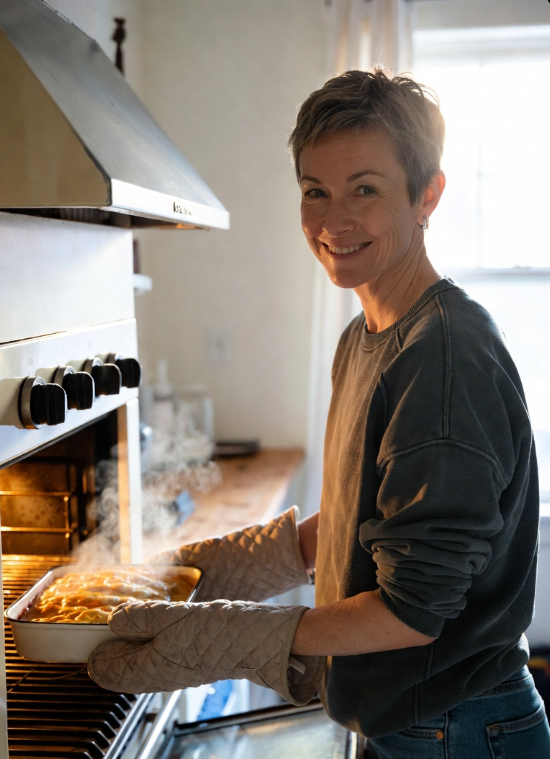
I baked bread again. Two loaves this time — one for us, one for Dad. Kneading dough for ten minutes is good for hands that need something to do. Push, fold, turn, push. The rhythm is like walking bean rows. Repetitive. Physical. Purposeful. You knead because the bread needs it. You knead because you need it. By the time the dough is smooth and elastic, you're calmer. Not calm. Calmer. In February, waiting for your father's heart surgery, calmer is the best you get.
If there is one recipe I can offer you from this particular February, it is the bread. Not because it is complicated — it isn’t — but because of what ten minutes of kneading does to a person who is waiting on something she cannot speed up or stop. I made two loaves every time: one for our table and one to carry over to my parents’ house, which was the only errand that made sense while Dad’s surgery was ten days out and then nine and then eight. Keep your hands busy. Give them a rhythm. Make something that rises anyway, no matter what else is happening in the world outside your kitchen.
Homemade White Sandwich Bread (Two Loaves)
Prep Time: 20 minutes + 2 hours rising | Cook Time: 30 minutes | Total Time: About 3 hours | Servings: 24 slices (2 loaves)
Ingredients
- 2 1/4 tsp active dry yeast (one standard packet)
- 2 1/2 cups warm water (about 110°F — warm to the wrist, not hot)
- 1 tbsp granulated sugar
- 1 tbsp kosher salt
- 2 tbsp neutral oil (vegetable or canola)
- 6 to 6 1/2 cups all-purpose flour, plus more for the kneading surface
- Softened butter for greasing the pans
Instructions
- Activate the yeast. In a large bowl, stir together the warm water, sugar, and yeast. Let it sit undisturbed for 5 to 10 minutes until the surface is foamy. If it doesn’t foam, your water was too hot or the yeast is old — start again.
- Build the dough. Add the oil and salt to the yeast mixture and stir to combine. Add the flour one cup at a time, stirring after each addition, until a shaggy dough forms and begins pulling away cleanly from the sides of the bowl. You may not need the full 6 1/2 cups.
- Knead. Turn the dough out onto a lightly floured surface. Knead for 8 to 10 minutes: push forward with the heel of your hand, fold the dough back toward you, give it a quarter turn, and repeat. The dough is ready when it is smooth, elastic, and springs back slowly when you press a finger into it.
- First rise. Place the dough in a lightly oiled bowl and turn it once to coat all sides. Cover with a clean kitchen towel and set in a warm, draft-free spot for 1 to 1 1/2 hours, until the dough has doubled in size.
- Divide and shape. Punch the dough down firmly. Turn it out and divide it into two equal portions. Shape each portion into a tight log and place each one seam-side down into a well-buttered 9x5-inch loaf pan.
- Second rise. Cover the pans loosely with the towel and let the dough rise again for 45 minutes to 1 hour, until it crowns about an inch above the rim of each pan.
- Bake. Preheat your oven to 375°F. Bake the loaves for 28 to 32 minutes until deep golden brown on top. They are done when they sound hollow when you tap the bottom of the loaf and an instant-read thermometer reads 190°F in the center.
- Cool before slicing. Remove the loaves from the pans immediately and transfer to a wire rack. Wait at least 30 minutes before cutting — the crumb is still setting, and slicing too early makes it gummy. One loaf for your table. One to bring to someone who needs it.
Nutrition (per serving, 1 slice)
Calories: 130 | Protein: 4g | Fat: 1g | Carbs: 26g | Fiber: 1g | Sodium: 195mg