
 By
By The last week of February and the news from outside Louisiana was getting harder to ignore. Cases of the novel coronavirus were being reported in Italy, in South Korea, in Iran, in Washington State. The word "pandemic" was beginning to appear in headlines with increasing frequency. At school, people were talking about it the way you talk about something that is happening somewhere else to someone else — with curiosity and the provisional seriousness that doesn't fully believe in its own concern yet.
Mr. Guidry mentioned it in AP Environmental Science — not as a course topic but as a current event with environmental dimensions: how respiratory illness spreads, what factors influence transmission rates, what pandemic preparedness means at the population level. He was matter-of-fact about it, as he is about everything. He said we should understand the science. Understanding the science is always the correct response. I wrote down everything he said.
Mama had been more attentive to news than usual. She is a nurse. She understands respiratory illness in ways the rest of us don't. She was not panicking — she never panics, it is professionally trained out of her — but she was paying attention with a different quality than usual. I watched her reading her phone at dinner and felt the particular frequency shift that happens when a parent is worried about something they are not yet naming.
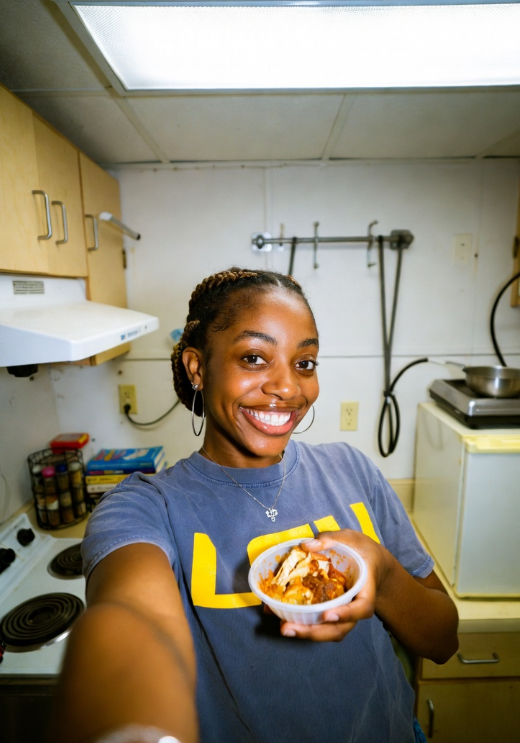
I made pot roast on Sunday — long and comforting and the kind of food that fills the house with warmth when the outside world has an unease to it. Daddy ate two plates and said it was the right food for the week. He didn't say why. We both knew why. We ate together in the warmth of the kitchen and didn't talk about what we were both reading in the news, because sometimes the best response to things you can't control is a good meal shared with people you love, fully present in the warmth.
The pot roast that Sunday was exactly what we needed, and it reminded me that comfort cooking isn’t just about the dish—it’s about the act of making something that fills the house with warmth when everything outside feels uncertain. This homemade chicken potpie carries that same spirit: it takes time and intention, it smells like safety, and it asks you to be fully present in the kitchen instead of doomscrolling through headlines. It’s the recipe I come back to when the world feels like it’s shifting underneath me and I need something steady under my hands.
Homemade Chicken Potpie
Prep Time: 40 min | Cook Time: 45 min | Total Time: 1 hr 25 min | Servings: 6
Ingredients
- 2 cups all-purpose flour
- 3/4 teaspoon salt, divided
- 2/3 cup cold unsalted butter, cubed
- 6–7 tablespoons ice water
- 1 1/2 pounds boneless skinless chicken breasts, cut into 1-inch pieces
- 1/3 cup unsalted butter
- 1/2 cup diced yellow onion
- 2 garlic cloves, minced
- 1/3 cup all-purpose flour
- 1 3/4 cups chicken broth
- 2/3 cup whole milk
- 1 1/2 cups frozen mixed vegetables (peas, carrots, corn, green beans), thawed
- 1/2 teaspoon dried thyme
- 1/4 teaspoon black pepper
- 1 egg, beaten (for egg wash)
Instructions
- Make the crust. Whisk together 2 cups flour and 1/4 teaspoon salt in a large bowl. Cut in cold cubed butter using a pastry cutter or your fingertips until the mixture resembles coarse crumbs with pea-sized pieces remaining. Add ice water one tablespoon at a time, stirring gently until the dough just comes together. Divide into two equal discs, wrap in plastic, and refrigerate for at least 30 minutes.
- Cook the chicken. Season chicken pieces with the remaining 1/2 teaspoon salt and pepper. In a large skillet over medium-high heat, cook chicken until no longer pink, about 6–8 minutes. Remove from skillet and set aside.
- Build the filling. In the same skillet, melt 1/3 cup butter over medium heat. Add onion and cook until softened, about 4 minutes. Add garlic and cook 1 minute more. Sprinkle in 1/3 cup flour and stir constantly for 1–2 minutes to cook out the raw flour taste.
- Add the liquids. Gradually whisk in chicken broth and milk. Cook, stirring frequently, until the mixture thickens to a creamy, gravy-like consistency, about 5–7 minutes. Stir in the cooked chicken, thawed vegetables, thyme, and black pepper. Taste and adjust seasoning. Remove from heat and allow to cool slightly.
- Assemble the pie. Preheat oven to 425°F. On a lightly floured surface, roll one dough disc into a 12-inch circle and fit it into a 9-inch deep-dish pie plate, letting the edges hang over. Pour the warm filling into the crust. Roll the second disc into a 12-inch circle and lay it over the filling. Trim the edges to a 1-inch overhang, fold under, and crimp to seal. Cut 4–5 small slits in the top crust to vent steam. Brush all over with the beaten egg.
- Bake. Place the pie on a rimmed baking sheet (to catch any drips) and bake at 425°F for 30–35 minutes, until the crust is deep golden brown and the filling is bubbling through the vents. If the edges begin to brown too quickly, cover them loosely with strips of foil. Let the pie rest for 10 minutes before slicing.
Nutrition (per serving)
Calories: 540 | Protein: 29g | Fat: 28g | Carbs: 44g | Fiber: 3g | Sodium: 520mg