Erik fixed the step on Saturday. He came with his tools — Erik's tools are as old as Erik, inherited from Pappa, kept in the same wooden toolbox that Pappa carried to every repair job in the house — and he leveled the step and replaced the railing and added a non-slip strip, all while Mamma watched from the window with the expression of a woman supervising work she didn't authorize.
She came out when he was done and inspected it. "It looks different," she said. Erik said, "It's level now, Mamma." She said, "It was fine before." Erik said, "You fell." She said nothing, which from Mamma is an acknowledgment that the point has been made, even if she won't concede it verbally.
I brought coffee and cinnamon rolls. The three of us — Mamma, Erik, me — sat on the front porch in the October air and drank coffee and ate rolls and the leaves were falling around us and the afternoon light was golden and for a moment the three of us were just three of the five Johansson kids, minus Lars and Karin, and the subtraction was painful and familiar and we absorbed it the way we always do, by eating and being quiet.
Erik looks tired. He's sixty-four and he's been retired from the mill for two years and retirement doesn't suit him the way it should. He needs to work — his hands need to work, the way mine need to cook and Paul's need to teach. He does woodworking in his garage. He volunteers at Habitat for Humanity. He fixes Mamma's house. But there's a restlessness in him that wasn't there when he was working, as if the mill gave him a purpose he hasn't fully replaced.
I worry about Erik the way I worry about everyone, which is to say constantly and silently. He lives alone — never married, never seemed to want to. He has friends, a routine, his woodworking, his Thursdays at Mamma's. But he's alone in the way that scares me, the way that has scared me since Lars died and I watched Pappa's aloneness grow inside him like a tumor.
I can't fix this. I can fix a step. I can bake cinnamon rolls. I can show up with coffee. But the fundamental aloneness of a Johansson man — the silence they carry, the way they hold grief in their bodies — I can't fix that. I can only be present for it.
I made a big batch of beef stew on Sunday and brought a container to Erik. He said, "You don't need to feed me, Linda." I said, "I know." I left the stew on his counter. He'll eat it. He always eats it. The stew is not about hunger. The stew is about presence. It says: I was here. I thought of you. You're not alone.
Paul helped me carry the stew because the pot was heavy and because Paul carries things when I need things carried, and this is what marriage is — carrying stew to your brother-in-law because your wife needs you to and the stew is heavy and the night is cold and you don't question it because you've been married for twenty-nine years and the not-questioning is love.
This is the stew I brought to Erik’s that Sunday night — the one Paul helped me carry because the pot was heavy and the night was cold. It’s nothing fancy, just beef and root vegetables and a long, slow simmer, the kind of cooking that gives your hands something to do while your heart works through the things it can’t say. I make it in big batches because the people I love are scattered across town in their quiet houses, and a container of stew on the counter is the closest I can get to being present when I’m not there.
Hearty Beef Stew
Prep Time: 25 minutes | Cook Time: 2 hours 30 minutes | Total Time: 2 hours 55 minutes | Servings: 8
Ingredients
- 3 pounds beef chuck roast, cut into 1-1/2 inch cubes
- 1/4 cup all-purpose flour
- 1 teaspoon salt, plus more to taste
- 1/2 teaspoon black pepper, plus more to taste
- 3 tablespoons olive oil, divided
- 1 large yellow onion, diced
- 4 cloves garlic, minced
- 2 tablespoons tomato paste
- 1 cup dry red wine
- 4 cups beef broth
- 2 tablespoons Worcestershire sauce
- 1 tablespoon soy sauce
- 2 bay leaves
- 1 teaspoon dried thyme
- 1 teaspoon smoked paprika
- 1 pound Yukon Gold potatoes, cut into 1-inch chunks
- 4 large carrots, peeled and cut into 1-inch pieces
- 3 stalks celery, cut into 1/2-inch pieces
- 1 cup frozen peas
- 2 tablespoons fresh parsley, chopped
Instructions
- Season the beef. Pat the beef cubes dry with paper towels. In a large bowl, toss the beef with flour, salt, and pepper until evenly coated.
- Brown the beef. Heat 2 tablespoons olive oil in a large Dutch oven over medium-high heat. Working in batches so you don’t crowd the pot, brown the beef on all sides, about 3 to 4 minutes per batch. Transfer browned beef to a plate and set aside.
- Cook the aromatics. Add the remaining 1 tablespoon olive oil to the pot. Add the diced onion and cook until softened, about 4 minutes. Add the garlic and tomato paste and stir for 1 minute until fragrant.
- Deglaze the pot. Pour in the red wine and scrape up any browned bits from the bottom of the pot. Let the wine simmer for 2 minutes.
- Build the stew. Add the beef broth, Worcestershire sauce, soy sauce, bay leaves, thyme, and smoked paprika. Return the browned beef and any accumulated juices to the pot. Stir to combine and bring to a boil.
- Simmer low and slow. Reduce heat to low, cover, and simmer for 1 hour 30 minutes, stirring occasionally.
- Add the vegetables. Add the potatoes, carrots, and celery. Cover and continue simmering for 45 minutes to 1 hour, until the vegetables are tender and the beef is fork-tender.
- Finish the stew. Remove the bay leaves. Stir in the frozen peas and cook for 5 minutes until heated through. Taste and adjust salt and pepper as needed. Garnish with fresh parsley before serving.
Nutrition (per serving)
Calories: 420 | Protein: 38g | Fat: 16g | Carbs: 28g | Fiber: 4g | Sodium: 780mg
About the cook who shared this
Linda Johansson
Week 82 of Linda’s 30-year story
· Duluth, Minnesota
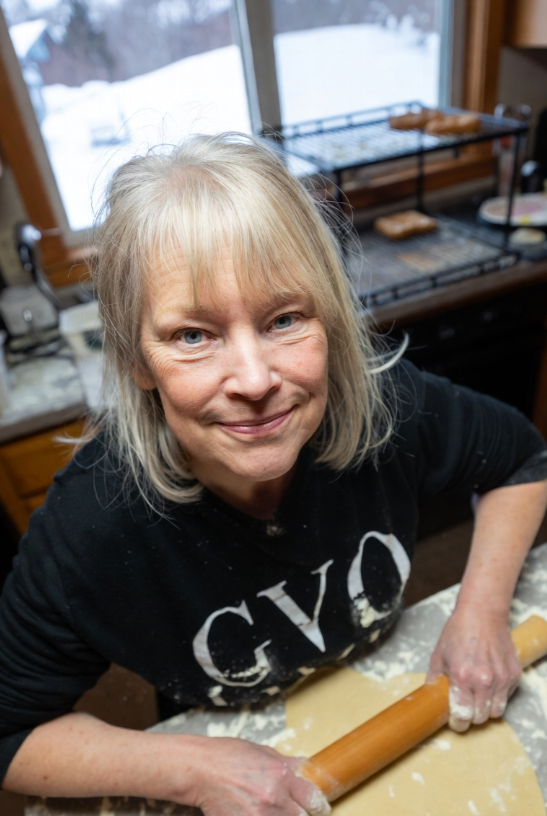
Linda is a sixty-three-year-old retired nurse from Duluth, Minnesota, living alone in the house where she raised her children and said goodbye to her husband. She lost Paul to ALS in 2020 after two years of watching the kindest man she'd ever known lose everything but his dignity. She cooks Scandinavian comfort food and Minnesota hotdish and the pot roast Paul loved, and she sets two places at the table out of habit because it makes her feel less alone. Every recipe she writes is a person she's loved.
