
← Back to Blog

Hearty Beef Stew with Limpa Bread — A One-Handed Meal Made with Love

Paul's left hand is unusable now. Not gradually, not slowly — the last function left, the grip that could hold a cup if I placed it carefully, is gone. He tried to pick up his coffee mug on Monday morning and his fingers closed around it and then opened, involuntarily, like a flower blooming in reverse, and the mug fell and the coffee went everywhere and he stood in the kitchen looking at his hand as if it belonged to someone else. I cleaned the coffee. I poured him a new cup and put it in his right hand and I said, "The right hand is doing fine." He said, "The right hand is doing the work of two." I said, "It's a good hand. Strong." He looked at me and his eyes were — I can't describe his eyes. Grateful and devastated. A man watching himself lose something and watching his wife pretend it isn't happening and knowing that the pretending is love. He can't write. Paul Johansson, who has been writing since he was five — lesson plans, journal entries, letters, the handwriting that I fell in love with on a card at a church potluck in 1986 — cannot hold a pen in his left hand. He's learning to write right-handed. The handwriting is like a child's — shaky, uneven, large. He practices at the kitchen table in the evening, filling legal pads with right-handed script, and I watch from across the room and I don't say anything because there's nothing to say that would help. I started cutting his food this week. I do it casually — at the counter, before I plate it, so it arrives at the table already cut, as if it's a stylistic choice and not a medical necessity. Paul notices. Paul notices everything. But he eats the pre-cut food without comment because the alternative is struggling with a knife and fork and the struggling is harder on both of us than the cutting. I made a meal he can eat with one hand: beef stew with thick bread for dipping. Everything in a bowl. Spoon in the right hand. Bread torn, not cut. The food accommodating the body without announcing it. The stew was good — chuck roast, carrots, potatoes, red wine, thyme. The bread was limpa, torn into pieces, piled on a plate within reach. Paul ate a full bowl, dipping the bread, and said, "This is the best stew you've made." It was the same recipe as always. But sometimes the context changes the taste. I called the occupational therapist at the ALS clinic. We talked about adaptive equipment — rocker knives, plate guards, weighted utensils. The words sound clinical. They feel like a surrender. But they're not surrender — they're strategy. You don't fight a disease by refusing to adapt. You fight it by adapting so well that the disease has to work harder to take what it wants. Paul's right hand is still strong. His legs are strong. His voice is clear. His mind is perfect. The disease has one hand. One hand out of an entire man. I'm holding the rest of him steady, and I will hold him steady for as long as my arms will let me. The cutting. The cutting is the thing I'll remember. Standing at the counter, cutting my husband's food into bite-sized pieces, the knife moving through the beef with the same precision I use at work, the same steady hands. The cutting is nursing. The cutting is love. They're the same thing.

After that Monday morning with the coffee mug, I started thinking about every meal differently — not just what tastes good, but what Paul can manage with one strong hand, a spoon, and his dignity intact. This beef stew became our answer. Everything in a bowl, bread torn into pieces he can grab and dip, no knife required. I’m sharing the recipe here because maybe someone else is rethinking dinner for the same quiet reasons, and it helps to know that a meal can hold someone steady, too.

Hearty Beef Stew with Limpa Bread

Prep Time: 25 minutes | Cook Time: 2 hours 30 minutes | Total Time: 2 hours 55 minutes | Servings: 6

Ingredients

  • 2 1/2 pounds chuck roast, cut into 1 1/2-inch pieces
  • 1/4 cup all-purpose flour
  • 1 teaspoon kosher salt, plus more to taste
  • 1/2 teaspoon black pepper
  • 3 tablespoons olive oil, divided
  • 1 large yellow onion, diced
  • 4 cloves garlic, minced
  • 2 tablespoons tomato paste
  • 1 cup dry red wine
  • 4 cups beef broth
  • 1 pound Yukon Gold potatoes, cut into 1-inch chunks
  • 4 large carrots, peeled and cut into 1-inch pieces
  • 2 stalks celery, sliced
  • 1 tablespoon fresh thyme leaves (or 1 teaspoon dried thyme)
  • 2 bay leaves
  • 1 tablespoon Worcestershire sauce
  • Fresh parsley for garnish

For the Limpa Bread

  • 1 1/2 cups warm water (110–115°F)
  • 2 1/4 teaspoons active dry yeast (1 packet)
  • 2 tablespoons brown sugar
  • 2 tablespoons butter, melted
  • 1 1/2 cups medium rye flour
  • 2 to 2 1/2 cups bread flour
  • 1 1/2 teaspoons kosher salt
  • 1 tablespoon caraway seeds
  • 1 teaspoon fennel seeds
  • Zest of 1 orange
  • 2 tablespoons molasses

Instructions

  1. Season and sear the beef. Pat the chuck roast pieces dry. Toss with flour, salt, and pepper. Heat 2 tablespoons olive oil in a large Dutch oven over medium-high heat. Sear beef in batches until deeply browned on all sides, about 3–4 minutes per batch. Transfer to a plate.
  2. Build the base. Add the remaining tablespoon of oil to the pot. Cook the onion until softened, about 4 minutes. Add garlic and tomato paste and stir for 1 minute until fragrant and the paste darkens slightly.
  3. Deglaze with wine. Pour in the red wine and scrape up all the browned bits from the bottom of the pot. Let it simmer for 2 minutes.
  4. Add broth and beef. Return the seared beef and any juices to the pot. Add the beef broth, Worcestershire sauce, thyme, and bay leaves. Bring to a boil, then reduce heat to low, cover, and simmer for 1 hour.
  5. Add the vegetables. Stir in the potatoes, carrots, and celery. Cover and continue simmering for 1 to 1 1/2 hours, until the beef is fork-tender and the vegetables are soft.
  6. Adjust and serve. Remove the bay leaves. Taste and season with additional salt and pepper as needed. The stew should be thick and rich — if it’s too thin, simmer uncovered for 10 minutes. Ladle into bowls and garnish with fresh parsley.
  7. Start the limpa bread. While the stew simmers, combine warm water, yeast, and brown sugar in a large bowl. Let sit 5–10 minutes until foamy. Stir in melted butter, molasses, orange zest, caraway seeds, and fennel seeds.
  8. Mix the dough. Add the rye flour and salt, stirring until combined. Gradually add the bread flour, 1/2 cup at a time, until a soft dough forms. Turn out onto a floured surface and knead for 8–10 minutes until smooth and elastic.
  9. Let it rise. Place the dough in a lightly oiled bowl, cover with a towel, and let rise in a warm spot for 1 to 1 1/2 hours, until doubled in size.
  10. Shape and bake. Punch down the dough and shape into a round loaf on a parchment-lined baking sheet. Cover and let rise another 30–40 minutes. Preheat oven to 375°F. Bake for 30–35 minutes until the loaf sounds hollow when tapped on the bottom. Cool on a wire rack.
  11. Tear and serve. Tear the limpa bread into generous pieces and pile on a plate alongside the stew. The bread is for dipping — no knife needed.

Nutrition (per serving)

Calories: 620 | Protein: 42g | Fat: 22g | Carbs: 58g | Fiber: 6g | Sodium: 890mg

Linda Johansson
About the cook who shared this
Linda Johansson
Week 105 of Linda’s 30-year story · Duluth, Minnesota
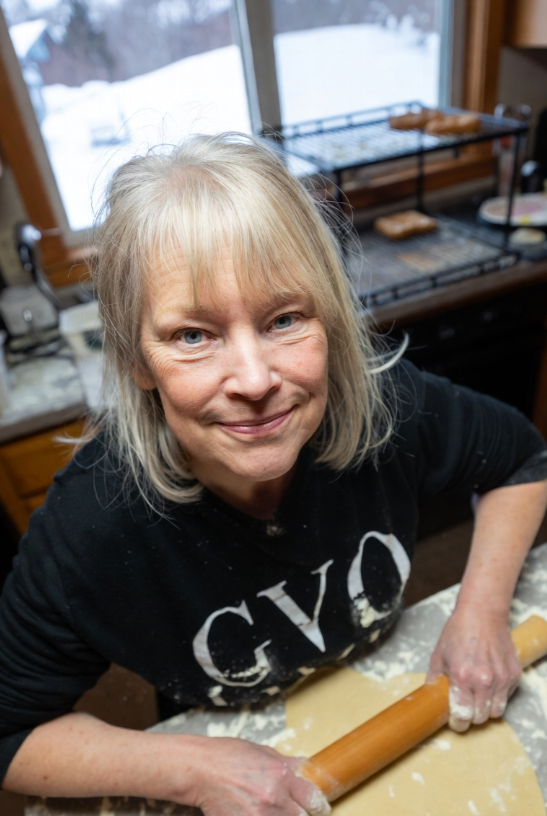
Linda is a sixty-three-year-old retired nurse from Duluth, Minnesota, living alone in the house where she raised her children and said goodbye to her husband. She lost Paul to ALS in 2020 after two years of watching the kindest man she'd ever known lose everything but his dignity. She cooks Scandinavian comfort food and Minnesota hotdish and the pot roast Paul loved, and she sets two places at the table out of habit because it makes her feel less alone. Every recipe she writes is a person she's loved.

How Would You Spin It?

Put your own twist on this recipe — what would you add, remove, or swap?