
 By
By Mid-September and I have settled into a new routine — the post-Fumiko routine, the one that includes her recipes cooked from translated cards pinned above the stove, her ceramic bowls used daily, her cast iron pan on the burner every morning for tamagoyaki. The routine is not the same as hers. It is mine, built from the pieces of hers, reconstructed in a different kitchen in a different city by a different woman who shares her blood and her stubbornness and her inability to eat soup that does not smell like the ocean.
I made sanma — Pacific saury, the autumn fish that Fumiko waited for every September. Finding sanma in Portland is not easy — it is a Japanese market specialty, seasonal, available for only a few weeks. I found it at Uwajimaya, two small silver fish, and I grilled them whole the way Fumiko did: salted, broiled until the skin crackles and the flesh is white and flaky, served with grated daikon and soy sauce. The smell of grilling sanma filled the apartment with autumn — smoky, rich, the smell of Japanese fall, the smell of Fumiko's kitchen in September. I ate the fish with rice and miso soup and closed my eyes and was in Sacramento, at Fumiko's table, ten years old, picking fish bones from my teeth while Fumiko told me to eat the head. I did not eat the head then. I ate the head now. Fumiko would be pleased.
Miya turned two and a half this week. An age that exists only for parents — no one else counts half-birthdays — but I count it because the counting is the paying attention and the paying attention is the love. She is two and a half and she uses chopsticks (badly), says "Obaachan" (perfectly), and stirs miso paste into dashi with both hands and a concentration that suggests she believes the fate of the universe depends on the even dissolution of fermented soybean paste. She is not wrong.
I wrote about sanma for the blog — about seasonal fish, about the Japanese reverence for the first catch of autumn, about the way Fumiko waited all year for sanma the way I wait all year for tomatoes. The waiting is the relationship. The waiting is the proof that you care about the thing, that the thing matters, that the arrival of a small silver fish can be the most important event of the week. The post was quiet. The week was quiet. The fish was extraordinary.
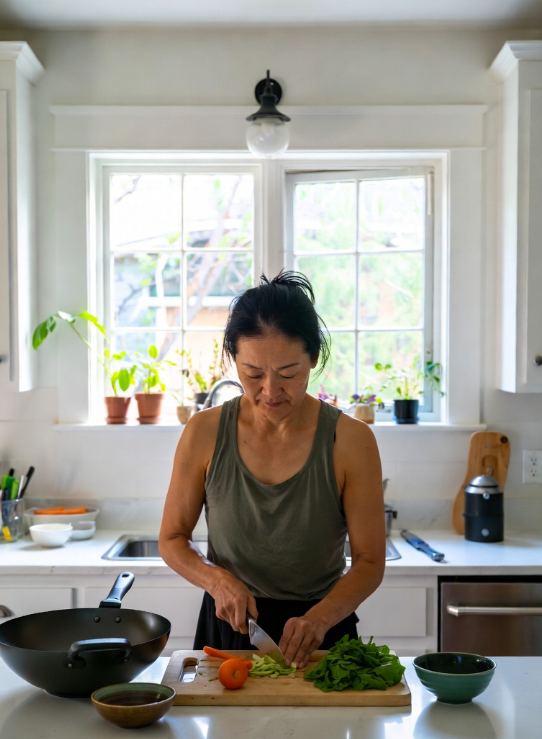
The sanma was mine—smoky and ceremonial and not something Miya will fully appreciate for years. But she was watching from her chair with that same two-and-a-half-year-old intensity she brings to the miso pot, and I wanted something we could make together afterward, something where her hands could do real work. Fumiko used to say that children learn a kitchen through repetition and proximity, not instruction. So we made dumplings: folding, pressing, small fingers pinching pleats into wrappers with imperfect and absolutely correct results. This is the recipe that has become our follow-up ritual—the thing we cook after the serious fish, the thing that belongs to both of us.
Healthy Steamed Dumplings
Prep Time: 30 min | Cook Time: 12 min | Total Time: 42 min | Servings: 4 (about 20 dumplings)
Ingredients
- 20 round dumpling wrappers (gyoza-style)
- 1/2 lb ground chicken or lean ground pork
- 1 cup napa cabbage, finely shredded and squeezed dry
- 2 green onions, finely minced
- 1 tbsp low-sodium soy sauce
- 1 tsp sesame oil
- 1 tsp fresh ginger, grated
- 1 garlic clove, minced
- 1/4 tsp white pepper
- 1 tsp cornstarch
- Cabbage leaves or parchment for lining steamer
- Dipping sauce: 2 tbsp low-sodium soy sauce, 1 tbsp rice vinegar, 1/4 tsp chili oil (optional)
Instructions
- Make the filling. In a large bowl, combine ground meat, shredded napa cabbage, green onions, soy sauce, sesame oil, ginger, garlic, white pepper, and cornstarch. Mix well with your hands or a fork until everything is evenly combined. The mixture should hold together when pressed.
- Fill the dumplings. Place a dumpling wrapper flat in your palm. Add about 1 teaspoon of filling to the center—do not overfill. Dampen the edge of the wrapper lightly with water using your fingertip, fold in half over the filling, and press to seal. Pleat the edge by making small folds along the sealed edge, pressing firmly to hold. Repeat with remaining wrappers and filling.
- Prepare the steamer. Line a bamboo or metal steamer basket with napa cabbage leaves or parchment paper cut with small holes to allow steam to pass. Bring 2 inches of water to a boil in a wok or wide pot that fits the steamer snugly.
- Steam in batches. Arrange dumplings in the lined steamer in a single layer, leaving a little space between each. Place steamer over the boiling water, cover, and steam for 10—12 minutes, until the wrappers are translucent and the filling is cooked through. Do not lift the lid during the first 8 minutes.
- Make the dipping sauce. While dumplings steam, whisk together soy sauce, rice vinegar, and chili oil if using. Taste and adjust.
- Serve immediately. Transfer dumplings carefully to a plate—they will be delicate. Serve hot with dipping sauce alongside. Best eaten the moment they are ready.
Nutrition (per serving)
Calories: 210 | Protein: 16g | Fat: 6g | Carbs: 24g | Fiber: 1g | Sodium: 420mg