
 By
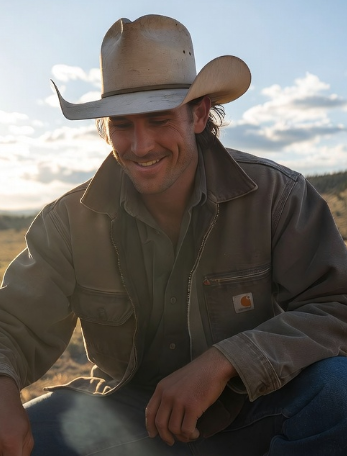
By I haven't left the ranch. It's been ten days. I haven't gone to town, haven't gone to Billings, haven't gone farther than the fence line along the south pasture, which is maybe a quarter mile from the house. Mom drives to Roundup for groceries. Dad works cattle. I sit on the porch and watch the river. That's what I do now. I watch the river.
The Musselshell is half-frozen, moving slow under ice at the banks, open in the middle where the current won't quit. I watch it for hours. I don't know what I'm watching for. I'm not waiting for anything. I'm just — present, in the most reduced sense of the word. A body on a porch. Eyes open. Breathing. The VA discharge papers said to establish care with Dr. Kessler in Billings. I haven't called. The orange bottles are on my dresser. I take the pills because the pills are structure and structure is the last scaffolding holding the shape of a person upright.
Dad works around me. That's the right phrase — around, not with. He moves cattle, checks fences, feeds the horses, does everything he's done every day for forty years, and he does it in my periphery without asking me to join and without commenting on my absence. He gives me space the way you give a spooked horse space — not ignoring, not crowding, just existing at the right distance. Dad has never been to war but he understands something about what it does, or he understands me, which is maybe the same thing.
Mom cooks. Of course Mom cooks — she's been cooking for this family since before I existed and she's not going to stop because her son came home wrong. Pot roast on Sunday. Beef stew on Tuesday. Biscuits every morning. Chicken fried steak on Thursday with mashed potatoes and gravy so thick it holds a spoon upright. She puts the plates in front of me and I eat some of it. Not enough — I can see her measuring what comes back to the kitchen, calculating the math of what went in versus what went out, the school nurse assessing the patient. I eat more than I want to because she needs me to eat. That's the deal. She feeds me. I eat. We don't talk about why I need to be fed like a child. We don't talk about much of anything.
Last night I got up at 2 AM and went to the kitchen and stood there. Just stood. The house creaked in the cold. I could hear Dad's breathing down the hall. I made toast. Butter and salt. Ate it standing at the counter in the dark. The bread was Mom's bread, homemade, dense, the kind that holds up under butter. I went back to bed. I didn't sleep. The toast was good. Small victories. January-sized. February-sized. Whatever size this is.
That toast at 2 AM—butter, salt, bread that actually meant something—reminded me that the right food doesn’t have to announce itself. It just has to hold. I’ve been making this hamburger stew since before things got hard, and it’s the kind of pot you put on when you need the house to smell like something good is happening, even if you’re not sure you believe it yet. Here’s how it goes.
Hamburger Stew
Prep Time: 15 min | Cook Time: 45 min | Total Time: 1 hr | Servings: 6
Ingredients
- 1 1/2 lbs ground beef (80/20)
- 1 medium yellow onion, diced
- 3 cloves garlic, minced
- 3 medium russet potatoes, peeled and cut into 3/4-inch cubes
- 3 medium carrots, sliced into rounds
- 2 stalks celery, sliced
- 1 can (14.5 oz) diced tomatoes, undrained
- 3 cups beef broth
- 2 tablespoons tomato paste
- 1 tablespoon Worcestershire sauce
- 1 teaspoon dried thyme
- 1 teaspoon dried parsley
- 1/2 teaspoon black pepper
- 1 teaspoon salt, plus more to taste
- 2 tablespoons all-purpose flour
- 1 tablespoon olive oil or vegetable oil
Instructions
- Brown the beef. Heat oil in a large Dutch oven or heavy pot over medium-high heat. Add ground beef and cook, breaking it apart, until no pink remains, about 7–8 minutes. Drain excess fat, leaving about 1 tablespoon in the pot.
- Build the base. Add onion and celery to the pot. Cook over medium heat until softened, about 4 minutes. Add garlic and cook 1 minute more. Stir in tomato paste and flour; cook, stirring, for 2 minutes until the paste darkens slightly.
- Add liquids and vegetables. Pour in beef broth, diced tomatoes, and Worcestershire sauce. Add potatoes, carrots, thyme, parsley, salt, and pepper. Stir to combine, scraping up any browned bits from the bottom.
- Simmer. Bring to a boil, then reduce heat to low. Cover and simmer for 30–35 minutes, until potatoes and carrots are fully tender and the broth has thickened into a gravy-like consistency.
- Adjust and serve. Taste and adjust salt and pepper as needed. Ladle into bowls. Serve with thick-sliced homemade bread or biscuits for soaking up the broth.
Nutrition (per serving)
Calories: 380 | Protein: 26g | Fat: 16g | Carbs: 32g | Fiber: 4g | Sodium: 720mg