Mamma fell on Thursday. Not badly — she tripped on the rug in the hallway and bruised her hip — but she fell, and when your mother is eighty-five and she falls, the world tilts sideways for a moment before it rights itself.
Erik called me at work. "Mamma fell," he said, in the flat voice that Johansson men use when they're scared. I left St. Mary's — my charge nurse covered for me, God bless her — and drove to Fifth Street. Mamma was on the couch with an ice pack, furious. Not at the fall. At the fuss. "I tripped on a rug, Linda. I didn't fall off a cliff."
I checked her over — nurse's hands, nurse's eyes. The hip was bruised, not broken. Her range of motion was good. She was alert, oriented, angry, and opinionated, all of which are Mamma's baseline and therefore reassuring. I said she should see her doctor. She said her doctor was "a child" who "probably doesn't know what a bruise is." I said she was going anyway. She went. The doctor — who is forty-two and perfectly competent — said it was a bruise and recommended she remove the hallway rug. Mamma said she'd had that rug since 1974 and it wasn't going anywhere. The rug is still there.
This is the beginning of something and I know it. Not the fall itself — the fall is nothing. But eighty-five is eighty-five, and the body that pulled weeds on its knees last month is the same body that tripped on a rug this week, and the math of aging doesn't lie. I've been a nurse for thirty-one years. I know what comes next. I know the trajectory. And I know that knowing doesn't make it easier.
Erik and I had coffee at Mamma's kitchen table while she napped on the couch — another sign, because Mamma doesn't nap; she considers napping a moral failing. Erik looked at me over his cup and said, "She's getting older, Linda." I said, "We're all getting older, Erik." He said, "But she's getting older faster." And he was right, and we both knew it, and we drank our coffee and didn't say anything else.
I made kroppkakor that night — Swedish potato dumplings filled with pork and onions, boiled until they float. They're heavy and filling and exactly wrong for August, but they're Mamma's favorite, and I needed to make something that was hers. You boil potatoes, rice them, mix with flour and egg into a dough, fill with seasoned pork, shape into balls the size of a fist, and boil them. They're dense and starchy and you serve them with melted butter and lingonberry jam and they taste like November even when it's August.
Paul ate two and said, "These are a hug in dumpling form." He's not wrong. That's exactly what they are.
I didn’t have the energy that night to make the full kroppkakor from scratch — the ricing, the shaping, the waiting — but I needed something in the same family: starchy, dense, grounding, the kind of food that sits in your chest like a hand on your shoulder. This gnocchi cauliflower casserole does exactly that. Pillowy potato gnocchi baked into something warm and cohesive, the kind of dish that doesn’t ask anything of you while you’re eating it. When the world tilts sideways, you need food that tilts it back.
Gnocchi Cauliflower Casserole
Prep Time: 15 minutes | Cook Time: 35 minutes | Total Time: 50 minutes | Servings: 6
Ingredients
- 1 lb (450g) store-bought or homemade potato gnocchi
- 3 cups cauliflower florets, cut into small pieces
- 2 tablespoons olive oil, divided
- 3 cloves garlic, minced
- 1 medium yellow onion, diced
- 2 tablespoons unsalted butter
- 2 tablespoons all-purpose flour
- 1 1/2 cups whole milk
- 1/2 cup chicken or vegetable broth
- 1 cup shredded Gruyere cheese, divided
- 1/2 cup freshly grated Parmesan cheese, divided
- 1/2 teaspoon Dijon mustard
- 1/4 teaspoon ground nutmeg
- Salt and black pepper to taste
- 2 tablespoons breadcrumbs
- Fresh parsley, chopped, for garnish
Instructions
- Preheat and prep. Preheat your oven to 400°F (200°C). Lightly grease a 9x13-inch baking dish and set aside.
- Roast the cauliflower. Toss cauliflower florets with 1 tablespoon olive oil, a pinch of salt, and pepper. Spread on a baking sheet and roast for 15–18 minutes until golden at the edges. Remove and set aside. Reduce oven to 375°F (190°C).
- Par-cook the gnocchi. Bring a large pot of salted water to a boil. Cook gnocchi according to package directions, just until they float, about 2–3 minutes. Drain and toss with the remaining tablespoon of olive oil to prevent sticking.
- Sauté the aromatics. In a large oven-safe skillet or saucepan over medium heat, melt butter. Add onion and cook until softened, about 5 minutes. Add garlic and cook 1 minute more until fragrant.
- Build the sauce. Sprinkle flour over the onion mixture and stir for 1 minute to cook out the raw flour taste. Slowly whisk in milk and broth, a little at a time, until smooth. Bring to a gentle simmer, stirring constantly, until the sauce thickens, about 4–5 minutes.
- Add cheese and seasoning. Remove from heat. Stir in 3/4 cup of the Gruyere, 1/4 cup of the Parmesan, Dijon mustard, and nutmeg. Season generously with salt and pepper. The sauce should be smooth and creamy.
- Combine and assemble. Gently fold the cooked gnocchi and roasted cauliflower into the cheese sauce until everything is evenly coated. Pour into the prepared baking dish and spread into an even layer.
- Top and bake. Scatter the remaining Gruyere, remaining Parmesan, and breadcrumbs evenly over the top. Bake at 375°F for 18–22 minutes until bubbling around the edges and the top is golden and lightly crisped.
- Rest and serve. Let the casserole rest for 5 minutes before serving. Garnish with fresh parsley. Serve warm, straight from the dish.
Nutrition (per serving)
Calories: 390 | Protein: 15g | Fat: 18g | Carbs: 44g | Fiber: 3g | Sodium: 520mg
About the cook who shared this
Linda Johansson
Week 21 of Linda’s 30-year story
· Duluth, Minnesota
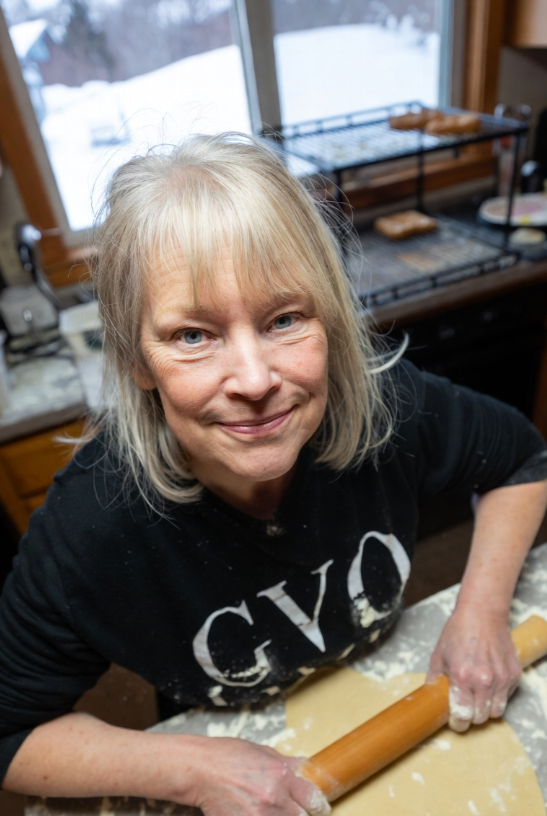
Linda is a sixty-three-year-old retired nurse from Duluth, Minnesota, living alone in the house where she raised her children and said goodbye to her husband. She lost Paul to ALS in 2020 after two years of watching the kindest man she'd ever known lose everything but his dignity. She cooks Scandinavian comfort food and Minnesota hotdish and the pot roast Paul loved, and she sets two places at the table out of habit because it makes her feel less alone. Every recipe she writes is a person she's loved.
