Paul died on Sunday. Minnesota locked down on Wednesday.
Three days. Three days between my husband's death and the closing of the world. Three days in which I should have been surrounded by people — the church, the Damiano Center, the neighbors, the community that holds you when you fall — and instead the world shut its doors and I was alone in a house that still smelled like cardamom bread and still had machines in the bedroom and still had two places set at the table because I hadn't cleared the second place yet and I couldn't. I couldn't.
The funeral was Saturday, March 21. A funeral for twelve people because of the gathering limit. Twelve. Paul Johansson taught thousands of students. He served his church for thirty years. He walked the lakewalk for forty years. And twelve people were allowed to say goodbye.
Anna and David drove up. Peter flew in (one of the last flights). Elsa was here. Sophie was here. Erik brought Mamma. The twelve: family only. No students. No colleagues. No neighbors. No Gerald from the Damiano Center. Just us.
The Swedish Evangelical Lutheran Church. The same church where we were baptized, confirmed, married. The same church where Pappa was eulogized and Lars was eulogized. Pastor Eriksson conducted the service. The pews were empty except for our twelve. The sound of twelve people in a church built for three hundred is the sound of absence made physical.
I didn't speak. I couldn't. Elsa spoke — she talked about Paul's ships, his history, his teaching, his love of the lake. Peter spoke — three sentences, which was three more than anyone expected, and the three sentences were: "My father saw the best in history. He saw the best in people. He saw the best in me." Anna spoke — organized, steady, the teacher's daughter giving the lesson: "Paul Johansson believed that the past mattered because it was made by people, and people mattered because they made the past."
Mamma sat in the front pew and held my hand. She didn't speak. She held. Eighty-nine years old, holding her daughter's hand in the same church where she held the same daughter's hand at the same daughter's husband's wedding thirty-one years ago.
I went home. The house was empty. The machines were gone — the hospice team had removed them on Monday, quietly, efficiently, the way they remove everything: with clinical compassion. The bedroom was a bedroom again. The nightstand was empty. The hissing was gone. The beeping was gone.
The silence was enormous.
Sven was in the hallway. He looked at Paul's empty wheelchair (still there — I hadn't returned it yet) and then at me and then at the wheelchair again. He lay down beside the wheelchair and put his head on the wheel and didn't move.
I went to the kitchen. I stood at the counter. I didn't cook. I didn't bake. I didn't do anything. I stood.
Then I set two places at the table. Two places. The way I've set the table for thirty-one years. Two plates. Two glasses. Two settings.
I know he's gone. I set the place anyway.
The lockdown began. The doors closed. The world stopped.
I set two places and I sat at the table and I ate nothing and the house smelled like nothing because the bread wasn't baking and the meatballs weren't cooking and the only smell was the absence of smell, which is the smell of grief.
The machines stopped. The world stopped. I stopped.
For now. I stopped.
I wrote about standing at that counter and doing nothing, and that was the truth — the meatballs didn’t cook that day, and the bread didn’t bake, and the house smelled like absence. But eventually the counter stopped being a place I stood frozen and became a place I worked again, slowly, with my hands, the way cooking always comes back before words do. This was the recipe I returned to first: the meatballs I’ve made a hundred times, adapted over the years to be gluten-free when Paul’s digestion required it, and now just the way I make them — his recipe, really, in all the ways that matter.
Gluten-Free Meatballs
Prep Time: 15 min | Cook Time: 25 min | Total Time: 40 min | Servings: 4
Ingredients
- 1 lb ground beef (80/20)
- 1/2 lb ground pork
- 1/2 cup gluten-free rolled oats, finely pulsed in a blender
- 1/4 cup whole milk
- 1 large egg
- 1/2 small yellow onion, grated on a box grater
- 2 cloves garlic, minced
- 1 teaspoon kosher salt
- 1/2 teaspoon ground black pepper
- 1/4 teaspoon ground allspice
- 1/4 teaspoon ground nutmeg
- 2 tablespoons fresh flat-leaf parsley, finely chopped
- 1 tablespoon olive oil or neutral oil, for the pan
Instructions
- Soak the oats. In a large mixing bowl, combine the pulsed oats and milk. Stir and let sit for 5 minutes until the oats have absorbed the milk and formed a soft paste.
- Mix the meatball base. Add the egg, grated onion, garlic, salt, pepper, allspice, nutmeg, and parsley to the oat mixture. Stir until combined.
- Add the meat. Add the ground beef and ground pork. Using your hands, mix gently until everything is just incorporated — do not overwork the meat or the meatballs will be dense.
- Form the meatballs. Roll the mixture into balls roughly 1 1/2 inches in diameter (about the size of a large walnut). You should get approximately 20–24 meatballs. Place them on a plate or parchment-lined sheet as you go.
- Brown in batches. Heat the oil in a large heavy skillet (cast iron works well) over medium-high heat. Working in batches, add the meatballs in a single layer without crowding. Brown on two or three sides, turning gently, about 6–8 minutes total per batch. They do not need to be cooked through at this stage.
- Finish cooking. Return all browned meatballs to the skillet, reduce heat to medium-low, cover with a lid, and cook an additional 8–10 minutes until cooked through (internal temperature 165°F). Alternatively, transfer browned meatballs to a 375°F oven on a rimmed baking sheet and bake 10–12 minutes.
- Rest and serve. Let the meatballs rest 3 minutes before serving. Serve over egg noodles, mashed potatoes, or riced potatoes with lingonberry jam on the side if you have it.
Nutrition (per serving)
Calories: 390 | Protein: 28g | Fat: 26g | Carbs: 9g | Fiber: 1g | Sodium: 480mg
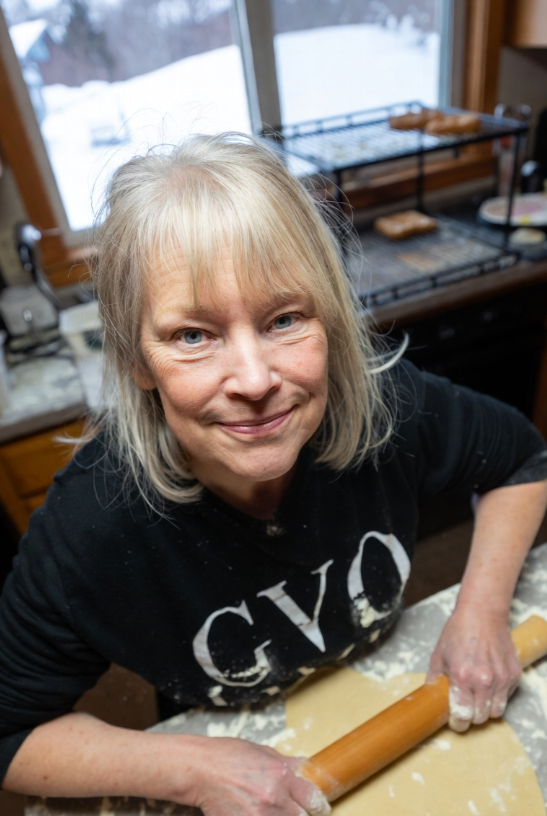
About the cook who shared this
Linda Johansson
Week 209 of Linda’s 30-year story
· Duluth, Minnesota
Linda is a sixty-three-year-old retired nurse from Duluth, Minnesota, living alone in the house where she raised her children and said goodbye to her husband. She lost Paul to ALS in 2020 after two years of watching the kindest man she'd ever known lose everything but his dignity. She cooks Scandinavian comfort food and Minnesota hotdish and the pot roast Paul loved, and she sets two places at the table out of habit because it makes her feel less alone. Every recipe she writes is a person she's loved.
