First week back at Pendleton. The air smells like salt. The produce at the commissary includes RIPE AVOCADOS. The oven only runs fifteen degrees hot. I have TWO extra square feet of counter space. This is what liberation feels like.
Soo-Jin came over Wednesday. She CAME OVER. She walked two blocks from her unit (she's still here — her husband got extended orders) and knocked on my door with a plate of hotteok and a jar of her mother's gochugaru and said, 'Welcome back.'
I held the gochugaru and I held Hazel and I held back tears (barely) and said, 'I missed you.'
'I missed you more. Also, your baby is beautiful. Also, your book is on my coffee table. Also, I made japchae for dinner, come over at six.'
Soo-Jin. My Korean-American military wife friend. My short ribs teacher. My California.
We ate japchae at her table — me, Ryan, Caleb, Hazel (in the bouncer), Soo-Jin, her husband, Mia (now six and reading — SIX!). The table sat eight. The food was Korean and Southern and the combination of two women who missed each other and cooked through the missing.
Caleb and Mia reunited like long-lost friends. They played for three hours. Caleb told Mia about the desert: 'It was HOT. And there was SAND. And Mama wrote a BOOK.' Mia said, 'My mom has your mom's book. She reads it all the time.' A six-year-old told my son that her mother reads my book. The surrealism of authorship.
The blog this week: 'Back to California: When the Kitchen Returns to the Coast.' About the relief of leaving the desert and the strange gratitude for having been there. About how the desert made me a better cook by taking everything away and leaving only the basics.
Ten thousand views. The return post. The audience celebrates with me.
Planted the desert tomato seeds on the patio. New pots. Bigger pots (Dad insisted). California soil. Dad's seeds, traveled from Norfolk to Jacksonville to Pendleton to Twentynine Palms and back to Pendleton. The most well-traveled tomato seeds in military history.
Made Soo-Jin's short ribs tonight. The FIRST short ribs at Pendleton in two years. The marinade. The grill. The California sun on the patio.
The short ribs are back. The ocean is back. Soo-Jin is back.
We're home. For now. For however long the Marines say.
That dinner at Soo-Jin’s table — the japchae, the laughter, the kids running circles around us — reminded me that the best food is the kind made in the company of people you’ve missed terribly. I wasn’t ready to attempt Soo-Jin’s short ribs the very next night (some recipes deserve their moment), so I reached for something that still carried that same warmth and depth: a bold, fragrant ginger fried rice built on the sesame and soy notes that had been ringing in my head since her kitchen. It came together fast, it used the day-old rice sitting in my new California fridge, and it tasted exactly like settling back in.
Ginger Fried Rice
Prep Time: 10 min | Cook Time: 15 min | Total Time: 25 min | Servings: 4
Ingredients
- 3 cups cooked jasmine rice, day-old preferred
- 2 tablespoons sesame oil, divided
- 1 tablespoon neutral oil (vegetable or avocado)
- 4 cloves garlic, minced
- 1 1/2 tablespoons fresh ginger, finely grated
- 4 green onions, thinly sliced, whites and greens separated
- 1 cup frozen peas or mixed vegetables, thawed
- 3 eggs, lightly beaten
- 3 tablespoons low-sodium soy sauce
- 1 tablespoon oyster sauce
- 1 teaspoon gochugaru or red pepper flakes (optional, to taste)
- 1 teaspoon rice vinegar
- Salt and white pepper to taste
- Sesame seeds, for garnish
Instructions
- Break up the rice. If using refrigerated day-old rice, break up any clumps with your hands or a fork before cooking. Cold, dry rice fries up far better than fresh — it won’t steam and clump in the pan.
- Heat the wok or skillet. Heat a large wok or heavy skillet over high heat until very hot. Add the neutral oil and 1 tablespoon of the sesame oil and swirl to coat.
- Sauté the aromatics. Add the garlic, ginger, and green onion whites. Stir-fry for 60–90 seconds until fragrant, taking care not to burn the garlic.
- Add the vegetables. Toss in the peas or mixed vegetables and stir-fry for 2 minutes until heated through.
- Scramble the eggs. Push the vegetables to one side of the pan. Pour the beaten eggs into the empty space and scramble gently, breaking into small curds. Once just set, fold them into the vegetables.
- Add the rice. Add the rice to the pan and stir-fry over high heat, pressing and tossing, for 3–4 minutes until the rice is heated through and beginning to crisp in spots.
- Season. Drizzle the soy sauce, oyster sauce, and rice vinegar over the rice. Add gochugaru if using. Toss everything together over high heat for 1–2 minutes until evenly coated and fragrant. Finish with the remaining tablespoon of sesame oil, season with salt and white pepper, and toss once more.
- Serve. Divide into bowls and top with sliced green onion greens and a sprinkle of sesame seeds. Serve immediately.
Nutrition (per serving)
Calories: 335 | Protein: 11g | Fat: 13g | Carbs: 44g | Fiber: 2g | Sodium: 610mg
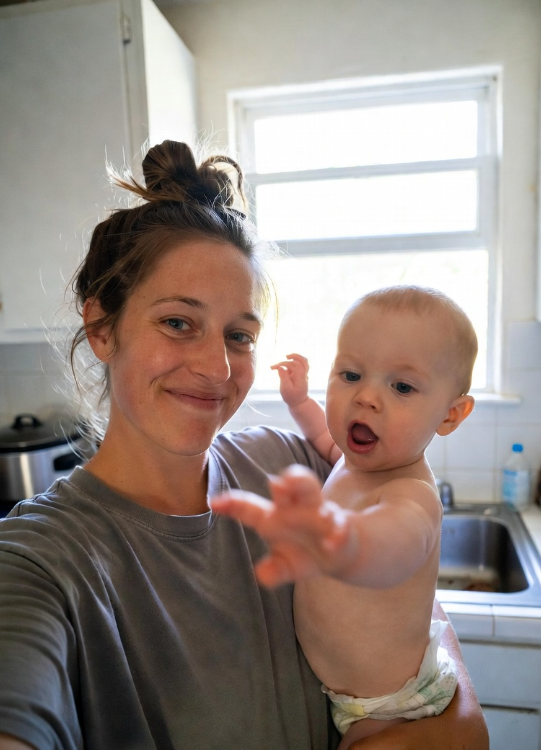
About the cook who shared this
Rachel Abernathy
Week 323 of Rachel’s 30-year story
· San Diego, California
Rachel is a twenty-eight-year-old Marine wife and mom of two who has moved five times in six years and learned to cook a Thanksgiving dinner with half her cookware still in boxes. She married young, survived postpartum depression, and feeds her family of four on a junior Marine's salary with a freezer full of pre-made meals and a crockpot that has never let her down. She writes for the military spouses who are cooking dinner alone in base housing and wondering if they're enough. You are.
