
 By
By The week after our birthday and the apartment is still finding gyoza wrappers in unexpected places — behind the toaster, under the table, one stuck to Miya's shoe. The gyoza-making was enthusiastic and messy and exactly the kind of cooking I want to do with my daughter: imperfect, joyful, full of flour on the floor and laughter that sounds like permission.
I made Fumiko's nasu dengaku this week — miso-glazed eggplant, broiled until the top bubbles and caramelizes. The eggplant season in Portland is late summer, when the Japanese eggplants at the farmers market are slender and glossy and almost too beautiful to cut. I halve them, score the flesh, spread the sweet miso paste, and broil. The result is smoky, sweet, rich — the kind of dish that converts people who think they don't like eggplant. Fumiko served this in August, always in August, and I serve it in August too, the calendar a form of fidelity.
Brian came home at one AM on Saturday. I was awake — the anxiety keeps me company when no one else will — and I heard the key in the lock, the careful footsteps of a man trying to be quiet and failing, the bathroom light clicking on. He brushed his teeth for a long time. Drunk men always brush their teeth for a long time, as if toothpaste can erase the evidence. I lay in bed and stared at the ceiling and thought about my parents' divorce: the quietest divorce in history. No screaming, no lawyers, just a conversation at the kitchen table and Ken moving to a condo. I am twelve in this memory. I am thirty-four in this bed. The distance between the memory and the bed is twenty-two years and no distance at all.
My therapist asked this week: "What would your life look like if you were happy in it?" I said I didn't know. She said, "That's what we need to figure out." The question haunts me in the way good therapy questions do — not aggressively, not urgently, but persistently, like a small stone in your shoe that changes the way you walk. What would my life look like if I were happy in it? The kitchen would still be there. The miso soup would still be there. Miya would still be there. The mat would still be rolled out by the window. What wouldn't be there is the emptiness at the dinner table, the midnight key in the lock, the toothpaste cover-up, the careful silence that passes for peace.
I wrote about nasu dengaku for the blog — about how miso paste transforms eggplant the way attention transforms a moment. The metaphor was heavy-handed. The readers didn't mind. Sometimes heavy-handed is just honest.
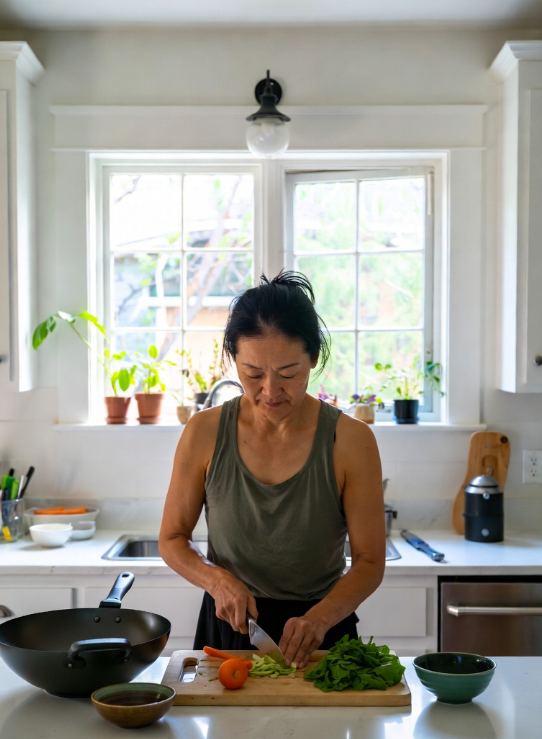
The therapist’s question is still with me — what would your life look like if you were happy in it? — and the only answer I keep returning to is the kitchen, the smell of ginger hitting a hot pan, the particular focus that comes from having something simple and urgent to do with your hands. This ginger beef stir-fry lives in the same culinary vocabulary as Fumiko’s cooking: bright with ginger, savory, quick enough that dinner is on the table before the hard feelings can fully settle in. On the nights when the ceiling offers nothing and the questions are too large, I come back to this.
Ginger Beef Stir-Fry
Prep Time: 15 min | Cook Time: 12 min | Total Time: 27 min | Servings: 4
Ingredients
- 1 lb flank steak or sirloin, thinly sliced against the grain
- 2 tablespoons soy sauce
- 1 tablespoon cornstarch
- 2 tablespoons vegetable oil, divided
- 1 tablespoon fresh ginger, grated
- 3 cloves garlic, minced
- 1 red bell pepper, thinly sliced
- 1 cup broccoli florets
- 1 medium carrot, julienned
- 3 tablespoons soy sauce (for sauce)
- 1 tablespoon rice vinegar
- 1 tablespoon sesame oil
- 1 teaspoon honey
- 1/4 teaspoon red pepper flakes (optional)
- 2 green onions, sliced, for garnish
- 1 teaspoon sesame seeds, for garnish
- Cooked white or brown rice, for serving
Instructions
- Marinate the beef. In a bowl, toss the sliced beef with 2 tablespoons soy sauce and the cornstarch. Let sit for 10 minutes while you prep the vegetables.
- Make the sauce. Whisk together the remaining 3 tablespoons soy sauce, rice vinegar, sesame oil, honey, and red pepper flakes (if using) in a small bowl. Set aside.
- Sear the beef. Heat 1 tablespoon vegetable oil in a large skillet or wok over high heat until shimmering. Add the beef in a single layer and cook undisturbed for 1—2 minutes, then stir-fry for another 1—2 minutes until just cooked through. Transfer to a plate.
- Cook the aromatics and vegetables. Add the remaining tablespoon of oil to the pan. Add the ginger and garlic and stir-fry for 30 seconds until fragrant. Add the broccoli, carrot, and bell pepper and stir-fry over high heat for 3—4 minutes until crisp-tender.
- Combine and finish. Return the beef to the pan, pour the sauce over everything, and toss to coat. Cook for 1 more minute until the sauce thickens slightly and everything is glossy and well-coated.
- Serve. Spoon over steamed rice and garnish with sliced green onions and sesame seeds. Serve immediately.
Nutrition (per serving)
Calories: 320 | Protein: 28g | Fat: 16g | Carbs: 14g | Fiber: 2g | Sodium: 890mg