
 By
By Easter weekend. The families gathered at Tom and Linda's. Linda looked healthy — genuinely healthy, not performing health. Her hair was back to normal after the radiation thinned it. Her energy was up. She made deviled eggs and argued with Colleen about whether mayo or Miracle Whip was the correct base (mayo, obviously, and I will die on this hill alongside my mother). She looked like herself. The relief of seeing her look like herself will never get old.
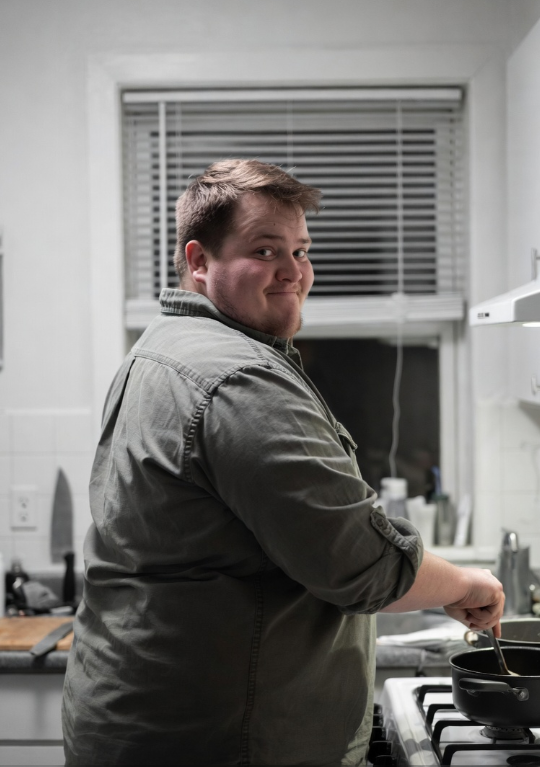
I made the Easter zurek — the sour rye soup — and the pierogi and the golabki. The kitchen at Tom and Linda's was full: Linda, Colleen, Megan, all working alongside me, chopping and stirring and arguing about seasoning. Three women who met because of me and stayed because of each other. Watching them cook together is like watching a small civilization form. They have their own language, their own jokes, their own hierarchy (Linda is in charge, Colleen challenges her, Megan mediates).
Tom and Patrick stood in the living room and discussed the merits of different types of mulch. They can discuss mulch for ninety minutes without repeating a single point. This is a gift. I aspire to this level of conversational endurance about something I don't care about.
After dinner, I helped Linda with the dishes. Just the two of us in the kitchen. She said, "Have you asked her yet?" I said, "Soon." She said, "How soon?" I said, "Mom." She said, "I'm just asking." She's not just asking. She's been "just asking" every week since I told her about the ring. She is constitutionally incapable of patience when it comes to grandchildren-adjacent events. I love her. She is exhausting.
The Hoan Bridge. The sunset. Spring is here. The plan is ready. It's almost time.
The zurek and the golabki were always going to be the centerpieces, but every Easter table needs something that just quietly holds everything together — a side dish that asks nothing of anyone and delivers every time. These German-style mashed potatoes were that dish. I’ve made them alongside the sour rye soup for years now, and watching Linda reach for seconds while still managing to oversee three other pots on the stove felt like the most normal, beautiful thing in the world. Normal and beautiful are not always the same thing, but this Easter, they were.
German-Style Mashed Potatoes
Prep Time: 15 min | Cook Time: 25 min | Total Time: 40 min | Servings: 8
Ingredients
- 3 lbs Yukon Gold potatoes, peeled and cubed
- 4 tablespoons unsalted butter, cut into pieces
- 3/4 cup full-fat sour cream
- 2 tablespoons Dijon mustard
- 1/2 cup whole milk, warmed
- 1 teaspoon salt, plus more for the cooking water
- 1/2 teaspoon white pepper
- 1/4 teaspoon freshly grated nutmeg
- 3 tablespoons fresh chives, thinly sliced, for garnish
Instructions
- Boil the potatoes. Place cubed potatoes in a large pot and cover with cold, well-salted water. Bring to a boil over high heat, then reduce to a steady simmer. Cook 18—20 minutes, until a fork slides through without resistance. Drain thoroughly and return potatoes to the warm pot for 1—2 minutes to let excess steam escape.
- Mash and enrich. Mash the potatoes with a hand masher or ricer until smooth. Add butter pieces and stir until fully melted and absorbed.
- Add the dairy and mustard. Stir in the sour cream, Dijon mustard, and warmed milk. Mix until the potatoes are creamy and uniform. Adjust milk by the tablespoon if you prefer a looser consistency.
- Season. Add salt, white pepper, and nutmeg. Taste and adjust seasoning as needed — the mustard should be present but not sharp.
- Serve. Transfer to a warmed serving bowl and garnish generously with sliced chives. Serve immediately alongside zurek, golabki, or any Easter main.
Nutrition (per serving)
Calories: 255 | Protein: 4g | Fat: 11g | Carbs: 34g | Fiber: 3g | Sodium: 390mg