The Damiano Center on Thursday: wild rice soup, fifty gallons, the same recipe I have been making for twenty-some years now. The constancy is the point. People come into the basement of that building hungry and uncertain and what they find is a fifty-gallon pot of wild rice soup that has been there every Thursday of every year, and they find Linda Johansson, who has been there too, and the constancy is the message: you can come back. You can come back. You can come back.
Lena (Anna's youngest, college freshman) is in college now. She calls me sometimes. The calls are about boys, mostly. I listen. I do not give advice. I am eighteen-year-old's grandmother. My credibility on boys is suspect at best. I tell her the kinds of things a grandmother is supposed to tell her: be careful, be brave, trust your gut, do not date the one who reminds you of someone you do not like. She thinks I am wise. I am, in fact, just old. The two get confused sometimes in the right direction.
Jakob (Anna's middle, recently graduated) has a job. He hates the job. He is figuring it out. He called me Tuesday for advice. I told him: that is what your twenties are for. The first job is supposed to be unsatisfying. The first job teaches you what you do not want. He said, "Grandma, that is not super helpful." I said, "It is the truth. Helpful is not always the same as comforting." He laughed. He hung up. He kept the job for now. He will figure it out.
I cooked Salmon with dill this week. Lake trout or salmon, slow-roasted with butter and dill and lemon. The reliable spring fish.
The Damiano Center on Thursday. I have served soup at this center for twenty-some years. I know the regulars by name. I know the seasons of the crowd. I know that the first cold snap brings new faces. I know that the days after holidays bring the lonely ones. I know that the worst weeks of the year are not the ones that feel the worst — they are the ones in February when the cold has worn everyone down and the city has run out of tenderness.
Paul would have liked this dinner. Paul would have liked this week. Paul would have liked this life. I tell him about it anyway. The telling is the keeping. I have been told, by a grief counselor, by friends, by my own children at certain anxious moments, that perhaps the constant tell-Paul thing is not healthy. I do not agree. I think it is exactly healthy. I think it is, in fact, the structural beam of my emotional architecture. The beam is solid. The house stands.
It is enough. Paul is not here. Mamma is not here. Pappa is not here. Erik is not here. They are all here in the kitchen, in the smell, in the taste, in the wooden spoon and the bread pans and the marble slab. The dead are not where the body went. The dead are in the kitchen.
The lake from the kitchen window has been doing what the lake does for as long as there has been a lake. The lake has carried fish and ships and the bodies of drowned sailors and the names of Ojibwe villages and the granite-cold of melted glaciers. The lake does not notice the lives along its shore. The lives notice the lake. That is the deal. That has always been the deal.
It is enough.
The salmon I made this week was what it always is — slow, quiet, forgiving — and it reminded me that a good piece of fish asks almost nothing of you and gives back more than it should. Garlic-Herb Red Snapper is built the same way: a few honest ingredients, a little patience, and the kitchen does the rest. I have made versions of this for forty years, in different pans, for different people, in different seasons of grief and gratitude. It is the kind of recipe Paul would have asked for seconds of, and that is reason enough.
Garlic-Herb Red Snapper
Prep Time: 10 minutes | Cook Time: 20 minutes | Total Time: 30 minutes | Servings: 4
Ingredients
- 4 red snapper fillets (about 6 oz each), skin on
- 3 tablespoons unsalted butter, softened
- 4 cloves garlic, minced
- 2 tablespoons fresh parsley, finely chopped
- 1 tablespoon fresh dill, finely chopped
- 1 tablespoon fresh thyme leaves
- 1 lemon, half sliced into rounds and half for juice
- 2 tablespoons olive oil
- 1/2 teaspoon kosher salt
- 1/4 teaspoon freshly ground black pepper
- 1/4 teaspoon smoked paprika
Instructions
- Preheat the oven. Heat your oven to 400°F. Line a rimmed baking sheet with parchment paper or lightly oil a baking dish large enough to hold the fillets in a single layer.
- Make the herb butter. In a small bowl, combine the softened butter, minced garlic, parsley, dill, and thyme. Mix until well blended. Set aside.
- Prepare the fish. Pat the snapper fillets dry with paper towels. Drizzle both sides lightly with olive oil and season with salt, pepper, and smoked paprika.
- Top and arrange. Place the fillets skin-side down on the prepared baking sheet. Divide the herb butter evenly among the fillets, spreading it gently across the top of each. Lay one or two lemon rounds over each fillet.
- Roast the fish. Bake for 18—20 minutes, until the fish is opaque throughout and flakes easily with a fork at the thickest part. Do not overcook — snapper is best when it is just done.
- Finish and serve. Remove from the oven and squeeze the remaining lemon half over the fillets. Transfer to a warm platter and spoon any pan juices over the top. Serve immediately, with bread or rice to catch the butter.
Nutrition (per serving)
Calories: 310 | Protein: 38g | Fat: 16g | Carbs: 2g | Fiber: 0g | Sodium: 340mg
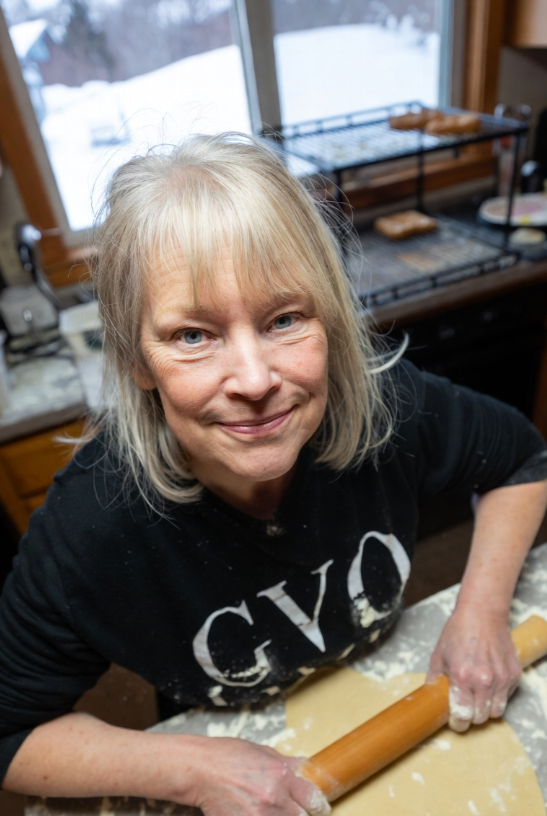
About the cook who shared this
Linda Johansson
Week 319 of Linda’s 30-year story
· Duluth, Minnesota
Linda is a sixty-three-year-old retired nurse from Duluth, Minnesota, living alone in the house where she raised her children and said goodbye to her husband. She lost Paul to ALS in 2020 after two years of watching the kindest man she'd ever known lose everything but his dignity. She cooks Scandinavian comfort food and Minnesota hotdish and the pot roast Paul loved, and she sets two places at the table out of habit because it makes her feel less alone. Every recipe she writes is a person she's loved.
