
← Back to Blog

Garden Orzo Risotto — The Rhythm You Cook When You Can’t Do Anything Else

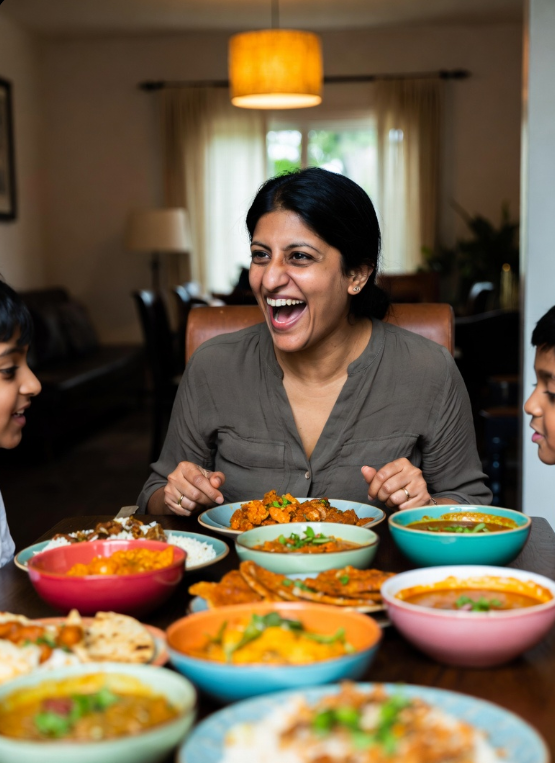
Amma's rescheduled cognitive test. Six months overdue because of the pandemic. The neurologist's office reopened with precautions: masks, distancing, temperature checks, the medical waiting room as a controlled environment. I drove Amma and Appa. Everyone masked. The car was quiet — the specific quiet of a family heading to a doctor's appointment that nobody wants. Two hours of testing. I waited in the car this time — COVID protocols don't allow non-patients inside. I sat in the parking lot and played a podcast and ate almonds and didn't breathe properly for one hundred and twenty minutes. Appa came out with Amma. His face was a mask behind a mask — unreadable. "Well?" I asked. "We'll get the results next week." A week. A week of not knowing. A week of watching Amma for signs while pretending I'm not watching, which is what I've been doing for four years now. At Saturday's visit, Amma was herself — bringing biryani, offering opinions about my hair ("Still too long"), commenting on Anaya's height ("She's tall. Must be the Patel side." This is an insult to the Krishnamurthy genetics, delivered as observation). Anaya performed for her. Two and a half years old, she's a performer now — she sings songs from the shows she watches ("Twinkle Twinkle" with Tamil words Amma taught her via FaceTime), she dances (badly, enthusiastically), she narrates her activities ("Anaya is cooking! Anaya is making sambar! Sambar for Paati!"). Anaya is making sambar for Paati. In her toy kitchen, with plastic vegetables, in the backyard, six feet from the woman whose sambar started everything. I made Amma's actual sambar that night. The Sunday version. The one with freshly ground spice powder and small onions and drumstick. I made it because the test results are coming and I need the kitchen and I need the rhythm and I need the sambar. The sambar was right. I didn't check the journal. I didn't call Amma. I made it from memory, from muscle, from the place where recipes live when they've been made enough times to become part of you. The results come next week. The sambar is ready. I am not.

The sambar I made that Sunday was Amma’s — it belonged to her, to the test results, to everything I couldn’t control. But the nights that followed needed their own rhythm, something I could cook without weight, without history pressing in from every direction. Garden Orzo Risotto became that dish: warm enough to feel like care, simple enough that my hands could move without my mind following, vegetables and broth pulling together into something whole. It’s not sambar — nothing else is — but it asks the same thing of you: patience, attention, the willingness to stand at a stove and let the stirring be enough.

Garden Orzo Risotto

Prep Time: 10 minutes | Cook Time: 25 minutes | Total Time: 35 minutes | Servings: 4

Ingredients

  • 2 tablespoons olive oil
  • 1 small yellow onion, finely diced
  • 3 cloves garlic, minced
  • 1 1/2 cups orzo pasta
  • 1/2 cup dry white wine (or additional broth)
  • 4 cups vegetable broth, warmed
  • 1 medium zucchini, diced small
  • 1 cup cherry tomatoes, halved
  • 1 cup baby spinach, roughly chopped
  • 1/2 cup frozen peas, thawed
  • 1/2 cup freshly grated Parmesan cheese
  • 2 tablespoons unsalted butter
  • 1/4 teaspoon crushed red pepper flakes (optional)
  • Salt and black pepper to taste
  • Fresh basil or parsley, for serving

Instructions

  1. Warm the broth. Pour vegetable broth into a small saucepan over low heat and keep it warm throughout cooking. Having warm broth ready is what gives orzo risotto its silky, even texture.
  2. Sweat the aromatics. Heat olive oil in a wide, heavy-bottomed pan or Dutch oven over medium heat. Add the onion and cook, stirring occasionally, until soft and translucent, about 5 minutes. Add garlic and red pepper flakes if using; cook 1 minute more until fragrant.
  3. Toast the orzo. Add the dry orzo to the pan and stir to coat in the oil. Cook, stirring, for 2 minutes until the pasta is lightly golden and smells slightly nutty. This step builds depth.
  4. Deglaze. Pour in the white wine and stir constantly until it is fully absorbed, about 1 to 2 minutes.
  5. Add broth gradually. Add the warm broth one ladleful at a time, stirring frequently and waiting until each addition is mostly absorbed before adding the next. Continue for 12 to 15 minutes, until the orzo is al dente and the mixture is creamy and thick. You may not need all the broth.
  6. Add the vegetables. Stir in the zucchini and cherry tomatoes with the last addition of broth. Cook 3 to 4 minutes until the zucchini is just tender. Fold in the spinach and peas; stir until the spinach wilts, about 1 minute.
  7. Finish and serve. Remove from heat. Stir in the butter and Parmesan until melted and glossy. Taste and adjust salt and pepper. Serve immediately in warm bowls, topped with fresh basil or parsley.

Nutrition (per serving)

Calories: 420 | Protein: 14g | Fat: 15g | Carbs: 57g | Fiber: 4g | Sodium: 680mg

Priya Krishnamurthy
About the cook who shared this
Priya Krishnamurthy
Week 230 of Priya’s 30-year story · Edison, New Jersey
Priya is a pharmacist, wife, and mom of two in Edison, New Jersey — the town she grew up in, surrounded by the sights and smells of her mother's South Indian kitchen. These days, she splits her time between the hospital pharmacy, school pickups, and her own kitchen, where she cooks nearly every night. Her style is a blend of the Tamil recipes her mother taught her and the American comfort food her kids actually want to eat. She writes about the beautiful mess of balancing two cultures on one plate — and she wants you to know that ordering pizza is also an act of love.

How Would You Spin It?

Put your own twist on this recipe — what would you add, remove, or swap?