The world has become smaller this year. Mamma is gone. The first Sven is gone. The kitchen holds them both — Mamma in the bread pans on the shelf, the wooden spoon worn smooth where her hand held it for sixty years, the recipe cards in her tiny European hand; the first Sven in the worn spot on the floor under the dining room table where he slept for fourteen years, in the chewed corner of the rocking chair he could never resist, in the absence of barking when the doorbell rings. I am sixty-something and orphaned in the new way: the parental generation gone, the adult generation in charge.
Sophie called. Her voice was thick. She said she was sorry about Mamma. She said she had been trying to type a text for an hour and could not. She called instead. We did not say much. We did not need to. Sophie has been to enough funerals at this point to know that the calls after are not for words but for the audible presence of a person on the other end of the line. The presence is the love. The presence is the bridge.
The new Sven (Sven the Second) is six months old now. He chewed through my favorite shoe. He jumped on the kitchen counter. He is the worst-behaved dog Duluth has ever produced. I love him completely. He has the energy of a small storm. He is the right thing for the kitchen right now. The first Sven was a steady ocean. This Sven is a storm. Both are necessary in their seasons.
Mamma is in hospice now. The home is good. The staff is kind. I visit daily. I bring food — though she eats less and less, the smell of the food is still received. I bring limpa bread. I bring her own meatballs (the recipe she taught me, returned to her by my hands). She holds my hand. She says the names: Pappa. Lars. Erik. Linda. Karin. Astrid. The names are the prayer. The prayer is what is left when the words go.
Thanksgiving is approaching. The brining starts on Tuesday. The pies start on Wednesday. The kitchen begins its annual reorganization for the bird — turkey out of the freezer to the cooler in the garage, fridge cleared for the brine cooler, the big roasting pan brought up from the basement, the carving knife sharpened, the gravy boat located (last seen on the top shelf of the pantry, where it lives all year except this one week). The kids are all coming. The house is going to be full. I am ready.
I cooked Cardamom bread this week. The braided loaf. Christmas-coming.
The Damiano Center on Thursday: wild rice soup, fifty gallons. Gerald helped me ladle. He told me about a regular who got into a sober house this week — a man named Curtis, who has been coming for soup for eight years and who has been sober for forty-three days now. The soup did not get him sober. The soup was there when he was hungry. The soup is the door, again. The door is the chance.
I read one of Paul's books in the evening. The Edmund Fitzgerald chapter. I have read it forty times now. The fortieth time is no less affecting than the first. The transmission still gives me a chill: "We are holding our own." Captain McSorley's last known words. The chapter ends with the wreck on the bottom of Lake Superior, and the men still inside, and the lake refusing to give up its dead. Paul read this chapter to me in 1989, on a winter evening, in the living room. I did not know then that he was reading me his own future.
It is enough. It has to be. And on a morning like this, with the lake doing what the lake does and the dog at my feet and the bread on the counter and the kitchen warm enough to live in, it is. It is enough.
The cardamom bread was already on the counter — braided, golden, Christmas-coming — and still the kitchen wasn’t done with me. It never is, in the weeks when grief and gratitude are living in the same rooms. I rolled these crinkle cookies the same afternoon, coating each one in powdered sugar the way Mamma used to coat the pepparkakor, and watched the cracks open as they baked, dark chocolate showing through the white like something insisting on being seen. The kids are all coming for Thanksgiving. There will be more baking before then. But these were for now, for the quiet hour, for Sven the Second asleep under the table in the spot that still belongs to someone else.
Fudgy Chocolate Crinkle Cookies
Prep Time: 20 minutes + 2 hours chilling | Cook Time: 12 minutes | Total Time: 2 hours 35 minutes | Servings: 36 cookies
Ingredients
- 1 cup (2 sticks) unsalted butter, softened
- 2 cups granulated sugar
- 4 large eggs
- 2 teaspoons pure vanilla extract
- 2 cups all-purpose flour
- 3/4 cup unsweetened cocoa powder
- 2 teaspoons baking powder
- 1/2 teaspoon salt
- 1 cup powdered sugar, for rolling
Instructions
- Make the dough. Beat butter and granulated sugar together in a large bowl until light and fluffy, about 3 minutes. Add eggs one at a time, beating well after each addition. Mix in vanilla.
- Combine dry ingredients. Whisk together flour, cocoa powder, baking powder, and salt in a separate bowl. Gradually add the dry ingredients to the butter mixture, stirring until a soft dough forms.
- Chill. Cover the bowl with plastic wrap and refrigerate for at least 2 hours, or overnight. The dough needs to be firm enough to roll.
- Preheat and prep. Heat oven to 350°F. Line two baking sheets with parchment paper. Place powdered sugar in a shallow bowl.
- Shape the cookies. Scoop the dough into 1-inch balls. Roll each ball generously in powdered sugar until fully coated — don’t be shy, a thick coating gives you the best crinkle effect.
- Bake. Arrange on prepared baking sheets about 2 inches apart. Bake 11–13 minutes, until the tops are crackled and the centers are just set. They will look slightly underdone — that is correct. They firm up as they cool.
- Cool. Let cookies rest on the baking sheet for 5 minutes before transferring to a wire rack. The cracks will deepen as they cool. Store in an airtight container at room temperature for up to 5 days.
Nutrition (per serving)
Calories: 148 | Protein: 2g | Fat: 6g | Carbs: 23g | Fiber: 1g | Sodium: 62mg
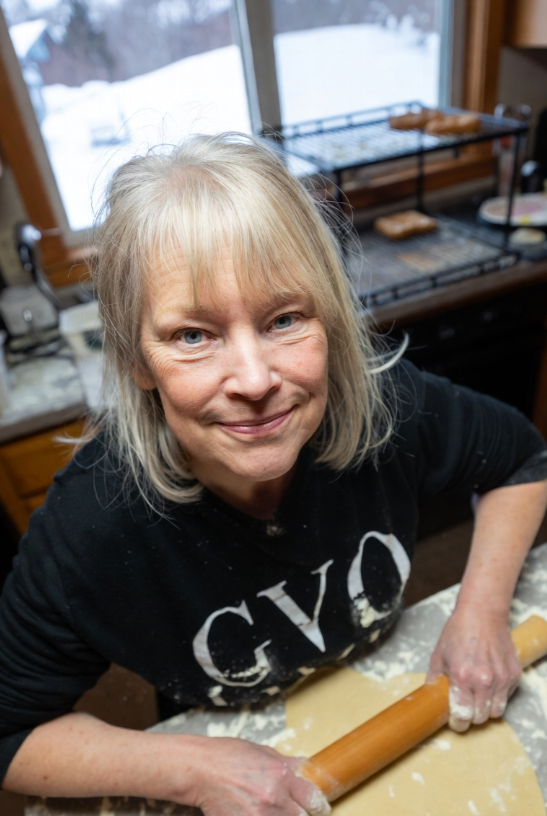
About the cook who shared this
Linda Johansson
Week 450 of Linda’s 30-year story
· Duluth, Minnesota
Linda is a sixty-three-year-old retired nurse from Duluth, Minnesota, living alone in the house where she raised her children and said goodbye to her husband. She lost Paul to ALS in 2020 after two years of watching the kindest man she'd ever known lose everything but his dignity. She cooks Scandinavian comfort food and Minnesota hotdish and the pot roast Paul loved, and she sets two places at the table out of habit because it makes her feel less alone. Every recipe she writes is a person she's loved.
