I have been baking more lately. The grief work after Mamma is, I think, complete enough that the baking has shifted from defense to celebration. The bread is for the table where Ingrid sits in her high chair. The cookies are for the great-grandchildren who come up for the weekends. The pies are for the friends I have started feeding again. The kitchen is back to its primary function: feeding the living people I love.
Elsa and Tom came for the weekend. Tom helped me move the heavy planters in the garden — the big terracotta ones I bought at a yard sale in 1995 that I cannot lift anymore. He did not ask. He just did it. He is the quiet kind of man Paul was. I see why Elsa loves him. The quiet men are not the loudest in the room, but they are usually the most useful. Paul taught me this by example. Tom is teaching it by repetition.
Anna had a small surgery. She is fine. I drove to Minneapolis for two weeks to help. I cooked. I cleaned. I cared. Anna said: "Mom, I had forgotten you were a nurse." I said: "I haven't." The thirty-five years at St. Mary's are not the kind of thing that fades. The skills come back at the first request. The hands remember how to take a pulse. The eyes remember how to read a face for pain. The role is permanent.
I cooked Macaroni and cheese from scratch this week. Béchamel with sharp Wisconsin cheddar (no Velveeta in this kitchen), hot sauce for backbone, dijon for depth. Tossed with elbows, topped with breadcrumbs and parmesan, baked until the breadcrumbs are dark gold and the inside bubbles. Paul's comfort food. The taste is Paul's happiness, which lives in the cheese, which lives in the kitchen.
The Damiano Center on Thursday. I have served soup at this center for twenty-some years. I know the regulars by name. I know the seasons of the crowd. I know that the first cold snap brings new faces. I know that the days after holidays bring the lonely ones. I know that the worst weeks of the year are not the ones that feel the worst — they are the ones in February when the cold has worn everyone down and the city has run out of tenderness.
Paul would have liked this dinner. Paul would have liked this week. Paul would have liked this life. I tell him about it anyway. The telling is the keeping. I have been told, by a grief counselor, by friends, by my own children at certain anxious moments, that perhaps the constant tell-Paul thing is not healthy. I do not agree. I think it is exactly healthy. I think it is, in fact, the structural beam of my emotional architecture. The beam is solid. The house stands.
It is enough. It has to be. And on a morning like this, with the lake doing what the lake does and the dog at my feet and the bread on the counter and the kitchen warm enough to live in, it is.
The lake from the kitchen window has been doing what the lake does for as long as there has been a lake. The lake has carried fish and ships and the bodies of drowned sailors and the names of Ojibwe villages and the granite-cold of melted glaciers. The lake does not notice the lives along its shore. The lives notice the lake. That is the deal. That has always been the deal.
It is enough.
The mac and cheese I made this week was Paul’s recipe — his comfort food, his happiness in a dish — and it reminded me that the best food is always the kind that pulls people into a kitchen without asking twice. These fried mozzarella sticks are that same kind of food: golden and bubbling, unapologetically cheesy, the sort of thing that makes Elsa and Tom linger at the counter and the great-grandchildren climb into their chairs without being called. If the kitchen is back to its primary function, this is what that function looks like on a good evening.
Fried Mozzarella Sticks
Prep Time: 15 min (plus 1 hr freezing) | Cook Time: 10 min | Total Time: 1 hr 25 min | Servings: 6
Ingredients
- 12 mozzarella string cheese sticks
- 1 cup all-purpose flour
- 2 large eggs
- 2 tablespoons whole milk
- 1 1/2 cups Italian-seasoned breadcrumbs
- 1/2 cup finely grated Parmesan cheese
- 1 teaspoon garlic powder
- 1 teaspoon dried oregano
- 1/2 teaspoon kosher salt
- 1/4 teaspoon black pepper
- Vegetable or canola oil, for frying (about 3 cups)
- Marinara sauce, for serving
Instructions
- Freeze the cheese. Arrange mozzarella sticks in a single layer on a parchment-lined baking sheet and freeze for at least 1 hour, or until completely firm. Do not skip this step — it keeps the cheese from melting out during frying.
- Set up your breading station. Place flour in a shallow bowl. In a second bowl, whisk together eggs and milk. In a third bowl, combine breadcrumbs, Parmesan, garlic powder, oregano, salt, and pepper.
- Bread the sticks. Working one at a time, roll each frozen cheese stick in flour, shaking off the excess. Dip in the egg wash, letting any drips fall back into the bowl, then press firmly into the breadcrumb mixture to coat all sides. Set on the parchment-lined sheet.
- Double-coat for a sturdy crust. Dip each breaded stick back into the egg wash, then into the breadcrumbs a second time. This double layer prevents blowouts and gives a satisfying crunch. Return to the baking sheet and freeze for another 30 minutes.
- Heat the oil. Pour oil into a heavy-bottomed pot or Dutch oven to a depth of about 2 inches. Heat over medium-high until a thermometer reads 375°F. Keep a close eye on the temperature between batches.
- Fry in batches. Fry 3—4 sticks at a time, turning once, until deep golden brown, about 1 1/2 to 2 minutes total. Do not crowd the pot. Transfer to a paper-towel-lined plate.
- Serve immediately. Mozzarella sticks are best the moment they come out of the oil, when the crust is shatteringly crisp and the center is fully molten. Serve with warm marinara alongside.
Nutrition (per serving)
Calories: 290 | Protein: 15g | Fat: 17g | Carbs: 21g | Fiber: 1g | Sodium: 540mg
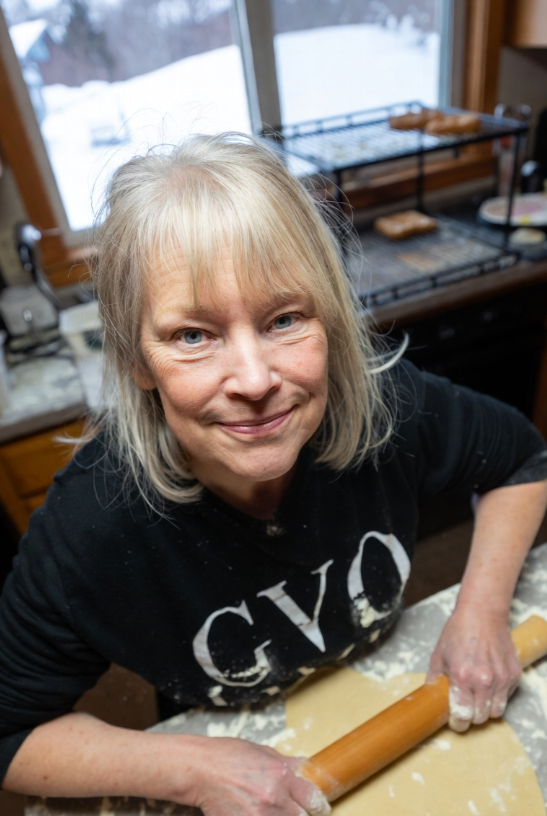
About the cook who shared this
Linda Johansson
Week 514 of Linda’s 30-year story
· Duluth, Minnesota
Linda is a sixty-three-year-old retired nurse from Duluth, Minnesota, living alone in the house where she raised her children and said goodbye to her husband. She lost Paul to ALS in 2020 after two years of watching the kindest man she'd ever known lose everything but his dignity. She cooks Scandinavian comfort food and Minnesota hotdish and the pot roast Paul loved, and she sets two places at the table out of habit because it makes her feel less alone. Every recipe she writes is a person she's loved.
