
 By
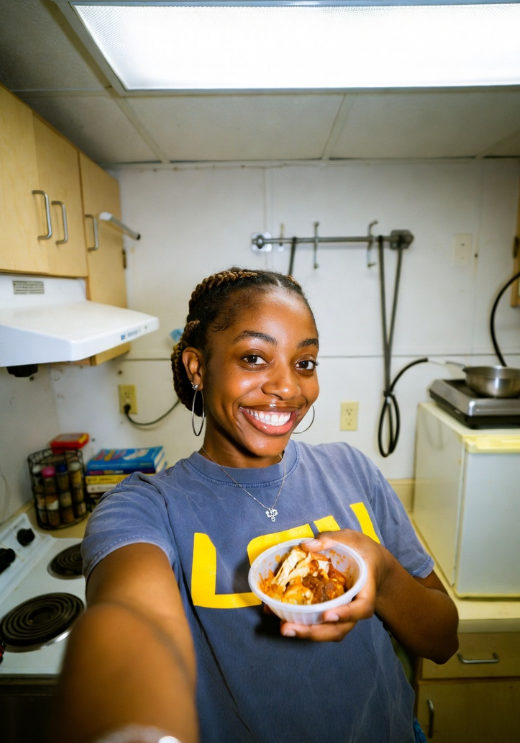
Saturday at MawMaw Shirley's, and this week she decided it was time for me to learn the difference between a quick saute and a slow build. She was making smothered pork chops, which sounds simple until you are watching her do it and realizing nothing about it is simple. She seared the chops first — high heat, oil, do not touch them until they release on their own. I would have moved them too early if she had not said keep your hands off. The pan will tell you when it is ready, she said. You will feel the resistance let go. That is when you flip.
I felt it let go on the third chop. A small release, a shift in the sound. She nodded. I flipped it. It was perfectly seared, golden and sealed. I made a sound I was not expecting to make, and MawMaw smiled in that small way that means she saw exactly what just happened to me. What happened is that I understood for the first time in my body, not just my brain, what it means to cook by feel. I can read recipes. I know measurements. But what MawMaw teaches is the thing recipes cannot give you — the sensory knowledge of the food itself, the communication between you and the pan.
The smothered gravy that followed was a whole separate lesson. Onions and bell pepper and celery — the holy trinity, she calls it, Louisiana doctrine — built slowly, stirring, adding broth a little at a time like she was making an argument and waiting for the other side to agree before proceeding. I ate three pork chops and a mountain of rice and came home quieter than I left.
Daddy asked if something was wrong. I said no, just thinking. He said thinking was fine as long as I had eaten. I showed him the containers MawMaw sent home. He did not ask again. Some things are answered better with food than with words.
I came home from MawMaw’s quieter and fuller than I’d left, and all I could think about was how every part of that meal earned its place on the table. The chops, the gravy, the rice — and the rolls she pulled from the oven almost as an afterthought, like good bread was just something that happened when she was around. I’ve been practicing these Fluffy Buttermilk Potato Rolls because they carry the same spirit as everything she makes: simple ingredients, patient technique, and a final result that feels like it was made with intention. They’re the roll I want next to a bowl of gravy, or honestly just warm with butter and nothing else.
Fluffy Buttermilk Potato Rolls
Prep Time: 30 minutes | Cook Time: 25 minutes | Total Time: 2 hours 30 minutes (includes rising) | Servings: 15 rolls
Ingredients
- 1 medium russet potato (about 8 oz), peeled and cubed
- 3/4 cup buttermilk, warmed to about 110°F
- 2 1/4 tsp active dry yeast (one standard packet)
- 1/4 cup granulated sugar, divided
- 1/3 cup unsalted butter, softened, plus more for brushing
- 2 large eggs, room temperature
- 1 1/2 tsp kosher salt
- 4 to 4 1/2 cups all-purpose flour, plus more for dusting
- 1/2 cup reserved potato cooking water, cooled to warm
Instructions
- Cook the potato. Place cubed potato in a small saucepan and cover with cold water. Bring to a boil and cook until completely tender, about 12 to 15 minutes. Reserve 1/2 cup of the cooking water before draining. Mash the potato until smooth with no lumps — you should have about 3/4 cup mashed. Let cool to room temperature.
- Activate the yeast. In the bowl of a stand mixer, combine the warm buttermilk, warm potato water, 1 teaspoon of the sugar, and the yeast. Stir gently and let sit for 5 to 10 minutes until foamy and fragrant. If it does not foam, your yeast may be expired — start over with fresh yeast.
- Mix the dough. To the yeast mixture, add the mashed potato, remaining sugar, softened butter, eggs, and salt. Mix on low with the dough hook until combined. Add 4 cups of flour one cup at a time, mixing on low between additions. Increase to medium speed and knead for 6 to 8 minutes. The dough should be soft, slightly tacky, and pulling away from the sides of the bowl. Add remaining flour one tablespoon at a time only if the dough is too sticky to handle.
- First rise. Lightly oil a large bowl. Shape the dough into a ball, place in the bowl, and turn to coat. Cover with plastic wrap or a clean kitchen towel and let rise in a warm spot until doubled in size, about 1 hour to 1 hour 15 minutes.
- Shape the rolls. Punch down the dough and turn out onto a lightly floured surface. Divide into 15 equal pieces (about 2.5 oz each). Roll each piece into a smooth ball by cupping your hand over it and rolling in a circular motion against the counter. Place in a greased 9x13-inch baking pan, spacing them evenly.
- Second rise. Cover the pan loosely with plastic wrap and let rise again until the rolls are puffed and touching each other, about 45 minutes to 1 hour. Meanwhile, preheat the oven to 375°F.
- Bake. Uncover and bake for 22 to 26 minutes, until the tops are deep golden brown and the internal temperature reads 190°F on an instant-read thermometer. If the tops are browning too quickly, tent loosely with foil after the first 15 minutes.
- Finish and serve. Immediately brush the tops generously with softened or melted butter. Let cool in the pan for 5 minutes, then pull apart and serve warm.
Nutrition (per serving)
Calories: 215 | Protein: 5g | Fat: 6g | Carbs: 34g | Fiber: 1g | Sodium: 230mg